Government buyers announce their plans in public
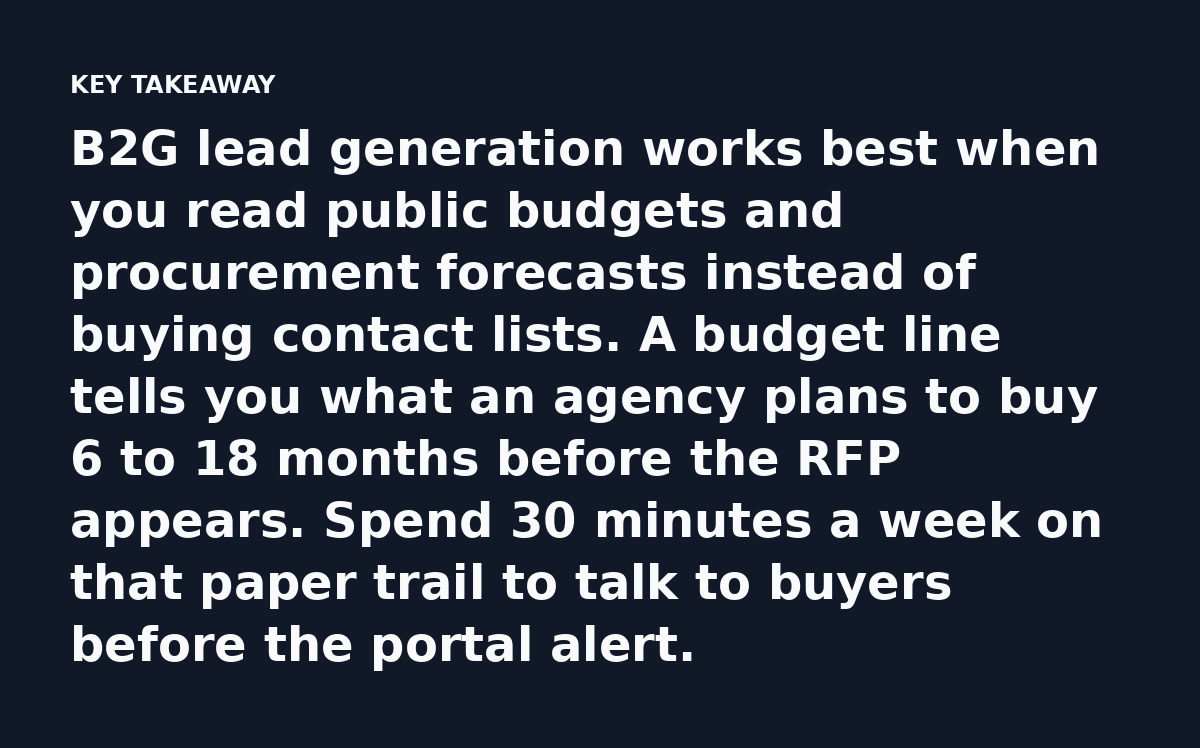
State and local governments in the US spend more than $3 trillion a year and federal contract spending passed $700 billion. Most of that money gets discussed in public documents months before a solicitation goes live.
The buyer is visible. The plan sits in a PDF on an agency website.
A county posts its capital improvement plan and a school district publishes a technology refresh schedule. A state agency releases a procurement forecast with estimated values and start dates, while a transit authority lists bus fleet upgrades.
One parks department listed a line item for irrigation controls at three sites: $180,000, starting next fiscal year. That is a lead with a budget attached.
B2G lead generation starts with a score
Job titles tell you who answers email. Budget lines tell you who has money.
Build a four-point score by adding one point when a budget line matches your service or an existing contract expires within 12 months. Add another when a procurement forecast names your category or a council agenda item describes the problem you fix.
Lead score = budget match + expiry window + forecast mention + agenda item
A score of three or higher goes to the top of your week. Anything lower stays in a watch folder until the next budget cycle.
Where the names actually live
Start with SAM.gov for federal work and your state procurement portal for state and local agencies. Then go one level deeper.
Cooperative contracts such as NASPO ValuePoint and Sourcewell let agencies buy from vendors that already passed review, according to public reports.
Public meeting minutes often name the system that failed last month. That gives you a date and a specific problem to mention in your first line.
The 30-minute weekly routine
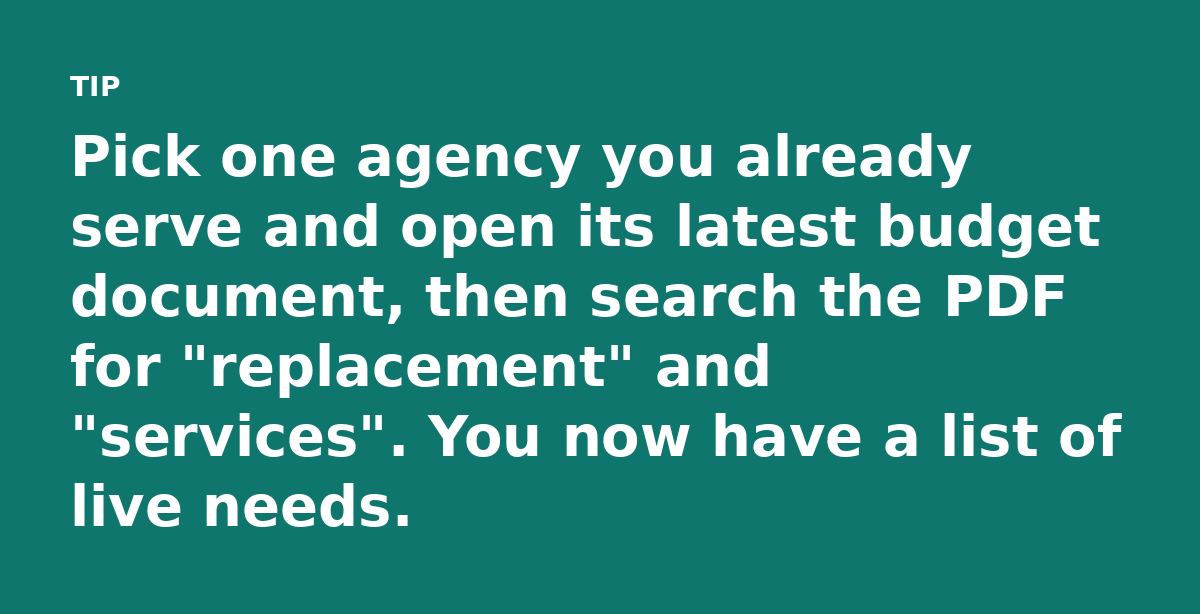
Monday morning works: open two budget PDFs from agencies on your list and search your category words. Save every line item that mentions a problem you solve.
Spend ten minutes on expiring contracts and ten minutes on new forecasts. Use what is left to write two short emails.
A weekly review beats a monthly batch because budget cycles move slowly and your attention needs to move faster.
Define the lead before you chase it
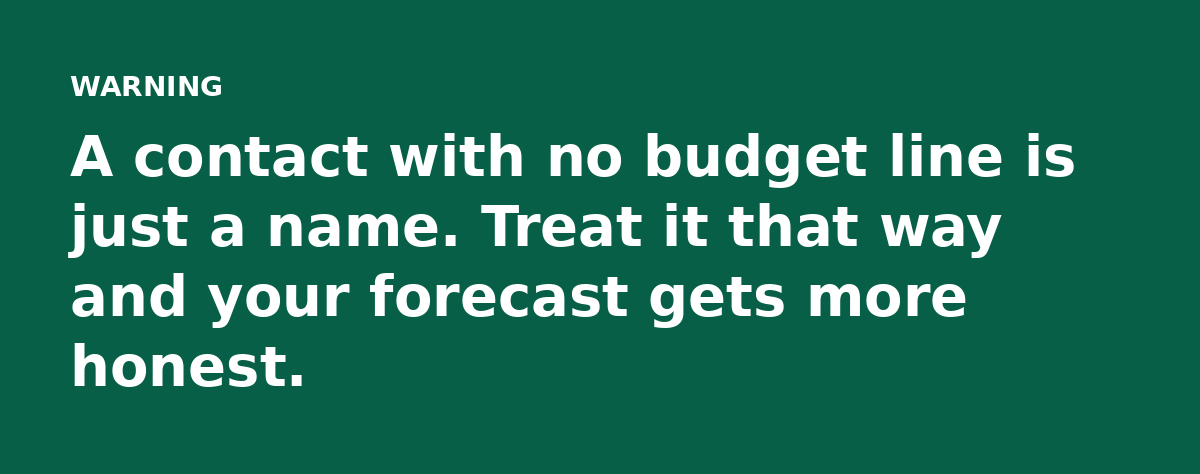
A real B2G lead has four parts: a budget line, a named program owner, a date on the calendar and a problem described in public.
If any of those is missing, label it a suspect and keep researching. This definition keeps your team honest and makes pipeline forecasts easier to defend in a Monday review.
Sales teams often skip the budget step because it feels slow, then spend weeks on a contact who has no authority to buy. The paperwork would have saved them.
What to write in the first email
Reference the line item and the fiscal year. Ask who owns the decision.
A short example: “I read your capital plan for next fiscal year. Line 42 lists a records system replacement. I work with agencies on that exact transition. Who is the right person to speak with about timing?”
That message works because it proves you did the reading. It also gives the buyer an easy reply.
The objection: we already have a vendor
Most agencies do, which is useful information.
Find the current contract on the portal or in the budget and note the end date and renewal options. A contract with one renewal left is a natural conversation.
Ask about subcontracting on the current vehicle, because some primes need niche skills or local support. That path can get you paid work before the next competition opens.
Track public minutes for performance complaints. A bad renewal gives you a reason to call.
Where pipelines leak
Most B2G pipelines lose deals before the RFP. Vendor registration lapses and past performance write-ups stay thin.
Keep your SAM.gov registration current and store a reusable past performance file with contract values and outcomes. Test your portal login on a quiet week before deadline week.
These tasks feel small. They decide whether your proposal gets read at all.
Timing beats volume
Most state fiscal years close on June 30 and the federal fiscal year closes on September 30. Agencies with leftover money often need to commit it before those dates.
That creates two busy windows each year, so build outreach around them. A relevant email in February can land better than ten emails in July.
Quick audit for your next list
- Does the agency publish a budget or capital plan?
- Is there a line item that matches your category?
- When does the current contract end?
- Who described the problem in a public meeting?
Four yes answers mean you have a real account. Two or fewer means you have homework.
Your next move
Open one budget PDF today and find one line item that matches your service. Write down the agency and the fiscal year, then send one email that mentions it.
One budget document and one email built from it are enough. Repeat weekly.
Need this run for you? See the outreach service.