The Short Version
Government buyers announce purchases in public before they buy. B2G lead generation means reading that public record early and finding the person who owns the budget. Do it right and you stop guessing who might buy.
Under federal procurement rules, any contract expected to top $25,000 gets a public notice on SAM.gov. State and local agencies run their own portals and publish the same kind of notice. That record is the most underpriced lead source in business-to-government sales.
Most sellers skip it. They buy a scraped list of agency phone numbers and cold call procurement officers who cannot talk to them. Then they wonder why the pipeline stays empty. Here is the fix, step by step.
Step 1: Define What a B2G Lead Actually Is
A company name in a CRM tells you little. A government lead has four pieces: a budget line that funds the purchase, a buying vehicle you can legally sell through, a contract that expires soon and a named person who owns the outcome.
Miss any one of those and you have a research task. That distinction saves months of wasted calls.
Rule to keep: If you cannot point to the budget document that pays for the purchase, you do not have a lead yet.
Step 2: Work the Public Paper Trail
You need four sources and they are free.
- SAM.gov for federal contract opportunities, plus USAspending.gov for every award already made.
- State and local procurement portals for bid postings. Most list the agency contact and the closing date.
- Budget requests and capital plans, which name projects a year or more before a solicitation appears.
- Board and council minutes, which often name the department head who asked for the money.
Read the minutes for the sentence that starts with a dollar figure. That is where the real lead sits. A council approving $400,000 for a records system is telling you a purchase is coming. The vendor who calls that department next week gets a different conversation than the one who calls after the RFP is posted.
Step 3: Score Every Lead With a Simple Formula
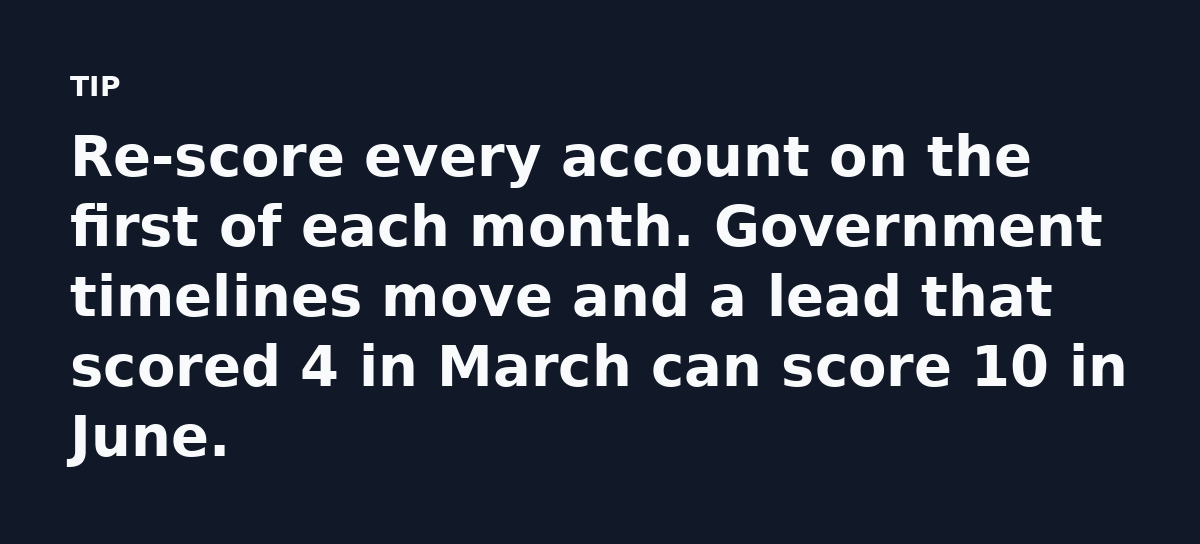
Rank leads on four signals, zero to three points each. Maximum score is 12.
Lead score = Budget signal + Vehicle access + Contract expiration + Named owner
The scoring math
Budget signal: 3 if money is already appropriated. If it only appears in a future plan or a wish list, score 1 or 0. Vehicle access: 3 if you hold a cooperative or schedule contract the agency can use, 0 if you would need a new one. Expiration: 3 if the incumbent contract ends in the next six months. Owner: 3 if you have a name and a title.
A city with a funded line item, a cooperative contract you already hold, an incumbent deal ending in 90 days and a named IT director scores 12. Call that account today. A state agency whose capital plan lists your category with no dollar figure and no named owner scores 1. Leave it alone until something changes.
Step 4: Put a Name on the Account
Procurement officers are gatekeepers. The person you need wrote the requirement.
Where names hide
- Agency org charts, which list program managers.
- Public hearings on capital budgets, where department heads defend their requests.
- Conference agendas, where program managers often speak.
- Past solicitation documents, which list the technical point of contact.
Write down the name before you write the email. Generic greetings to a public inbox get ignored and rightfully so.
Step 5: Sync Your Outreach to the Fiscal Clock
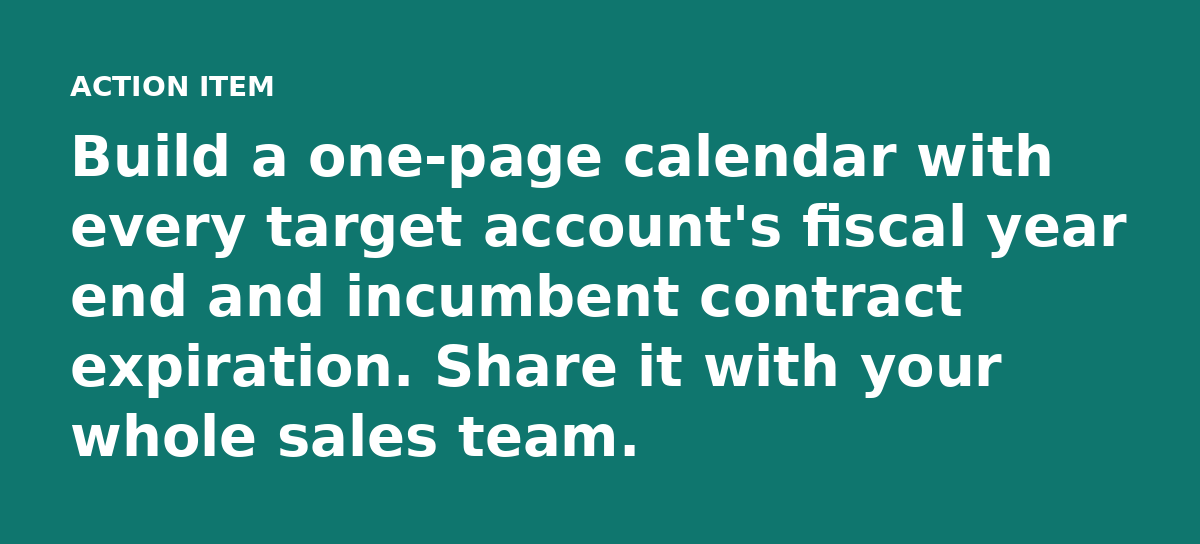
Government money runs on deadlines: the federal fiscal year ends September 30 and many states close their books at the end of June. Unspent funds often get pulled back, so agencies rush to obligate in the final quarter.
That creates two windows that matter more than any other. Late summer for federal buyers. Spring for state and local buyers. Your outreach calendar should follow those windows instead of your own quarter.
Also track contract end dates. A renewal decision made quietly in month eleven is almost impossible to break into. Get in at month six.
Step 6: Get Inside the Draft
Every solicitation starts as a rough idea inside an agency. You can influence that stage without breaking any rules. Procurement law protects your right to ask questions and share information.
Respond to Requests for Information and attend industry days. You can also request a capability briefing to show how your product handles the exact workflow the agency described.
What you cannot do is push for a spec that only your product meets or contact evaluators after the solicitation closes. Follow the agency’s stated contact rules to the letter. One sloppy email can get you disqualified.
Step 7: Cut Weak Leads Loose
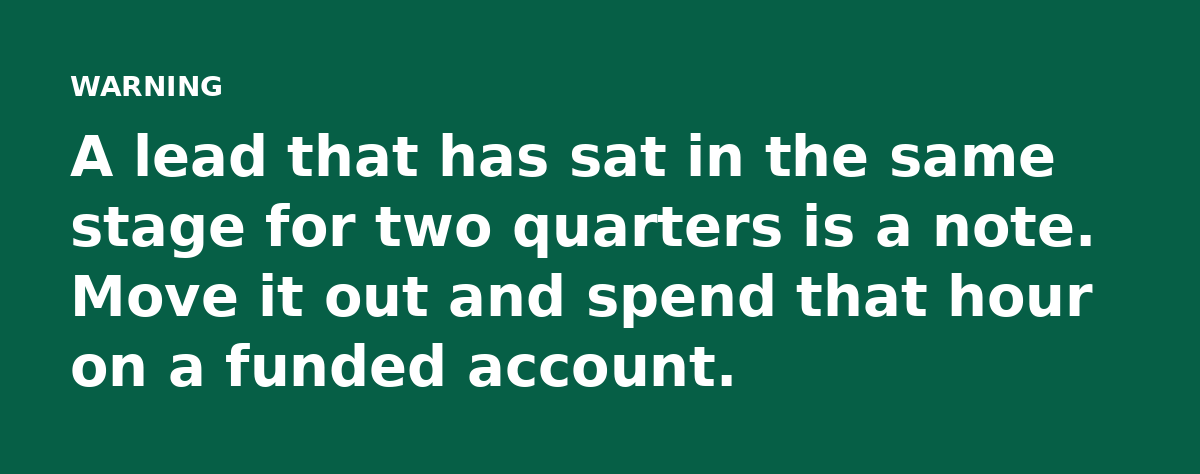
Most government pipelines are padded with hope. Kill any lead without a named owner and any lead where you have no legal path to sell.
A tight list of 40 scored accounts beats 400 names every time.
Your Move This Week
Open SAM.gov and pull the last 12 months of awards for one product category you sell. Note the agencies and the contract end dates. That single exercise gives you a scored target list in under two hours.
Then find one budget document for the highest-scoring agency and search it for your category. If the money is there, you have a real B2G lead generation starting point. If it is not, move to the next agency and repeat.
Need this run for you? See the outreach service.