Key Takeaway
Your top-of-funnel problem is a job-matching problem. AI sales tools handle list building and first-touch volume. SDRs handle messy replies and buying signals. Assign the work by task and prospecting gets cheaper without getting colder.
Why the AI sales tools vs. SDR debate starts in the wrong place
Most teams frame this as a replacement question. Can a machine do what a rep does? That framing loses money both ways.
Cut the reps and you get inboxes full of templated mail that buyers ignore. Keep reps doing pure list work and you pay a salary for copy-paste. The problem is the task split.
Top-of-funnel prospecting hides two very different jobs. One is mechanical and repeats while the other is situational and shifts with every account. AI is strong at the first and people are strong at the second. Blend them up and you waste both.
What AI sales tools actually do well
Automation wins wherever the work repeats.
- Building and cleaning lead lists at scale
- Sending first-touch sequences across hundreds of accounts
- Enriching records with firmographic and role data
- Flagging bounces and dead addresses before a rep wastes time
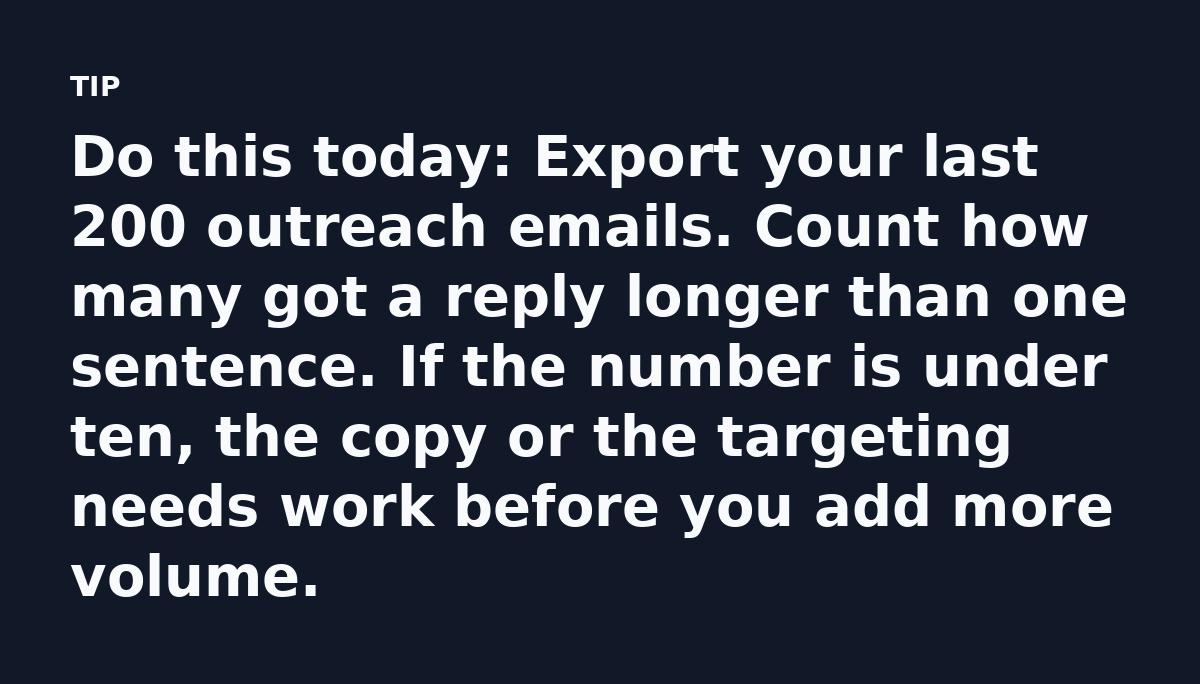
An SDR hand-building a 400-contact list spends a full day. A scraping and enrichment setup finishes the same list in under an hour with fewer typos.
The second win is filtering. A tool can score 800 accounts against your ideal customer profile and give a rep the top 60. Machines are excellent at pattern matching.
Where a human SDR still beats any tool
Reply handling is the first place AI folds. A prospect writes back with “not now, ping me after our audit.” A model logs it as a no. A sharp rep hears a timing cue and books a reminder for six weeks out. One of those two actions creates revenue.
Sales development representatives also catch signals a model does not understand, such as a prospect who switches jobs or someone who opens your pricing page five times in two days. A rep connects those dots in a note that sounds like a person wrote it.
Objection handling is the other gap. “We already have a vendor” is a routing problem. A machine hears a closed door. A trained rep hears an opening and asks who owns the contract renewal.
Define your terms once so the whole team works from the same page. An SDR is a sales development representative, the person who finds and qualifies new conversations. Your ideal customer profile is the account shape that historically converts best.
The handoff is where pipeline leaks
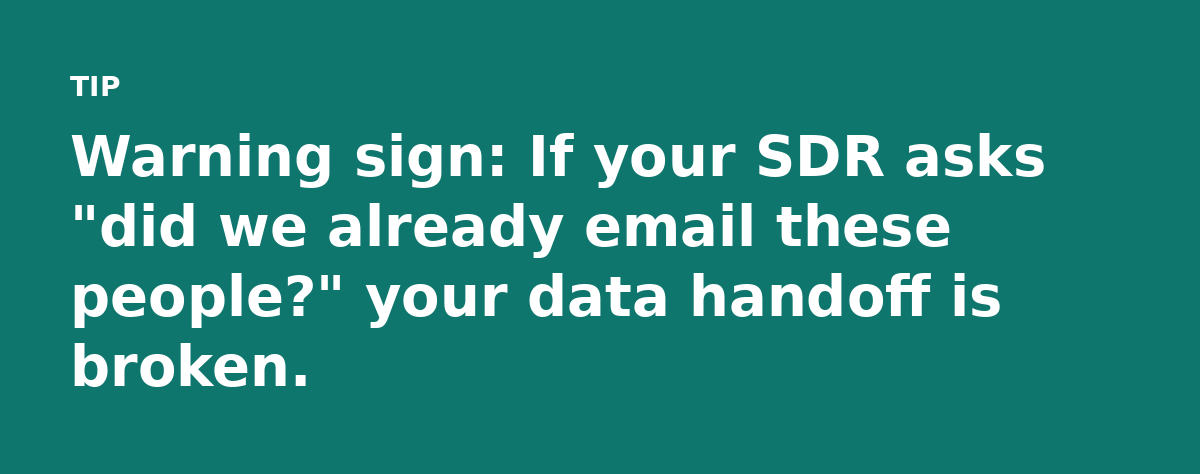
Most teams run AI and SDRs in separate lanes. The tool sends mail, but the rep never sees which accounts replied and calls the ones already burned. Two touches can land on the same annoyed buyer inside one week. Buyers who notice stop opening.
Fix it with one shared record: every automated touch gets logged and every reply gets tagged with a reason, whether that is timing or wrong contact. The rep starts each morning with a queue of only the contacts who showed a real signal.
The shared record also shows which sequences produce replies and which only produce noise.
A split that holds up in practice
For every 100 target accounts, let automation run the front. It sends the first touch and sorts replies into buckets. Then the rep takes the signaled ones and works them by hand, including the multi-threading into other decision makers.
A working ratio for many teams is one SDR supported by three to four live automated sequences. The rep is not buried in volume because the tool narrowed the list first. The tool stops at sorting, because the rep keeps the close-worthy replies.
The split holds as long as the tool never sends a second touch to an account the rep is already working by hand.
How to test it in 30 days
- Week one: pick 100 accounts and log every touch in one shared field
- Week two: let the tool send first touch and tag every reply by reason
- Week three: route only signaled replies to a rep and track meetings booked
- Week four: compare meetings per 100 accounts against your old process
Run the old process alongside the new one on a separate list. Without that baseline, a quiet week tells you nothing.
Watch two numbers. Meetings booked per 100 accounts and replies that turn into a real conversation. Cost per meeting follows from those. If meetings rise and cost per meeting falls, the split works. If replies rise but meetings do not, your targeting is off and more volume will not save it.
What to keep in mind
AI sales tools and SDRs cover different parts of the same funnel.
One move pays off fastest. Pick the single task your reps hate most, the one that repeats with zero thinking. Hand that to automation this month. Leave everything that needs a human read with the humans.
That one shift frees your reps for the work buyers actually respond to.
Read the full guide: AI or Hiring? The Straight Comparison Every Sales Team Needs