
The Short Version on Ramp-Up
A new cold caller in a new territory usually misses quota for the first few weeks. That part is normal. The trap is watching only closed deals, because a losing number hides a rep who is improving right now. Early cold call KPIs fix that blind spot.
Four numbers tell the story long before revenue does. Dials per day, connect rate, gatekeeper pass rate and meeting-set ratio. Watch those and you will know by week two whether the ramp is working.
Why Closed Deals Are a Bad Early Scoreboard
Say a rep starts on the first of the month and their first deal closes 45 days later. For six weeks the only visible number is zero, which proves very little about a new person on a new list. The sales cycle is simply longer than most managers want to wait.
Then there is the data problem. A veteran rep dropped onto a stale list can post a strong connect rate and still bomb. A sharp rookie working clean numbers can look hopeless while doing everything right.
Start With Activity, Not Results
Dials per day is the first cold call KPI to lock down. It is the one number a rep fully controls. If the target is 80 dials and they hit 55, that is a talk about calendar time, not about talent.
Watch the pattern across a week. Two heavy days and three light days tells you the rep calls only when they feel ready. Steady volume beats heroic bursts because it keeps the pipeline warm.

Connect Rate: Are You Reaching Humans?
Connect rate is the share of dials that turn into a live conversation.
The formula
Connect rate = live conversations ÷ total dials.
If a rep makes 200 dials and talks to 16 people, the connect rate is 8 percent. That is a healthy start for a fresh territory. Below 5 percent usually points at the list, not the script.
A drop from 9 percent to 4 percent between two weeks often means the rep burned through the easy numbers and moved into the hard ones.
Gatekeeper Pass Rate
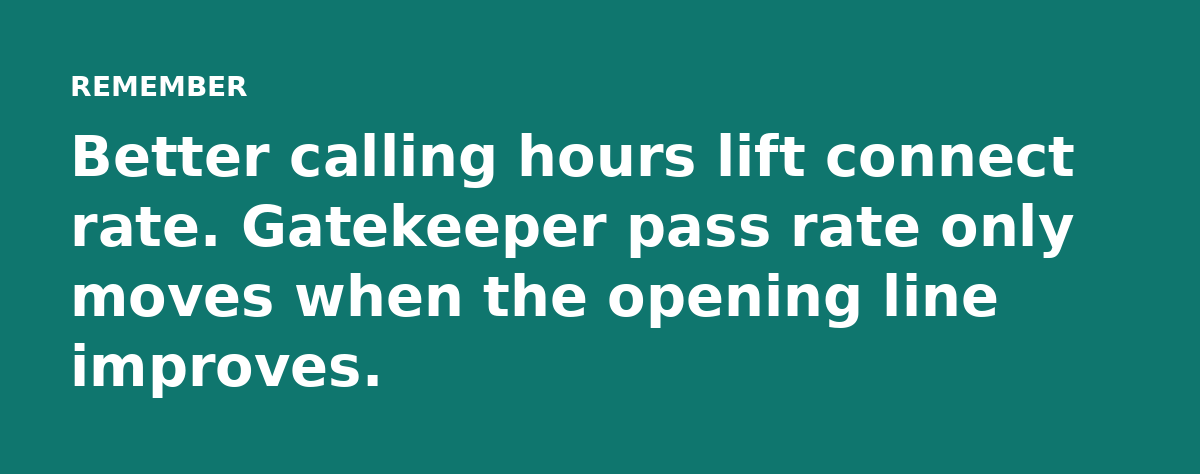
A connect is not a talk with a buyer. The gatekeeper pass rate measures how often a rep gets past the front desk or the assistant to reach the person who signs off.
The formula
Gatekeeper pass rate = decision-maker conversations ÷ live connects.
Suppose a rep connects 16 times and reaches a decision maker 6 times. That is a 37.5 percent pass rate. Track it apart from connect rate, because the two skills are different. Getting someone to pick up takes dialing. Getting transferred takes phrasing and a reason to be passed along.
Meeting-Set Ratio
Meeting-set ratio is the number of booked meetings divided by decision-maker conversations. It shows whether the rep can turn a real talk into a calendar slot.
The formula
Meeting-set ratio = meetings booked ÷ decision-maker conversations.
Six decision-maker talks that produce two meetings is a 33 percent ratio. That is strong. Twelve talks and zero meetings means the rep is chatting well but never asking. Listen to three recordings and you will hear it fast.
Reading the Cold Call KPIs Together
Each number points at a different fix. Dial count points at time management. Connect rate points at list quality and call timing. Gatekeeper pass rate points at the first few seconds. Meeting-set ratio points at the ask.
Here is a compact example. A rep has 60 dials, an 8 percent connect rate, a 40 percent gatekeeper pass rate and a 25 percent meeting-set ratio. That works out to about 4.8 conversations and 1.9 decision makers a day, which yields two or three meetings a week. Whether that is good depends on the goal, but now you can see exactly where it breaks.
Build a Baseline Before You Judge
You cannot read these numbers without a baseline. Collect one full week of raw activity before you set targets. New territories vary too much for benchmarks off the internet to mean much.
Five days of data is enough to spot a trend, but calling someone a win or a loss needs far more. Sit on your hands for a little longer than feels natural.
Read Direction, Not Level
A connect rate that climbs from 6 percent to 9 percent over three weeks says the rep is learning the map. A meeting-set ratio stuck at 10 percent for a month says the coaching is not landing.
Set one weekly check for the same day and the same numbers. Keep it to 20 minutes and ask what changed and what they will try next. The rep should leave with a single adjustment, not a speech.
When a Metric Stalls
When a metric stalls, change one lever at a time, because changing the list and the script in the same week teaches you nothing about which fix worked.
Keep It Simple
The point of tracking ramp-up is to split effort from outcome, because early figures reward the right behavior. That keeps a good rep from quitting in week three.
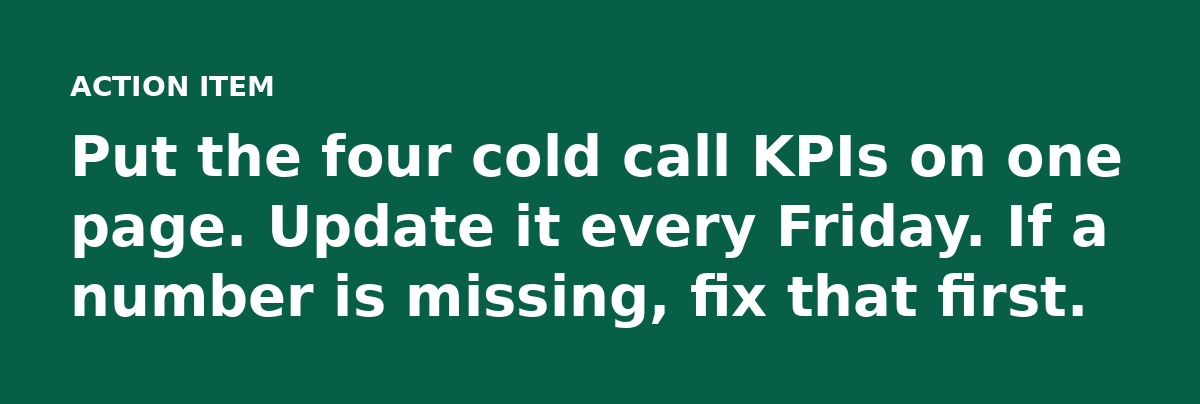
Pick your four cold call KPIs and review them with your rep every week. Coach the one number that drags.
Read the full guide: Appointment Setting Field Notes: How to Train for Cold Calls in a New Market