Key Takeaway
B2G lead generation borrows the vocabulary of commercial sales and then rewrites the rules under every word. A contact who looks ready to buy can sit for eighteen months, but a quiet program manager can move a purchase in six weeks. Match your process to the buyer.
Two pipelines that only look alike
Commercial lead generation rewards speed. You build a list of prospects with a problem and call before lunch.
The public sector moves on a different clock. Buyers spend against a fiscal calendar and a procurement rule book that someone else wrote years ago.
The leads are just as good, but the signals are different. Read them wrong and you waste a quarter chasing people who cannot sign anything.
Where B2G lead generation actually starts
Commercial lists come from databases and inbound forms. Public sector leads come from bid portals, budget documents, capital plans and conference sign-in sheets.
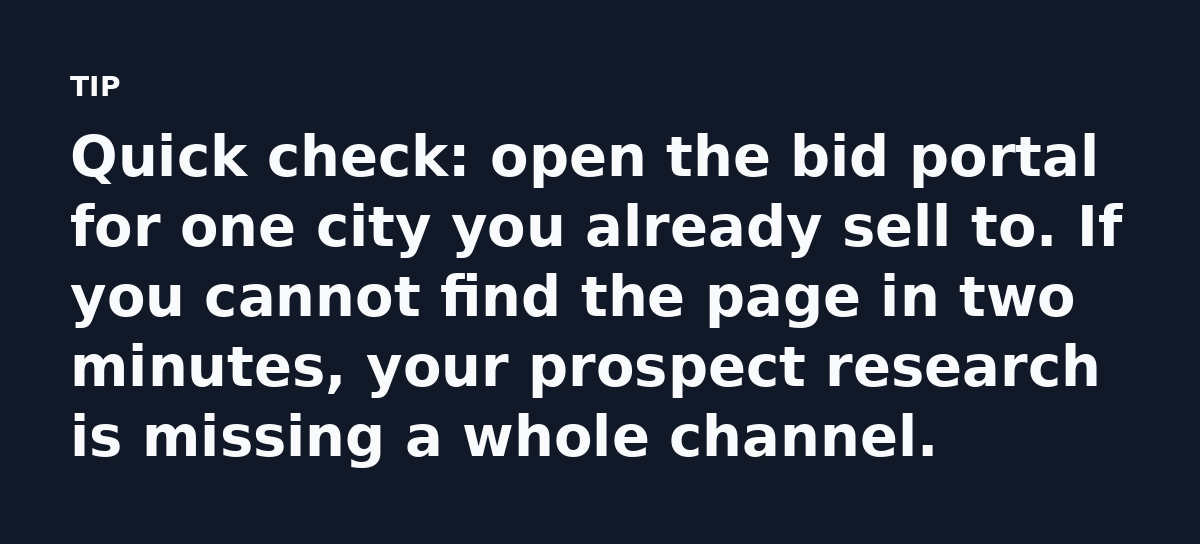
Many state opportunities run through a public bid board, according to public procurement records. A vendor who only watches social media never sees a single one of them.
Most state agencies and many school districts run their own version of that board. Learning where those boards live is the first real skill in B2G lead generation.
One word, two different jobs
Both sides call the same thing a lead. The meaning splits fast.
| Signal | Commercial lead | B2G lead |
|---|---|---|
| Source | Ads and forms | Bid notices and budget cycles |
| First reply | Same day | Often two weeks |
| Buying window | Any time | Tied to a fiscal year |
| Approver | One manager | A committee and a contract officer |
| Deal shape | Monthly subscription | PO or cooperative contract |
What a strong lead looks like on each side
In commercial sales a strong lead has a problem and a budget. A buyer who already had a rough experience with a competitor is an even better prospect.
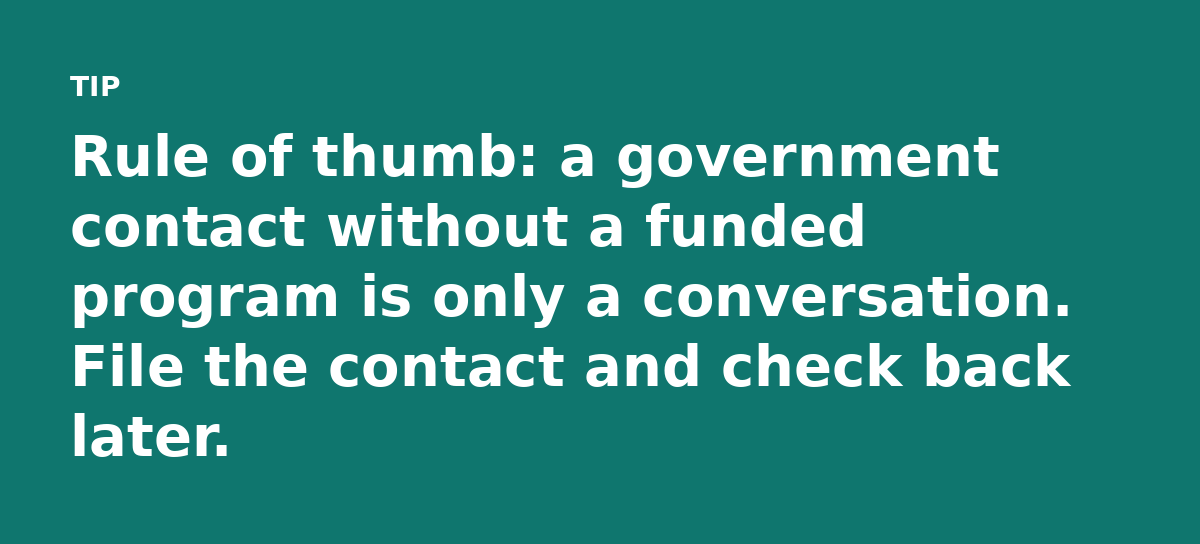
In B2G lead generation you add two harder questions. Is there a funded line item? Has the agency published a notice or a request for information?
If both answers are no, the contact has an opinion but no purchase order.
The objection that kills most B2G plans
Many owners worry that government takes too long to be worth the effort. A bid posted in March can stall until the next fiscal year. That is half true and completely fixable.
Slow cycles punish vendors who restart every quarter. They reward the ones who plan around them.
Treat B2G lead generation as a garden. Most of the work happens before anyone asks for a price.
Build for the window, not the quarter
Capital plans and grant awards all leave a paper trail. Read those documents and you know next year’s projects this year.
Your competitors call procurement officers in spring. You called the program manager back when the idea was a line in a draft document.
What to do with this on Monday
Pick one agency you already serve. Spend forty minutes on four tasks.
- Open its budget document and search for the phrase “capital improvement.”
- Pull the last two years of bid notices and look for repeat vendors.
- List the program managers named on those projects, not the buyers.
- Set a reminder to check the portal the first week of every fiscal quarter.
Measure the numbers that matter
Count contacts tied to a live program rather than raw email addresses. A list of 40 program managers matched to funded budgets beats a list of 4,000 generic government inboxes.
Watch reply rates by agency type and how many leads turn into a bid invitation. Those two numbers tell you if your B2G lead generation works long before revenue shows up.
The one thing to fix first
What you need is one name attached to one funded program.
Do that twenty times and you have a public sector pipeline that survives a slow quarter.
Need this run for you? See the outreach service.