
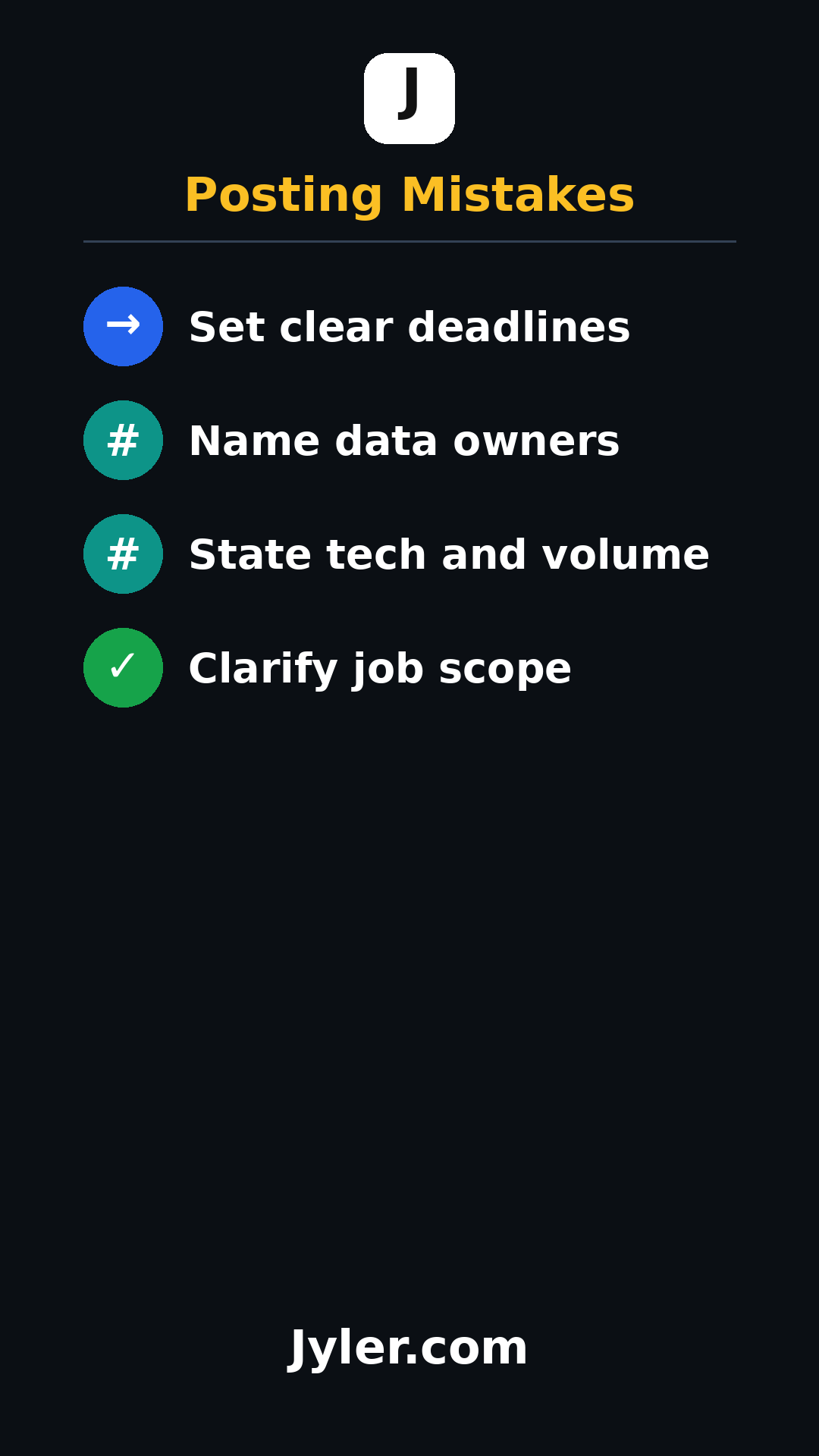
Executive Summary
Plenty of bookkeeping and accounting postings list financial reporting under duties and stop there. That phrase tells a candidate almost nothing, so they guess what the job is. The cost shows up in the first 90 days: a close that slips past the 10th business day and a hire who needs a full quarter before they carry real weight.
Below are five mistakes owners make with that line item, plus wording you can paste into your posting and edit for your own business.
What the phrase is hiding
Two postings can both say financial reporting and describe completely different jobs.
One is a bookkeeper at a six-person property management company who closes the month by the 5th business day and reconciles two bank accounts. The other is a staff accountant at a 200-person manufacturer who consolidates three entities and delivers a variance bridge to the CFO by day 6.
Good candidates read between those lines and price your company accordingly, so some of them decline.
Mistake 1: You wrote a category, not a deliverable
“Responsible for financial reporting” is a label. Labels are invisible at interview time because everyone fills them in differently.
A deliverable has a name and a due date: a monthly close pack by the 5th business day. A 13-week cash forecast, which covers 91 days and tells an owner whether payroll clears in four months or not.

Mistake 2: You never said who supplies the raw numbers
A large share of month-end work is waiting on other people. Someone has to hand over the payroll journal and the loan statements. Someone else owns the sales export.
Write the feeds down by name and name the owner of each one. A close that needs a chase every month is a staffing problem and you can fix it in the posting rather than in a performance review.
Mistake 3: The source systems stayed unnamed
Financial reporting says nothing about the software: QuickBooks, Xero, Sage Intacct and NetSuite all produce a profit and loss statement. What differs is how much arrives already imported before a human touches it.
In a small business, bank feeds plus an app like Ramp or Bill may handle most transactions, so the job is review and reconciliation. In a mid-market company, the job is building the consolidation and mapping the ERP and someone with only small business experience will stall there for months.
State the system and the entity count. Monthly transaction volume is the honest number: nine hundred transactions a month is a review job, ninety thousand is a rules and automation job.
Warning
Never post a job that says “some QuickBooks experience” when your books are actually in an ERP. You will interview for a different role than the one you need filled and you will pay for it twice.
Mistake 4: No accuracy standard and no reviewer
If nobody reviews the report, mistakes sit there quietly until the bank balance stops matching the books. That conversation gets expensive fast.
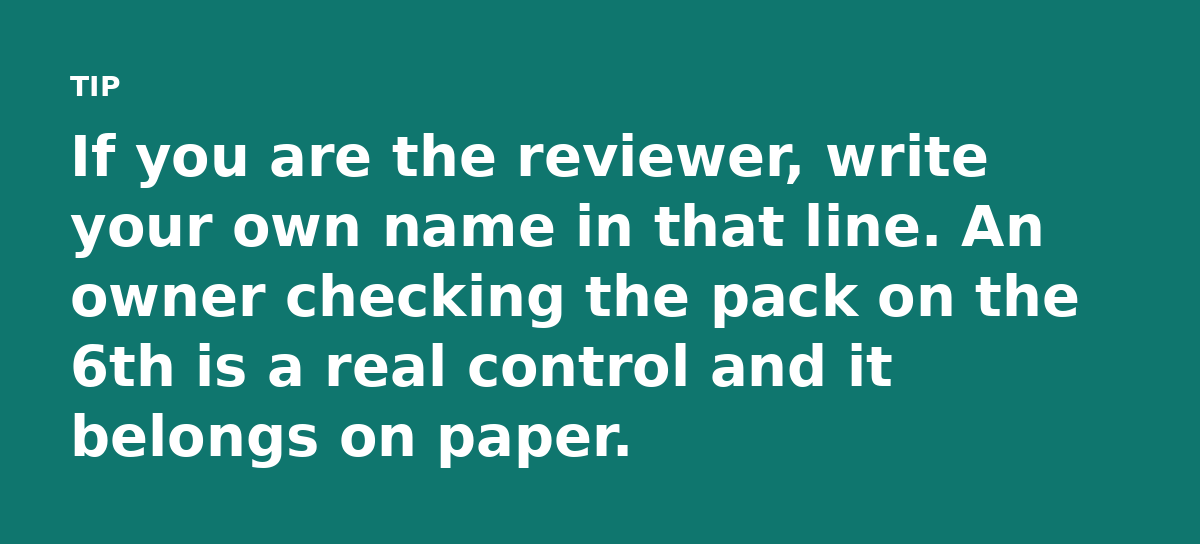
Give the tolerance and the review path. Bank accounts tied out to the penny on the last business day. Every line on the P&L traceable to a schedule someone can produce on request.
Mistake 5: The close deadline was never set
Many small and mid-size companies target a close within five to ten business days after month end. Some hit the 5th. Others drift toward the 15th and call it fine right up until someone asks a question the books cannot answer.
Pick a date, write it into the posting and check it during the first 60 days. The first month-end is a stress test, so run it like one.
Wording that replaces the label
Here is a responsibilities block you can drop in and edit.
- Owns the monthly close for two entities and delivers a close pack by the fifth business day.
- Reconciles two operating accounts and the corporate card each month with a documented tie-out.
- Maintains a 13-week cash forecast, refreshed every Friday and circulated to the leadership team on Monday morning.
- Prepares the monthly P&L by department plus a written variance note for any line more than 5% off budget.
- Owns the AR aging and follows up on invoices past 60 days.
- Answers finance questions from the operations team within one business day.
Six named items tell a candidate what the first 90 days actually look like. They also give you a scoring sheet for the interview instead of a feeling.
Questions that expose the gap in a posting
Ask these in the interview and listen for specifics.
- Walk me through your last month-end close. Which day did the bank tie out?
- Show me a variance explanation you wrote. Who read it and what did they change?
Your list for this week
- Pull the last three finance postings you ran. Circle every vague noun and attach a deliverable plus a date to each one.
- Ask whoever handles the books now what they produced last month. Write down the actual file names.
- Set one close date and put it in writing.
- Publish a reporting calendar: daily bank check, weekly forecast refresh, monthly pack, quarterly review.
The one thing
If a candidate cannot tell from your posting which report lands on whose desk and on which day, the posting is not done.
Name the system and name the close date. That edit takes about ten minutes.
Watch the 30 second summary
Video transcript: Define specific deliverables with due dates, like a close by the 5th business day. Specify who must supply key items like payroll, loan statements, and sales exports. List your software, entity count, and monthly transaction volume for clarity. Be explicit about whether you need a bookkeeper or a higher-level accountant.