
Nobody tells you the price up front. They tell you about the strategy call.
Here is the honest version. When a business owner pays for a done for you content writing service, six decisions decide whether the money returns anything. You make all six before the first draft lands and most buyers make two of them.
Executive Summary
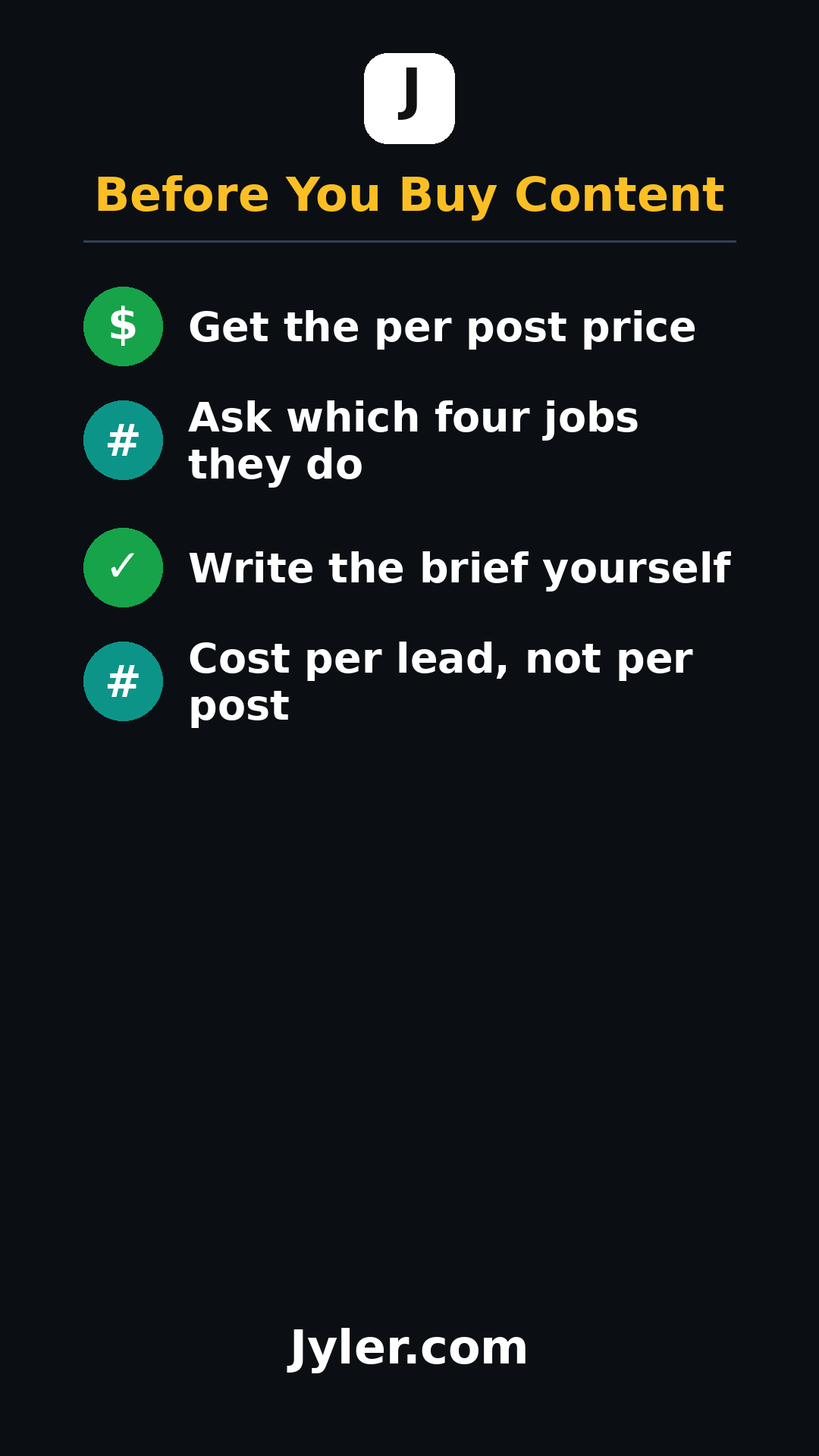
The real cost of outsourced content is the total monthly spend divided by the number of leads that content sourced. Get that number before you sign. Everything else in this guide is a step you take to control it.
Step 1: Price the work in writing
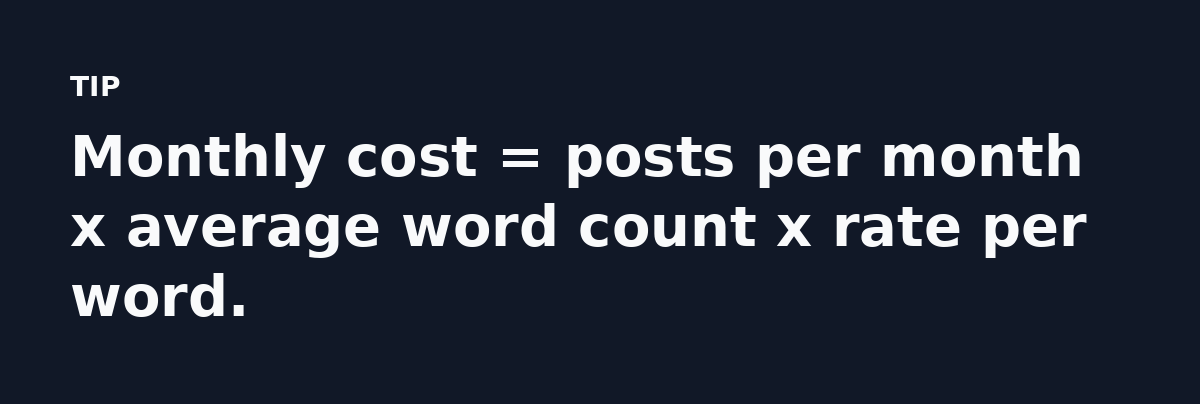
Get a per-post number in writing before you get into a retainer. A 1,200 word B2B post lands somewhere between $600 and $5,000 depending on who writes it. Freelancers sit at the low end. Agencies that include original research sit at the high end. That spread is real and it is worth about eight times.
Do the math with a calculator, not in your head:
Now run the same math on hiring. A content manager at $85,000 salary lands near $110,000 once you add tools, software and management time. That is about $9,000 a month, which buys six decent posts. If you only need four posts a month, outsourcing costs you less and takes about three hours of your week to brief and review.
Step 2: Find out how many of the four jobs they actually do
Content production splits into four parts. Research and briefing. Drafting. Editing. Publishing and distribution.
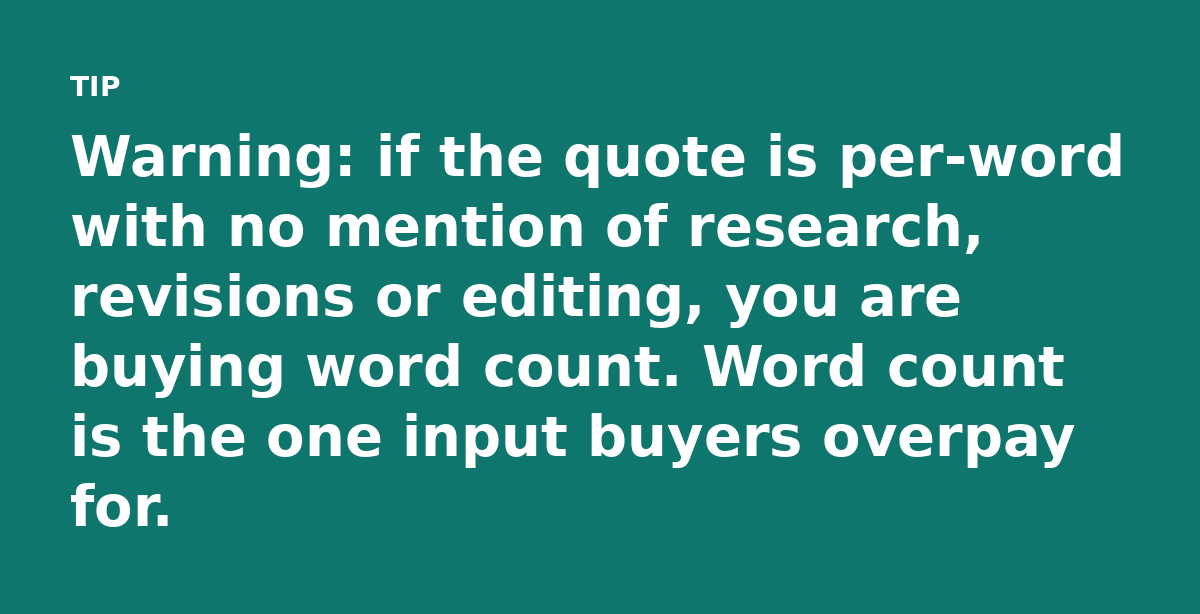
Most cheap vendors do only the second one. You hand over a topic, they hand back 1,200 words and the post reads like it was assembled from the top ten results. Ask which parts are included, in writing and get it in the proposal.
A writer who researches the topic and finds an original number will outperform a cheaper writer every time. The post is the cheap part. The thinking is the expensive part.
Step 3: Write the brief yourself
This is the step that saves the work. A vague topic gets a vague post. A brief gets a usable post.
Fill in these five fields for every piece:
- The person reading it. Job title and industry, not “business owners.”
- The exact question they typed into a search box.
- The proof you will supply. A number, a customer result, a screenshot of your own data.
- The one action you want them to take next.
- The word count and the deadline.
Here is a real one. Reader: operations manager at a 40 person manufacturing company. Question: how do we stop our sales rep from rekeying orders into the accounting system. Proof: our client’s cut rekeying errors from 12 per month to 0 after an integration. Action: request a 20 minute call. Length: 1,100 words.
That is thirty minutes of your time. It is the highest leverage thirty minutes in the whole process.
Step 4: Set the acceptance test before they write
Agree on what “done” means while nobody is emotionally invested. Four rules work for most B2B writing:
- The post answers the title question inside the first 100 words.
- It contains at least one number only you could know.
- Every claim links to a source that is not the same page.
- Two revision rounds are included. A third costs money.
Also name what gets rejected. Statistics with no source go straight back. Generic advice about “growing your business” comes out. If you do not name the failure modes, you will get them anyway.
Step 5: Lock a cadence you can survive
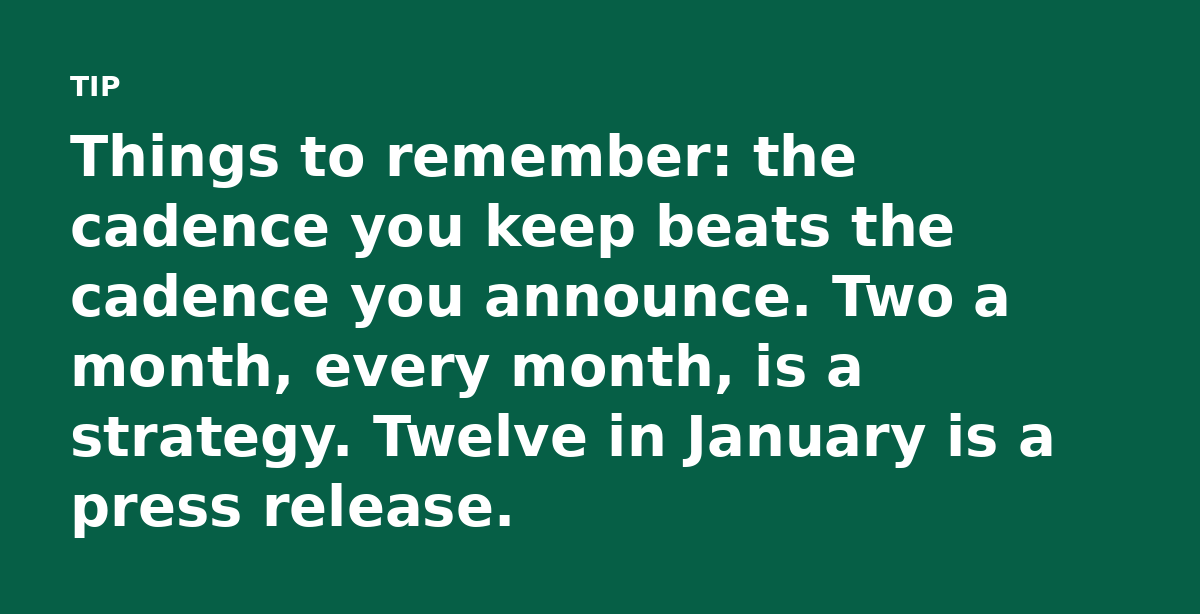
Eight posts in three weeks then nothing for five months is worse than two posts a month for a year. Publishing rhythm teaches search engines when to check you and teaches your sales team that the blog is alive.
Pick the number you can keep on a bad quarter. For most service businesses that is two. Batch the work: brief all four in one sitting, review on one afternoon, forward to your CRM on the same day.
Step 6: Measure leads, not page views
Traffic numbers will make you feel good and tell you nothing about return. Set up one spreadsheet with five columns: post URL, publish date, form fills, leads and revenue closed within ninety days.
Then calculate the only number that matters:

Spend $4,800 a year and pick up nine leads from content. That is $533 a lead. Compare it to what a paid lead costs you today. If content is coming in at half, keep it. If it is coming in at three times, the problem is almost always the brief, not the writer.
Give it ninety days minimum before you judge. Anything shorter is guessing.
Red flags worth walking away from
- They will not show you a full sample written for a business in your industry.
- The writers will not name themselves or their bylines on the post.
- No revision policy appears anywhere in the contract.
- They promise page one rankings. No one can promise that.
- Turnaround is quoted in hours with no review step built in.
One thing to do next
Open your analytics and find the last six pieces of content that started a real conversation. Sales call, email reply, demo request, anything with a name attached to it.
Write down what those six had in common. One of them will have a real number in it. One will answer a question the customer actually asked out loud. That observation is your brief and it costs you an hour to find.
Everything above is downstream of that hour.
Watch the 30 second summary
Video transcript: A 1200 word B2B post runs anywhere from about $600 to $5,000. That spread is real. Get a per post number in writing before you sign a retainer, and run the math on a calculator. Content splits into research, drafting, editing, and distribution. Most cheap vendors only draft. Ask in writing which parts are included. The thinking is the expensive part. A vague topic gets a vague post. Fill in five fields: the reader, the question they actually typed, your proof, one action you want, and the word count with deadline. The real cost is total monthly spend divided by leads the content sourced. Get that number before you sign. A $9,000 hire yielding four posts a month may not beat outsourcing.