Key Takeaway
A $30,000 monthly lead generation retainer buys a process. Define a qualified lead in writing before you hire anyone. The brief decides the result more than the budget does.
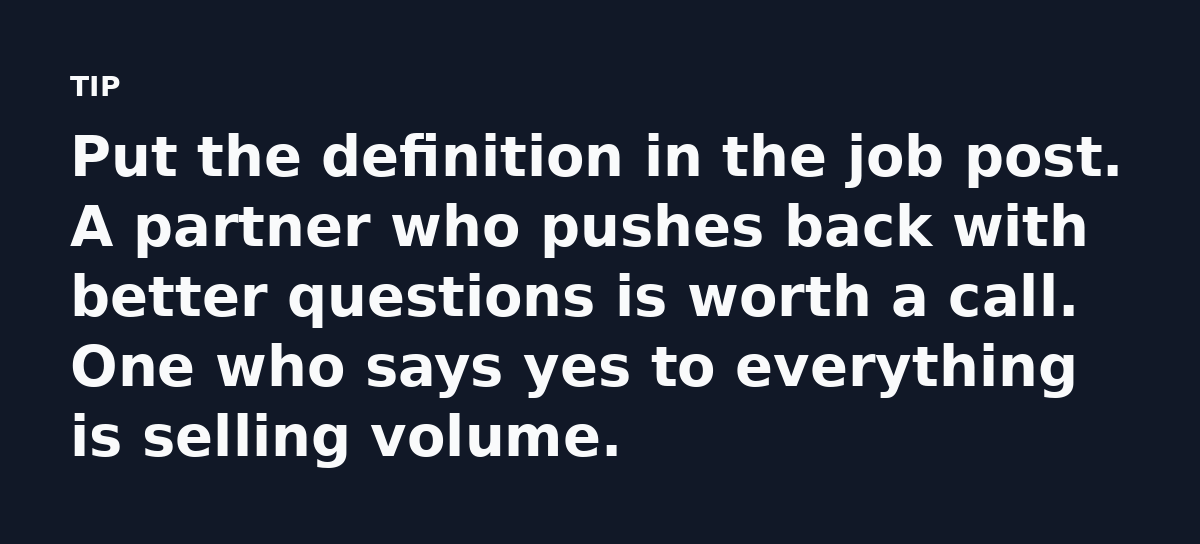
According to public reports, a job ad offered $30,000 a month for lead generation. The only quality bar was two words: hot leads. That brief fails before the first call.
The pattern repeats. A company wires a big retainer and then wonders why the sales team ignores the names it paid for.
Lesson One: Hot Is a Mood. Qualified Is a Definition.
Ask two salespeople what a hot lead is and you get two answers. One wants a booked meeting with a manager. The other wants any reply from a company with budget.
Both answers can be right, but neither is written down. That is the problem.
Write this down: a qualified lead has a named problem, a budget you can check, a decision date and a person who can sign. Remove one and you have a contact. Contacts are cheap. Qualified leads cost real money.
A 20-minute test
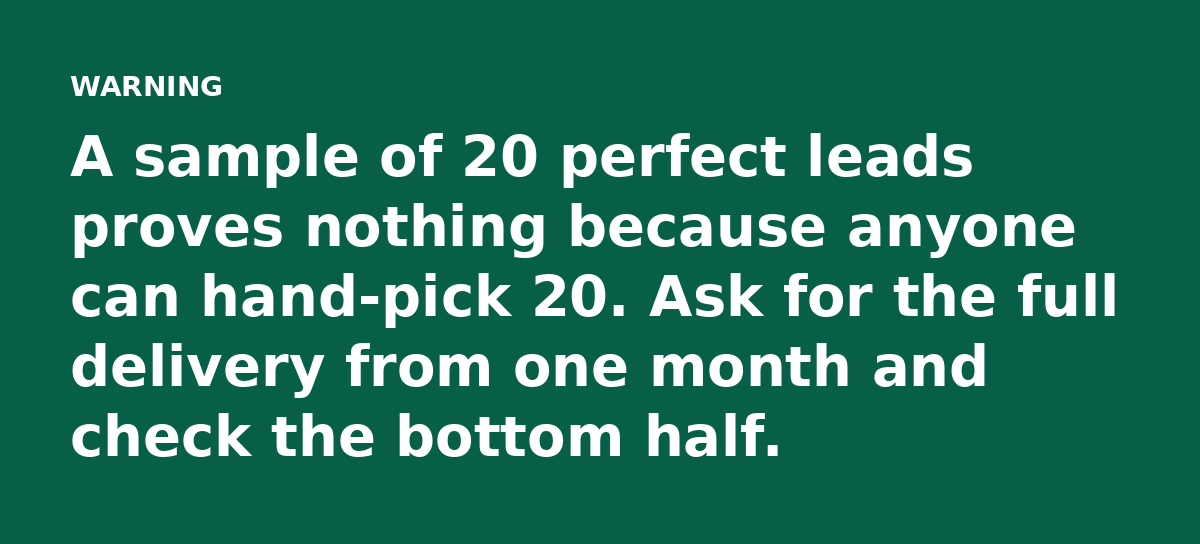
Take the last 20 leads your sales team loved and list what they had in common. That list is your definition. Now take the last 20 they ignored. That list is your disqualifier.

Lesson Two: The Number in the Contract Becomes the Product.
Pay per lead and you get leads. Pay per meeting and you get meetings.
Do the math on cost per qualified lead
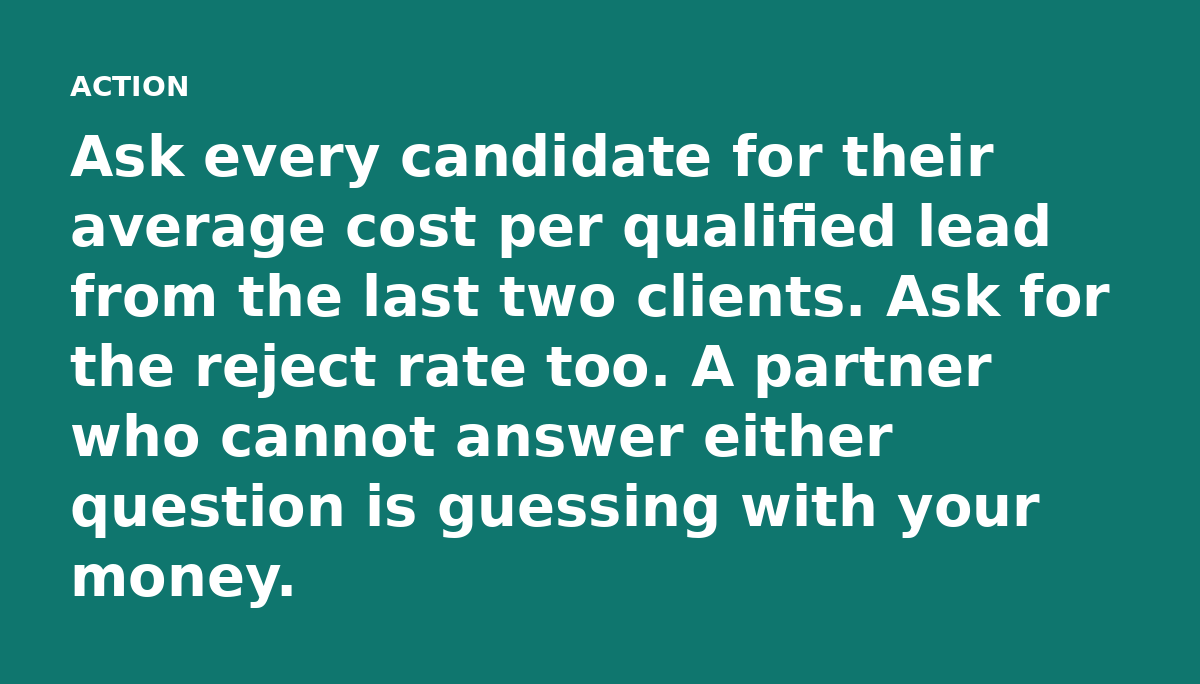
Use one number to compare every proposal: cost per qualified lead. The formula is total spend divided by qualified leads.
A $30,000 retainer that produces 10 qualified leads costs $3,000 each. The same retainer at 60 qualified leads costs $500 each. Same check. Different business.
Lesson Three: Cheap Lists Cost More Than Retainers.
A scraped list of 10,000 emails costs less than lunch. It can also get your sending domain blocked in a single afternoon.
Email providers watch bounce rates and spam complaints. One bad send can damage deliverability for months.
Cold outreach still works. A relevant message to 200 named accounts beats a generic blast to 20,000 strangers.
Lesson Four: Ask for the Rejects.
Every lead gen partner has a reject pile. Ask to see it.
Good partners keep notes on why a lead was thrown out: wrong title, no budget, competitor or student. The reasons tell you more than any sample list.
If the reject pile does not exist, the partner is forwarding leads without qualifying them.
Lesson Five: Pilot First. Wire Money Later.
Start with a two-week pilot. Set a fixed number of qualified leads and a price per lead, then pay on delivery.
Before the pilot starts, agree on the walk-away number. If the partner misses it, the deal ends, with no long contract and no sunk cost trap.
Track two numbers during the pilot: reply rate and meeting show rate. Both expose quality faster than a spreadsheet of names.
The Lead Generation Brief That Works
Use this checklist before you post a job or sign a contract.
- Lead definition: the four things every lead must have.
- Disqualifiers: titles and company signals that are an automatic no.
- Delivery: the format and the fields you need.
- Quality check: who confirms a lead is valid and how disputes get settled.
- Payment: what triggers an invoice and what triggers a refund or replacement.
- Exit: notice period and data ownership when the deal ends.
One bad month can bring 400 names and two meetings, with the retainer gone by week three.
Your Next Move
Write a one-page lead definition this week and send it to every salesperson who will touch the leads. Ask them to mark it up.
Their markups will show you where the definition is vague.
Do that before you wire $30,000.