

The Short Version
Budget SEO article writing fails for one reason. The writer never learns what the reader came to find. Fix that and a $60 post can beat a $300 post. Here are seven rules that decide whether your content ranks or sits in a folder forever.
Google handles billions of searches every day. According to Ahrefs, a study of a billion pages found that around 90% of them get no traffic from Google at all.
1. Start With the Search Intent
A topic is “email marketing.” Search intent is “how do I write a welcome email that people open.” Those are two different jobs.
Before you hire anyone for SEO article writing, write down the exact query you want to win. Then list what the top three results have in common. If two of them are step-by-step guides and you ordered a think piece, you ordered the wrong thing.
One client wanted to rank for “invoice template.” Their writer sent 2,500 words about the history of invoicing, with no template and no downloads. It never ranked.

2. The Brief You Send Sets the Ceiling
Cheap writers are often working blind. A one-line brief produces a one-line effort.
Send the target query and two competitor URLs, with a note on what each competitor misses. That note is where the win hides.
You can buy ten articles for the price of one agency retainer and still come out worse if every brief is vague.
3. Pay for Research
Word count is easy to measure and easy to fake. Filler sentences run long with no cost to the writer.
A stronger measure is sources per article. Ask for at least two real citations and a number the reader can trust. If the draft has none, you paid for padding.
Here is a simple test. Delete every sentence that could appear in any company’s brochure. What is left is your article.

4. Editing Is Where Budget Content Wins
Writing fast is cheap. Editing well is what makes fast writing usable.
Set aside a basic review pass. Cut the first paragraph if it warms up instead of delivering. Fix the intro so the reader gets value by line three.
5. Place Keywords Where They Actually Count
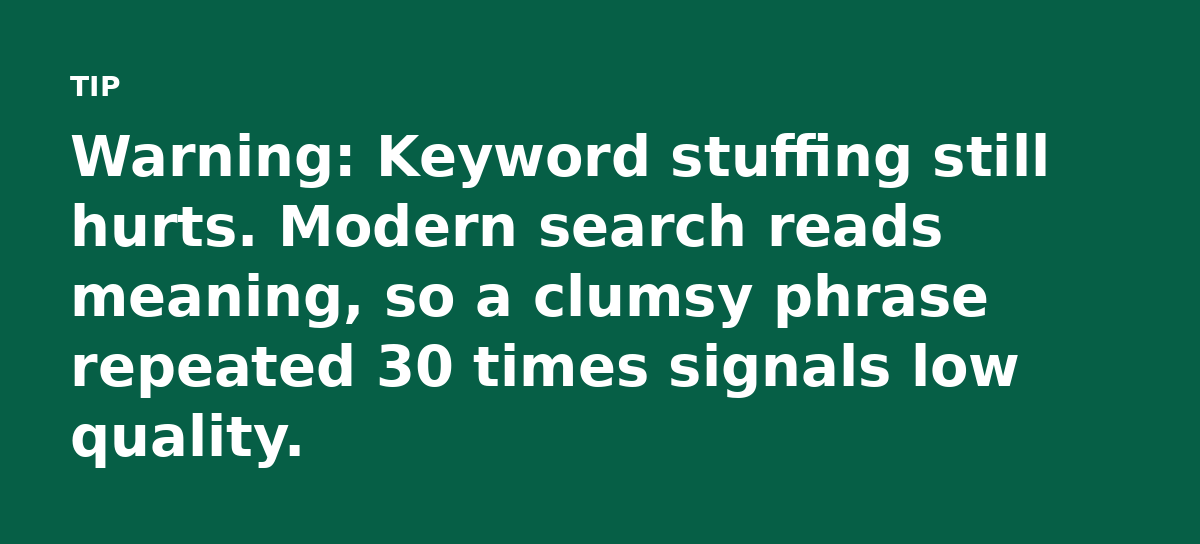
You do not need the phrase 40 times. What matters is where it appears.
Put your focus phrase in the title, the first 100 words, at least one subheading and the meta description. Then write the rest for a human.
Read the draft out loud. If a phrase trips your tongue, a reader will stumble too.
6. Link Old Posts to New Ones
Every new article should point to two older pages on your site. Every older page can slowly point back to the new one when you refresh it.
This costs nothing. It also tells search engines which pages matter to you. A blog with 40 posts and zero internal links is 40 strangers standing in a room.
Spend ten minutes after publishing adding two links from related posts.
7. Measure Rankings
A delivery of 12 articles means nothing if none of them rank. Track position for your target queries and organic clicks.
Give each article 60 to 90 days. Search needs time to test a new page. If nothing moves after three months, the intent was wrong or the page is too thin.
Then fix the weakest part. Change the title if clicks are low. Change the format if the page ranks but nobody stays.
Your Action Plan
Pick one query you want to win this month and write the intent in one sentence. Send a brief with two competitor URLs and one clear gap.
When the draft lands, edit before you judge it. Add two internal links and watch the ranking for 90 days.
Affordable SEO article writing means buying the right work at a fair price.
Watch the 30 second summary
Video transcript: Before hiring anyone, write down the exact query you want to win. A topic is not search intent, and they are two different jobs. A one-line brief produces a one-line effort. Send the target query plus two competitor URLs and note what each one misses. Word count is easy to fake. Ask for at least two real citations and one number the reader can trust. No sources means padding. Writing fast is cheap. Editing is what makes it usable. Cut any opening that warms up and give value by line three.
Need this run for you? See the writing service.