Executive Summary
Every content writing service shows you its best five samples. That portfolio tells you almost nothing about the work you will actually get. A proper audit takes about two hours and uncovers the truth: order one paid test piece, then call two real clients. Do these two things and you stop guessing before money changes hands.
Why Most Portfolios Are Useless
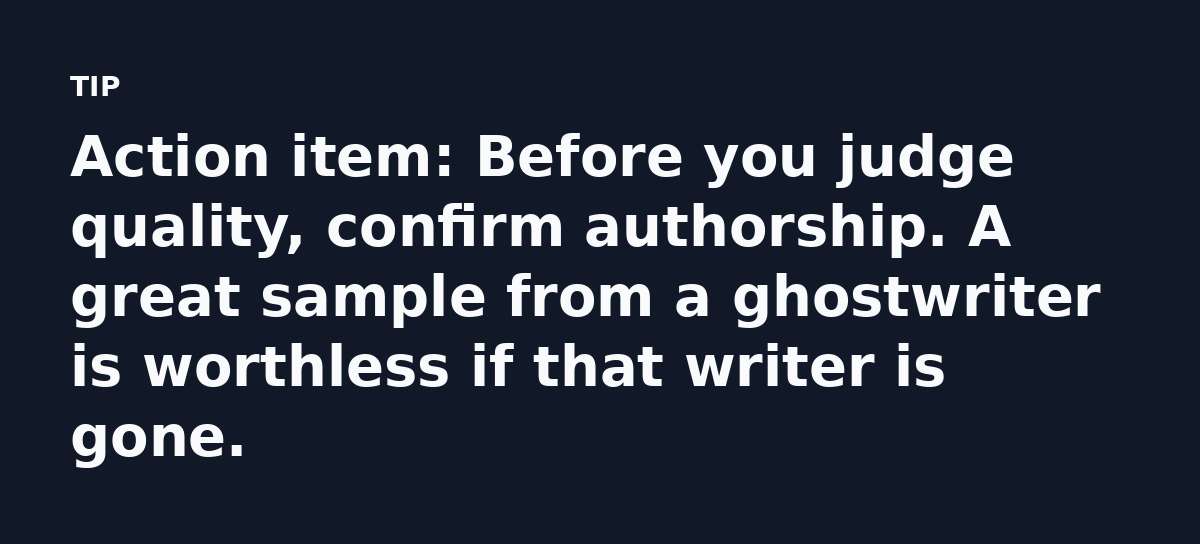
An agency picks its portfolio. You don’t. Those glossy samples might be written by one senior writer who left the company two years ago.
Here is the number that matters: only about 3 in 10 portfolio samples are written by the people who will handle your account. The rest get rewritten by an editor or borrowed from an old client nobody can name.
Ask one question on your first call. “Who wrote sample number two and can I speak with them?” Watch the hesitation. It tells you more than the sample ever will.
Read Samples Like an Editor, Not a Customer
Customers skim, but editors hunt for specific things. You need the editor’s skill set.
Open a sample and search for the company’s own name. Count how many times it appears. If the brand shows up 14 times in a 700-word post, the writer is selling to you. That pattern repeats across every future article.
Next, look at the first two sentences. Do they contain a number or a concrete situation? Or do they warm up with a soft intro? A writer who buries the point in paragraph five will do it to you.
Check the sources. A single unsourced claim about market size means the writer guessed. Guessing scales badly when you publish 20 posts a month.
Four things to scan in every sample
- The first line. Does it deliver value fast or stall?
- The brand mentions. More than three is a sales pitch.
- The sourcing. Named studies or vague “experts say”?
- The ending. Does it give one clear next step or just trail off?
The Paid Test Article Is Non-Negotiable
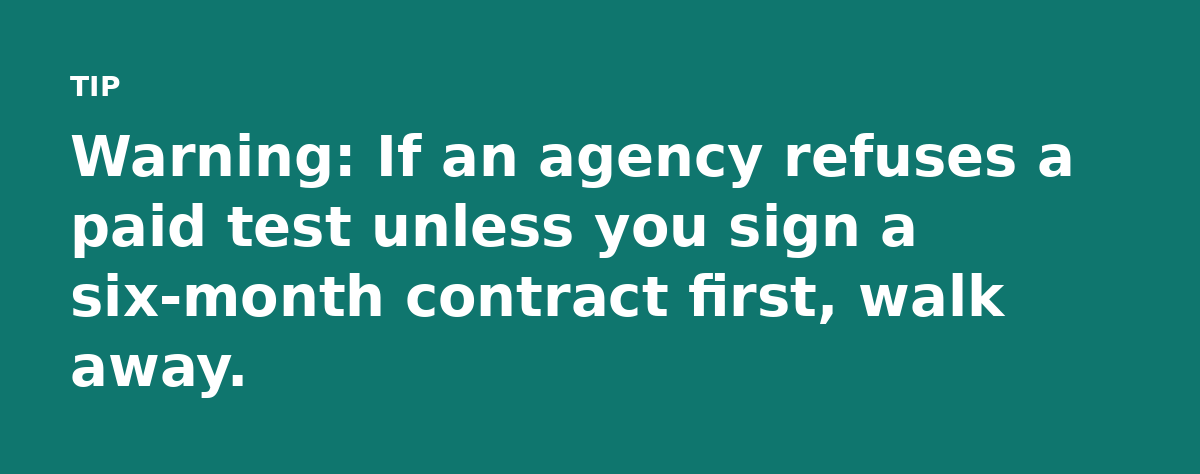
Free test articles are traps. A writer spends three hours on the free piece and 30 minutes on your real ones. You pay for the real effort.
Pay for one article at your normal rate. Pick a topic the writer cannot fake with general knowledge, something with numbers or a specific audience.
Give them the same brief and deadline window you would give a full-timer. Then measure two things: did they hit the deadline and did they follow the brief.
A writer who submits without asking a single question is guessing. A writer who sends two clarifying notes is working.
Call Two Real Clients, Not the Logo Wall
A logo wall proves nothing. Ask for two clients they wrote for in the past six months.
Then call those clients. Keep it to four questions and listen for tone, not just words.
- Did the agency ask questions before writing or just start?
- How did they handle a rewrite request?
- What broke in the first 90 days?
- Would you hire them again with your own money?
The last question carries the most weight. People defend a decision they already made. Ask if they would spend their own cash a second time and the honest answer slips out.
Red flags that show up fast
- They cannot name a client from the last year.
- Every reference is a former employee.
- The people on the sales call never appear again.
- Their turnaround promises shrink once you ask for specifics.
Test the Process, Not Just the Writing
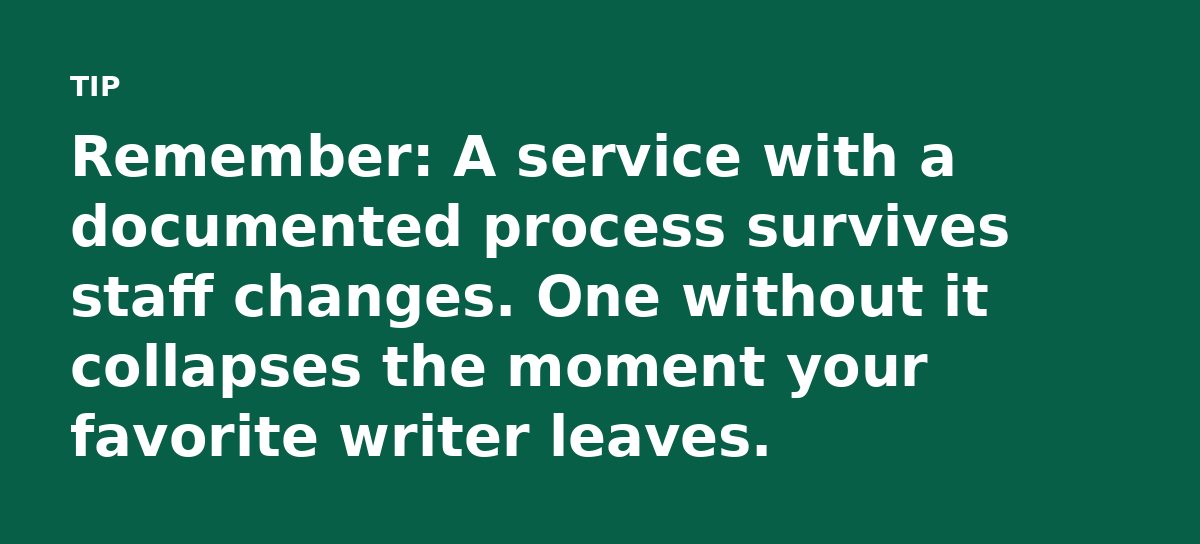
Good writing is a symptom and good process is the cause. You are buying a system that keeps producing after month three.
Ask how many rounds of edits are included and who checks facts. Ask what happens when your account manager quits, because someone will.
Request the style guide they use for another client, so you can see whether a real process exists on paper.
Score What You Found Before You Decide
Grade each part out of five: samples, test article, references and process. Anything scoring a two or lower is a hard stop, no matter how good the sales pitch felt.
Total the four scores. If you land under 15 out of 20, keep shopping. The content budget you save beats the headache of fixing bad posts for a year.
What to Do Next
Start with one paid test article this week about a real topic from your own content calendar.
If it passes, call the two references. If it fails, you lost only the price of a single article.
Read the full guide: 7 Things Nobody Tells You About Hiring a Website Content Writing Service