Key Takeaway
A done for you content writing service shows you its weak spots before you pay anything. The bad ones hide behind thin contracts and samples that all sound the same. Compare what they say against how they actually work and you can spot the wrong hire in one call.
Two Quotes at the Same Price, Two Different Products
Two shops quote you $200 for a 1,200-word article. Same word count. Same deadline. One assigns a writer who spends two hours studying your buyer and one competitor. The other opens a template and drops in your brand name.
The invoice looks identical. The finished file does not. Price alone will never tell you which shop you are talking to.
Red Flag 1: The First Call Is Pure Sales
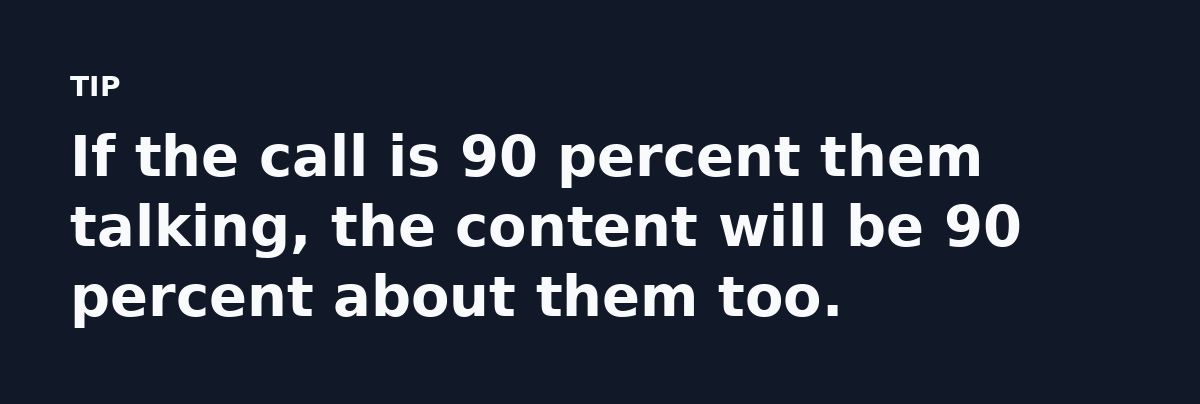
Watch who asks the questions. A bad service spends the call telling you about their process and their awards. You hang up knowing nothing new about your own market.
What a real service does instead
It asks what your buyer typed into Google the day before they found you. Then it asks which page already brings in leads. A sharp service turns that into a rough topic list on the call itself.
Red Flag 2: No Contract, No Scope
“We will sort the details later” is a promise to sort nothing. A real done for you content writing service puts numbers on paper before you pay.
Look for word counts, revision rounds, delivery dates and a kill fee. A kill fee is what you owe if you cancel a piece mid-flight. It protects both sides.
No document means no way to prove a missed deadline or a half-finished job. You pay on trust with nothing to fall back on.
Red Flag 3: Every Sample Sounds Like Everyone Else
Ask for three samples. Read the first sentence of each out loud. If you cannot tell which client each one belongs to, the writer has one voice and reuses it everywhere.
Strong samples carry specific details. A number or a real objection a buyer raised. Generic samples mean generic output for you.
Red Flag 4: “Unlimited Revisions” With No Finish Line
Unlimited sounds generous. In practice it means the writer never commits to getting it right the first time. You become the editor.
A clean offer names the number of rounds. Two is normal. Four is generous. Anything unlimited usually hides a writer who expects you to do the fixing.
Red Flag 5: They Never Ask About Your Buyer
Content fails when nobody knows who reads it. If the service never asks about your customer’s job or budget, they write for a search engine and hope.
Here is the test. Ask them to describe your ideal buyer in one sentence. A real service already can. A bad one repeats your homepage copy back to you.
Red Flag 6: No Named Writer, No Accountability
“Our team” means “we will hand this to whoever is free.” Ask who writes your pieces and how long they have covered your topic.
A named writer answers to a reputation. An anonymous team answers to a queue. When quality drops, nobody owns it.

Red Flag 7: Turnaround With No Research Window
Ten articles in 24 hours leaves no room for research. Real work needs time to check facts.
Ask how many hours go into one piece before the first draft. A serious shop will tell you something like three to five hours per article. A content mill will say they have a system and leave it there.
Red Flag 8: No Plan Past the First Batch
One good article changes nothing. The service should map the next ten topics against your funnel. Which pieces bring strangers in. Which ones close the sale.
If every topic comes from a keyword tool with no reason attached, you get content for the sake of content.
Red Flag 9: They Cannot Explain Your Competitors
Before hiring, ask who ranks above you and why. A sharp service studied this already. A weak one says they will look into it once you pay.
This question separates shops that build strategy from shops that fill orders.
Red Flag 10: The Exit Clause Does Not Exist
Read the cancellation terms. A fair deal lets you leave with 30 days notice and keeps the work you already paid for.
No exit means you are locked in even after quality drops. That is the worst position to bargain from.
The Real Cost Formula You Should Run
Price per article is a fake number. Run this instead:
Cost per usable article = total invoice / (articles delivered – articles you had to rewrite)
Say you paid $2,000 for ten articles. Four came back unusable, so you rewrote them yourself. Your real cost is $2,000 divided by six usable pieces. That is $333 each. The invoice said $200.
Cheap services rarely stay cheap once you count your own hours.
What to Do Before You Sign
Run these four checks on every done for you content writing service you talk to.
- Ask for a sample that names a real client result.
- Request the scope in writing with dates and revision rounds.
- Make them name the writer and the hours per article.
- Read the exit clause before the pricing page.
If a service fails two of these, walk. There are enough writers out there that you never need to accept a cold quote.
The One Move That Saves You Money
Book a short paid test. One article for real money, written by the named writer who will handle your account.
A confident shop says yes. A weak one asks you to buy a bundle first. The answer tells you more than the sales page.
Read the full guide: Done for You Content Writing Service: 7 Lessons Nobody Shares Before You Hire