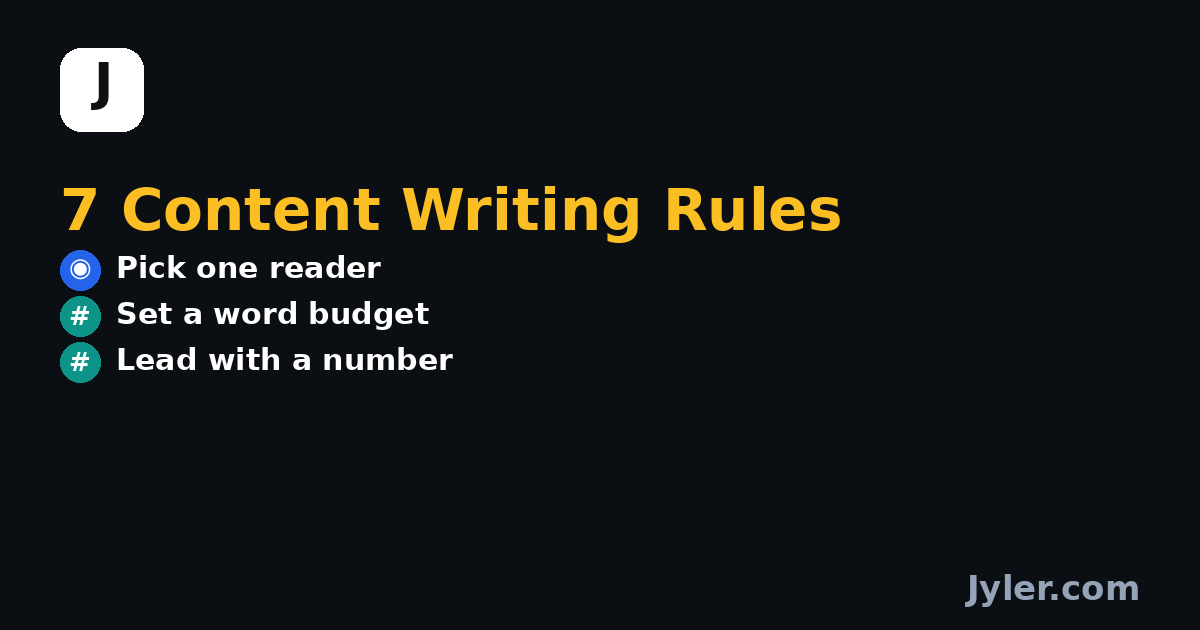
Executive Summary: Writer’s block is a spec problem. Define the reader and the single job of the piece before you type, then write to a fixed word budget. Follow the seven rules below and content writing becomes a process you can repeat on any topic.
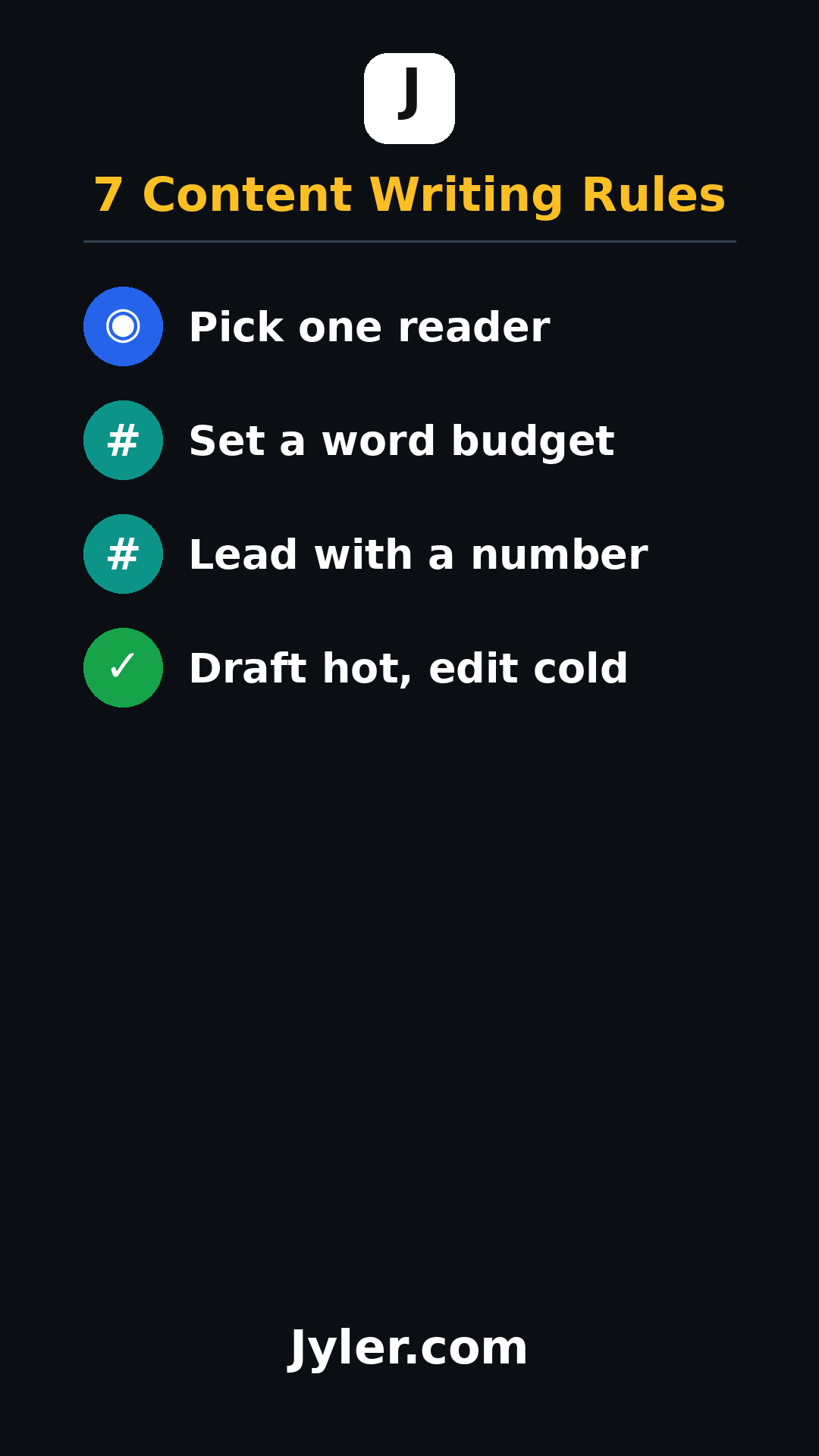
Why the Blank Page Stalls
Your draft stalls because the brief is missing. You are asking your brain to invent the goal and the sentences at the same time. That is two jobs.
Split them. Decide what the piece must do, then write. The words come faster once the target is fixed.
Most content writing advice skips this step. It talks about voice and flow before anyone has set the point.
Rule 1: Pick One Reader and One Job
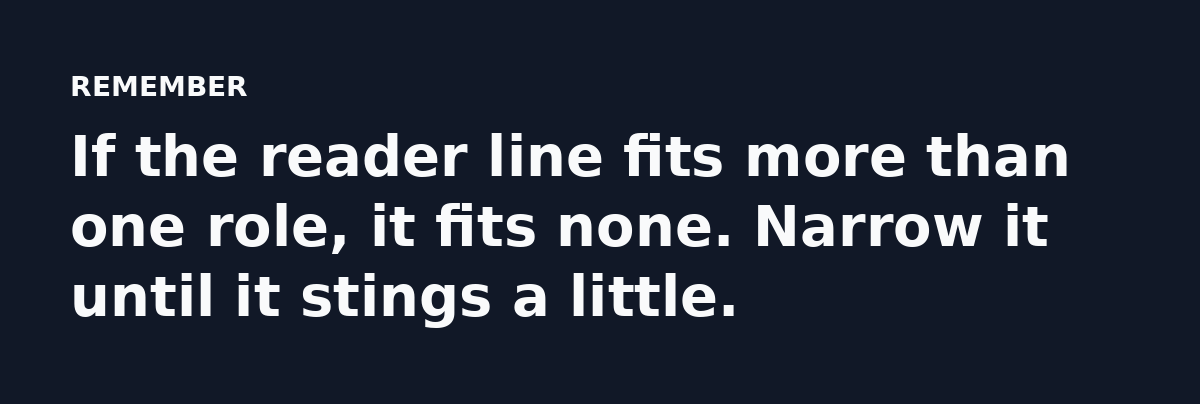
Do this: Write one sentence before you draft. “This piece helps a ___ do ___.” Fill both blanks in plain words.
Not that: Do not open with “for business owners and teams.” That sentence aims at nobody and lands on no one.
The tighter the reader, the sharper the examples. A piece for a warehouse manager tracking inventory writes itself faster than a piece for “modern businesses.”
Rule 2: Set a Word Budget
Do this: Cap the draft at 800 words and mark the number on a sticky note or at the top of the doc. Stop when you hit it.
Not that: Do not write until it “feels done.” That feeling stretches a 600-word idea into 1,400 words of padding.
Reading speed sits near 200 to 250 words per minute. Run the math. Reading time = word count / 230. An 800-word piece costs a reader about three and a half minutes.
Spend their time like it is money. Every extra paragraph needs to earn its place.
Rule 3: Put the Number in Line One
Do this: Open with a figure or a hard dilemma. Something the reader feels in the first five seconds.
Not that: Do not warm up with background. Nobody arrived for the history of your topic.
Most readers scan the first two lines then leave. Give them a reason to stay before line three.
Rule 4: Draft Hot, Edit Cold
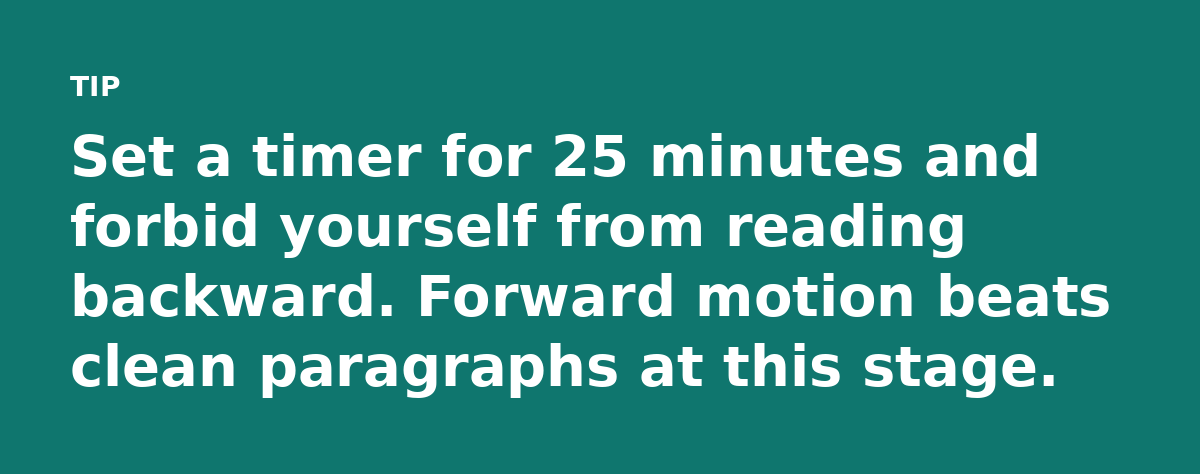
Do this: Write a rough version in one sitting. Do not fix grammar. Do not reorder.
Not that: Do not edit the sentence you just typed. Switching modes mid-draft kills momentum and doubles the clock.
Editing is a separate pass with a separate brain. Draft hot. Edit cold.
Rule 5: Cut the Softeners
Do this: Search the draft for four softeners: “very,” “really,” “just,” “quite.” Delete each one. The sentence gets stronger every time.
Not that: Do not hedge every claim with “maybe” or “somewhat.” Weak words tell the reader you do not believe your own point.
Pick the sharp verb once and move on. Adverbs often carry the weight a stronger verb should hold.
Rule 6: Reuse a Proven Skeleton
Do this: Keep a few outlines you can pull off the shelf. Problem, evidence, steps, close. Or myth, correction, proof, action.
Not that: Do not rebuild the structure from scratch each time. That step is the slowest part of the job.
A skeleton gives you the shape in advance. You fill in structure instead of inventing it under pressure. The skeleton also keeps your content writing consistent. Readers learn where your point will land, which builds trust across every post.
Rule 7: Read It Out Loud Before You Ship
Do this: Read the full draft aloud. Anywhere you stumble, the reader stumbles too. Mark those spots and fix them.
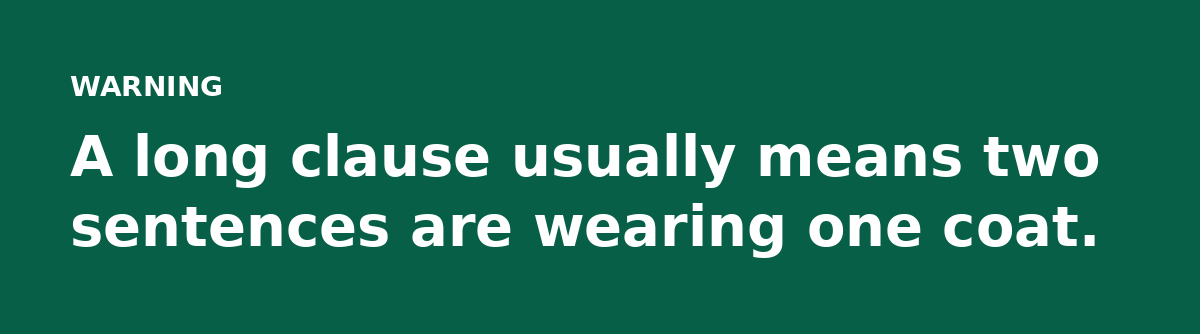
Not that: Do not trust the spellchecker alone. It catches typos. It misses long sentences that lose a reader halfway through.
Your ear catches rhythm problems a screen never shows. A sentence you cannot say in one breath is a sentence nobody wants to read.
The Two-Minute Audit Before Publish
Run this before you hit publish. It takes less than two minutes and catches the errors that hurt the most.
- Reader and job stated in one sentence.
- Word count under budget.
- First line carries a figure or a dilemma.
- Softeners removed.
- Outline matches a reusable skeleton.
- Read aloud once, fixes applied.
If any line fails, fix it before you push the post. This audit does more for content writing quality than another round of polishing.
One Move to Make Today
Before your next draft, write two lines at the top of the doc: the reader and what the piece must do. Then set a word cap.
That single habit removes most of the friction you feel at the start. Do it once and the blank page stops being the enemy.
Watch the 30 second summary
Video transcript: Before you draft, finish one sentence: this piece helps a specific person do one job. A tight reader writes itself faster than vague business owners. Cap the draft at 800 words and stop when you hit it. Writing until it feels done turns a 600 word idea into 1400 words of padding. Open with a figure or a hard dilemma the reader feels in five seconds. Skip the warmup background. Most readers scan two lines then leave. Write a rough version in one sitting without fixing grammar or reordering. Editing mid draft kills momentum. Draft hot, then edit cold as a separate pass.