Key Takeaway
Email remains the main channel for B2B lead generation because buyers keep asking for it. The campaigns that book meetings treat the list as the strategy. They follow up until a human answers. Miss either habit and the channel turns into noise.
Seventy-three percent of B2B buyers say they prefer email. A buyer survey cited by the Forbes Agency Council put that number on the table and it matches what reps hear on calls. Email gets read. Most B2B lead generation campaigns still miss because they load a template and hit send to a list nobody checked.
The Inbox Is Still the Front Door
Most buyers check email before they fill out a form. A familiar sender gets a reply. A blast gets deleted.
That gap is the whole game. The channel did not get harder. The competition for attention got sloppier.
B2B Lead Generation Field Note: The List Decides the Campaign
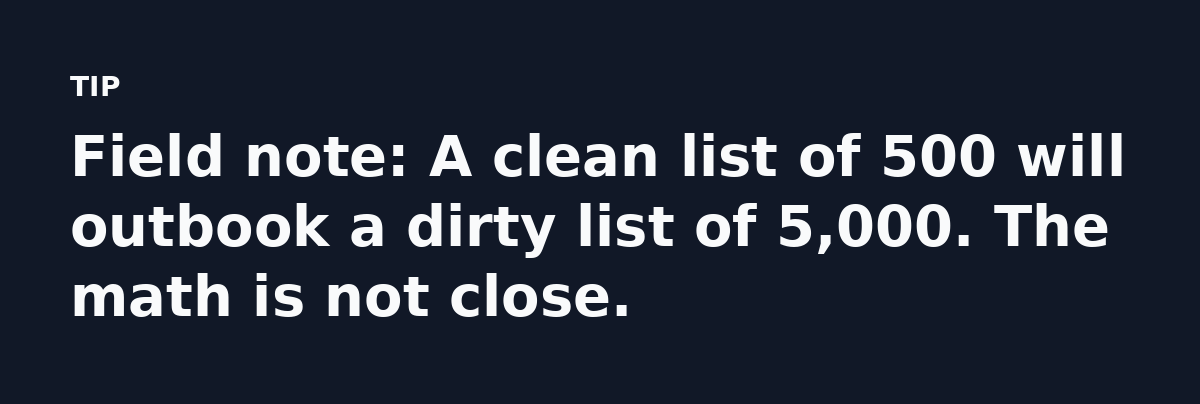
I watched two teams send the same offer to different lists. Team one used 4,000 contacts pulled from a scraped directory. Team two used 400 contacts from a webinar attendee export and a past proposal folder. Team two booked nine meetings. Team one booked one, then lost its sending domain for a week.
Same copy. Same sender name. The list was the difference.
Here is the plain definition. A usable B2B lead list is a set of people who have a reason to hear from you and a way to verify they exist. Title, company, a source URL, a date of last contact. If you cannot name where a record came from, it belongs in the trash.
What a Dead List Looks Like
- Bounced addresses above 3 percent. Stop sending and clean it.
- No source column. You cannot prove consent or relevance.
- One email per company. No second contact to try.
- Job titles copied from a database that updates once a quarter.
Run a bounce check before every send. A list with an 8 percent bounce rate will drag your domain reputation down within days. Many inbox providers start throttling around 2 to 3 percent.
The First Email Earns the Second
Most replies come from the second or third touch. Yet most teams stop after one send and call it a campaign.
Write the first email like a note to one person. Name the trigger. “You downloaded the pricing guide after the webinar.” Then ask a question that takes ten seconds to answer.
Subject lines that get opened tend to be short and specific. Put the trigger in the line: “Question about your Denver warehouse.” Body copy under 90 words works for most offers. Ask one question and name one next step.
Follow-Up Is Where Deals Hide
Reps give up after two touches. Buyers are busy. A reply on touch four is normal in B2B lead generation, especially when the first two landed during a budget freeze or a product launch.
Build a five-touch sequence across 18 days. Change the angle each time. Touch one: the trigger. Touch two: a relevant case detail. Touch three: a short question. Touch four: a useful link with no ask. Touch five: a clean close. “Should I stop reaching out?”
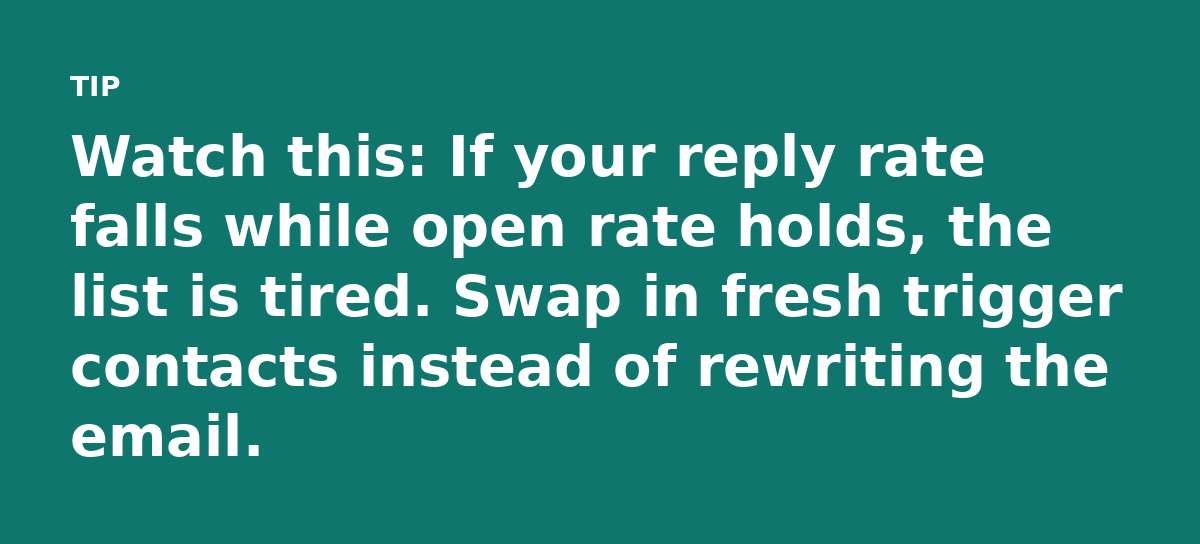
Track reply rate, not open rate. Opens are unreliable since Apple’s mail privacy update. Replies and meetings are the only signals that survive.
Numbers Worth Watching in B2B Lead Generation
Four numbers tell the story. Open rate is not one of them.
- Bounce rate: keep it under 3 percent. Clean the list when it climbs.
- Reply rate: replies divided by delivered emails. A cold sequence that gets 4 to 8 percent is healthy for a targeted list.
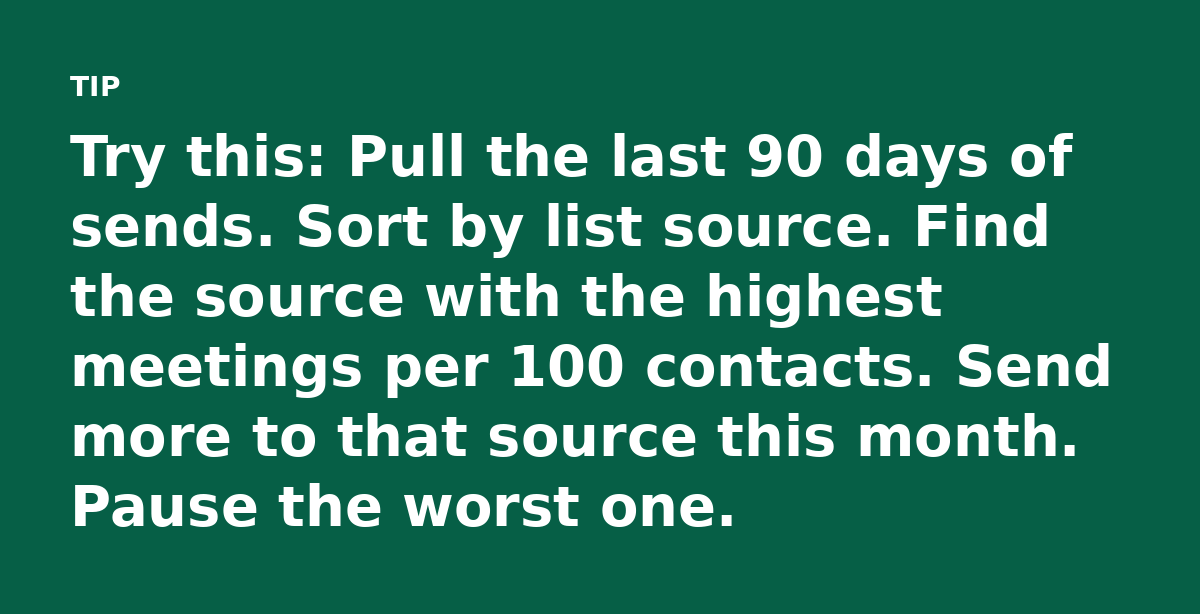
- Meetings per 100 contacts: one to three is a workable range for a trimmed list with a strong trigger.
- Cost per meeting: total spend divided by booked meetings. Compare it to the value of one closed deal. Benchmarks vary too much by market.
Ignore open rate for decisions. It moves with image blocking and phone settings. Reply rate tells you if the message earned attention.
The B2B Lead Generation Objection: Fewer Sends Means Less Pipeline
This is the fear that keeps teams blasting. It feels safer to send 10,000 emails than 600.
Run the math on your own data. If 10,000 sends produce 15 replies and 2 meetings, while 600 targeted sends produce 40 replies and 12 meetings, the smaller campaign wins. It also protects the domain that carries every future send.
What to Do This Week
A smaller list and a follow-up habit will do more than a new tool.
Start with one segment. Pick buyers who took a real action in the last 60 days: demo request, pricing page visit, webinar signup, reply to a newsletter. Export the records and check the source column on every row.
Write one email to that segment. Keep it under 90 words. Send it from a real person’s address with a real signature. Then set the follow-up cadence before you send the first one.
Measure replies at day 18. If the reply rate is under 2 percent, change the offer or the list. Fix the list before you rewrite the subject line.
Keep This in Mind
Email still wins B2B lead generation because buyers opted into a channel they check. Your job is to deserve the open. Build a list you can defend, write like a human and show up more than twice.
One action for tomorrow: open your current lead list and delete every row that has no source. Count what remains. That number is your real pipeline budget.
Need this run for you? See the outreach service.