
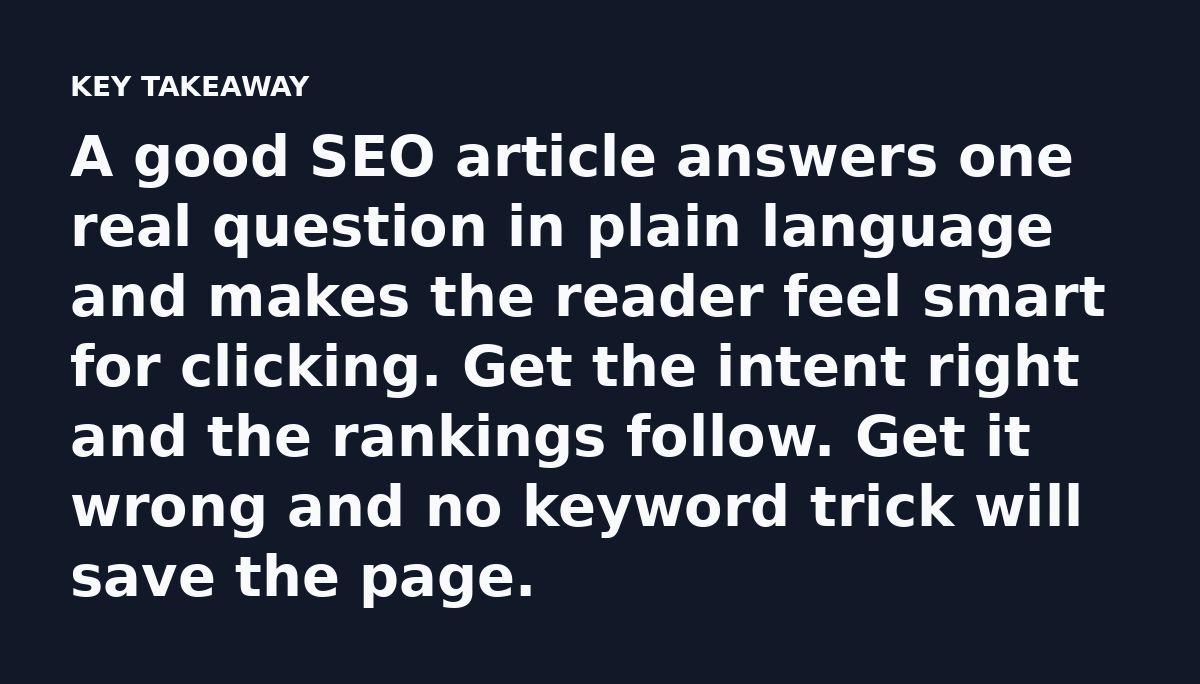
Search engines rank pages that satisfy a searcher. You can know SEO article writing inside and out, but if the piece does not answer the query on the first screen, the reader leaves. Search engines notice.
This guide walks through the steps that separate articles earning steady search traffic from articles nobody finishes.
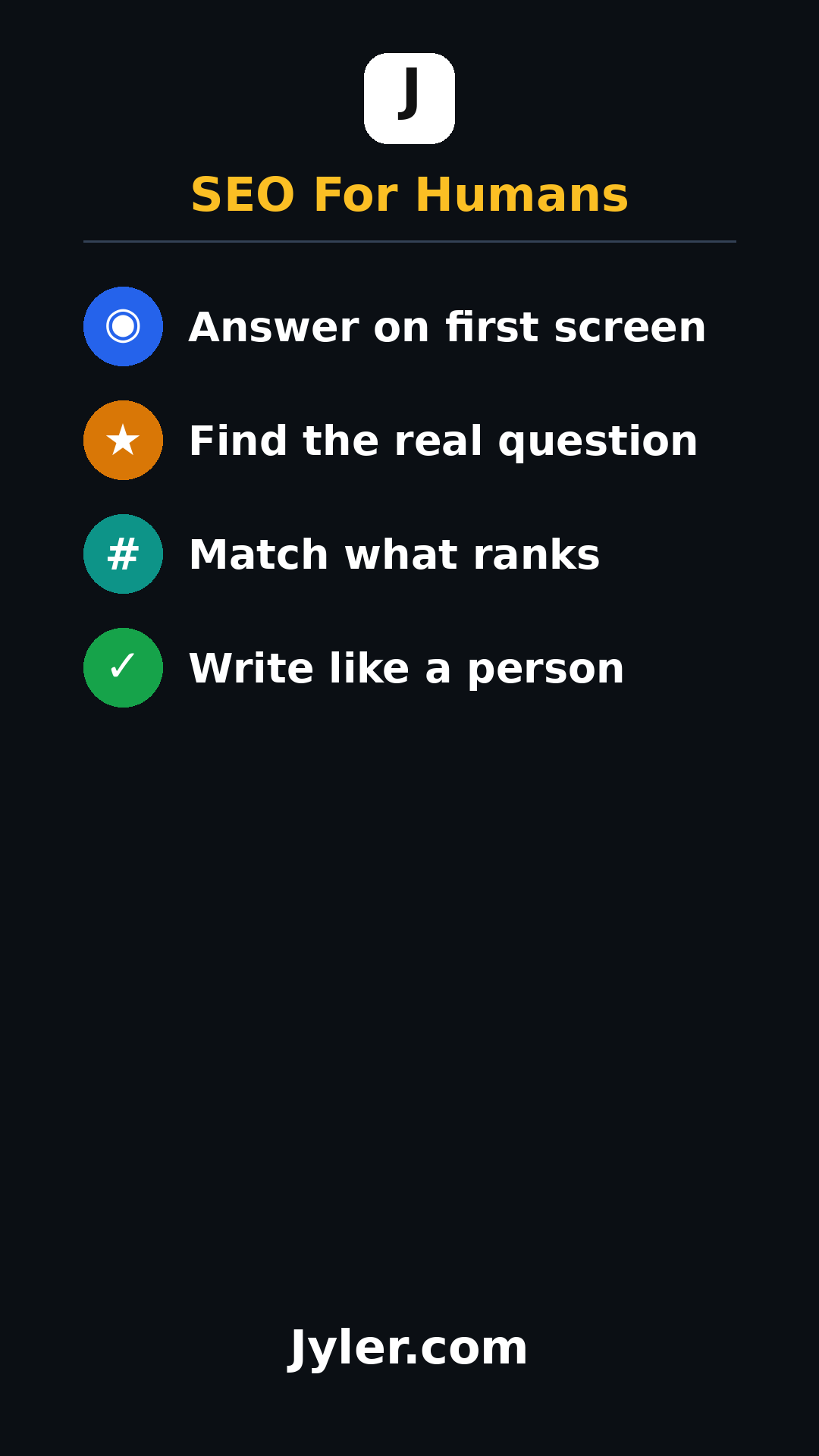
Step 1: Find the Question Behind the Keyword
Open a search box and type your topic. The autocomplete list is a free list of real searches, so read it closely.
Say you run a cleaning company. “Cleaning tips” is crowded. “How to remove pet hair from a fabric couch” is one person with one problem. That phrase is a doorway into your site.
Write down one focus phrase. Every strong SEO article is built around a single clear intent.
Then ask what the reader wants to do after reading, whether to buy or learn, because the answer shapes your tone.
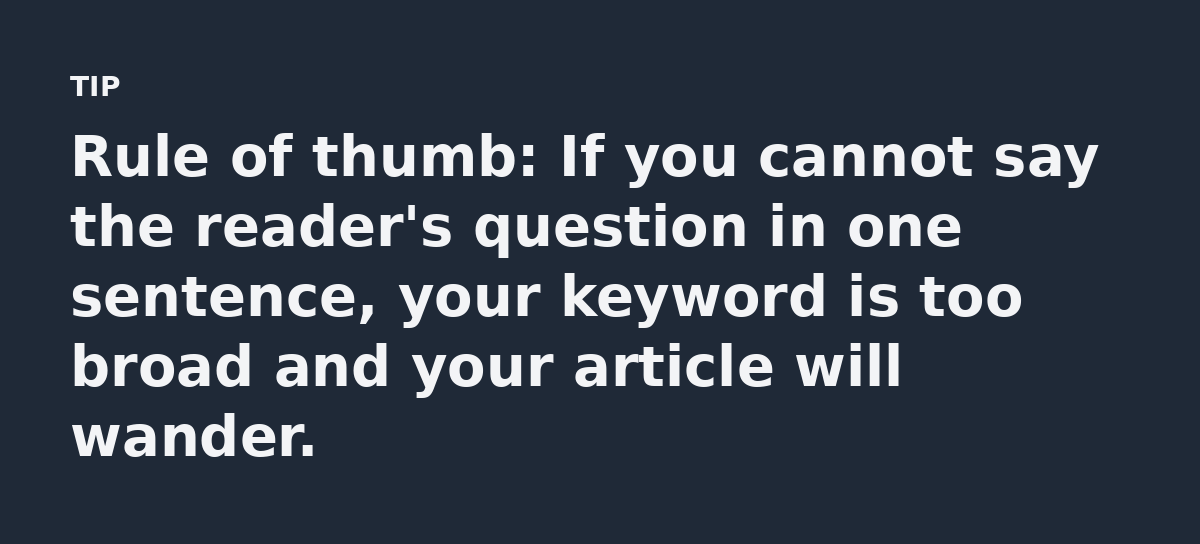
Check What Is Already Ranking
Search your phrase and study the first page. What format shows up most? Usually a guide or a short answer. The search engine has already tested this query thousands of times, so the results tell you the format it prefers.
If every top result is a step-by-step how-to, write a step-by-step how-to. Fighting the format is wasted effort.
Step 2: Outline Around the Reader’s Path
An outline maps the order the reader needs the information. Build it before you write a single heading.
Start with the simplest version of the answer, then save the edge cases for the end. A reader who leaves early should still walk away with the main answer.
For a finance topic, explain what a term means before showing how to use it. For a technical topic, show the result before the mechanics.
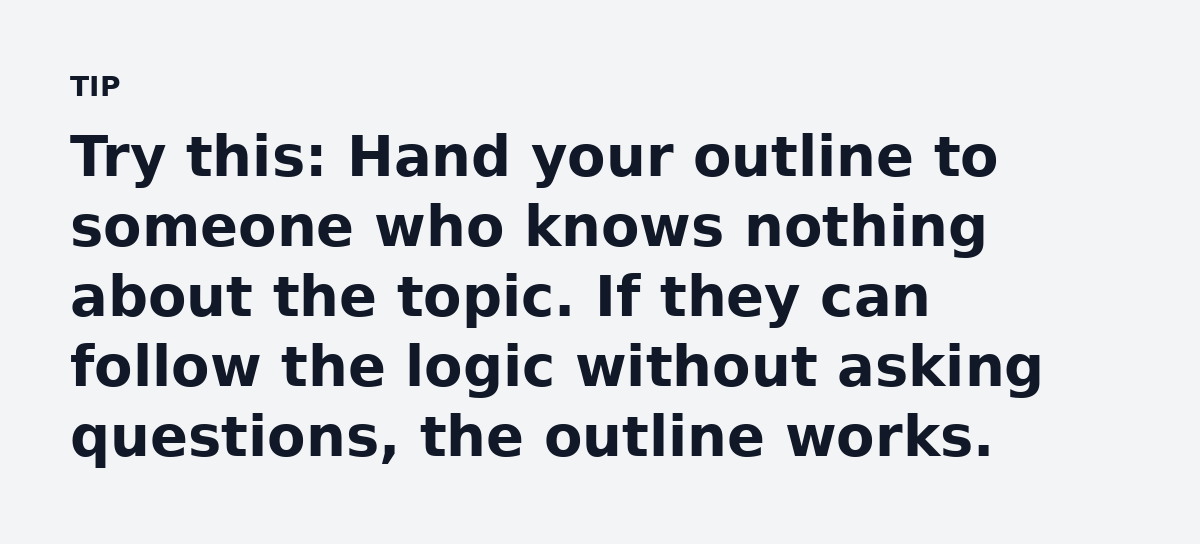
Step 3: Write Like a Person, Not a Brochure
Use short sentences and plain words. Say “use” instead of “utilize” and “help” instead of “facilitate.”
The reason is speed. A busy operator scanning your article should grasp each point in one pass. Stacked sentences slow the eye and the mind.
Read your draft out loud; where you stumble, the reader stops, so fix that spot.
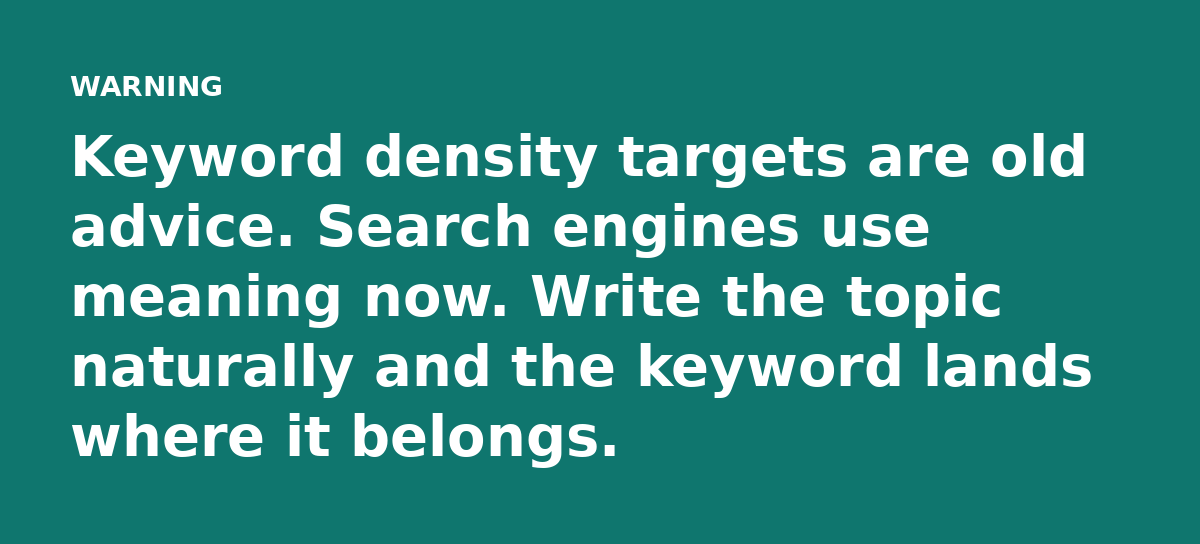
Put the focus keyword in the title and the first paragraph. That is enough. Stuffing it into every third sentence reads as spam to people and to software.
Step 4: The Boring On-Page Details That Still Count
These take ten minutes and they matter.
The title tag is the blue line in search results. Keep it under 60 characters and put the focus keyword near the front.
The meta description is the grey text below it. Write it as a promise and keep it under 155 characters.
Use one H1 on the page and H2 and H3 for sections, because search engines use these to map your structure.
Give every image a file name and alt text that describe it. “pet-hair-couch-cleaning.jpg” beats “IMG_4921.jpg.”
Link to two or three related pages on your own site. This keeps readers moving and helps search engines understand your topic.
Step 5: Edit for the Reader Who Is Scanning
Few people read web articles top to bottom. They scan headings then dive into the part they need.
So make headings do work. A reader should get the gist from the headings alone.
Break up long paragraphs; two or three sentences is plenty.
Cut any sentence that does not add a fact or a reason. If it is only there to sound smart, delete it.
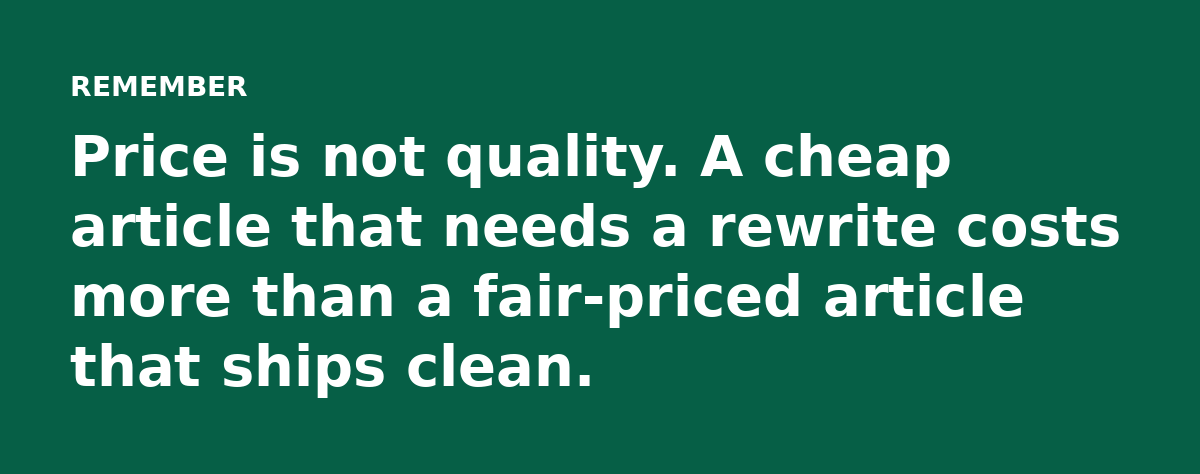
Judging Quality When You Pay a Writer
Anyone can call themselves a content writer. Here is how to test one.
Ask for a sample on a topic the writer knows nothing about. Good writers research fast and ask sharp questions. Weak ones recycle old drafts.
Read the first line. Does it state a fact or a step? Or does it warm up with a vague line about how important the topic is?
Check the facts. A writer who invents a statistic will invent the rest.
What to Do Next
Pick one question your customers actually ask and type it into a search box.
Then write 600 words that answer it better than the current page one, using plain language and one clear idea.
Publish it and watch which queries bring people in. Then write the next one.
That loop, repeated, is how a content library earns traffic.
Watch the 30 second summary
Video transcript: Open with the simplest version of the answer. If a reader finds it on the first screen, they stay, and search engines notice that they stayed. Use autocomplete to find the exact phrase one person typed. A narrow problem is a doorway into your site, unlike a crowded generic phrase. Study the first page and copy its format. If every result is a step by step how to, write one too. Fighting the format wastes effort. Use short sentences and plain words. Say use instead of utilize. Read your draft out loud and fix every spot where you stumble.
Need this run for you? See the writing service.