Key Takeaway
Content output stalls for a reason that has nothing to do with lazy writers. It stalls because one person researches, drafts, formats and checks SEO in a single sitting. Below is a problem-and-fix breakdown of why SEO content writing breaks near post twenty, plus four changes you can make before the next deadline.
The Wall You Hit Around Post Twenty
Month one feels easy: one writer ships eight posts. Month two drops to five. By month three the drafts read alike and search engines start treating pages as near duplicates.
You see it in the dashboard before you see it in the writing: impressions climb while clicks stay flat.
Why “Hire More Writers” Backfires
Adding writers adds coordination cost as well as capacity. Each new person needs onboarding and a source of truth. Give five writers the same loose topic and you get five versions of the same article, which dilutes the authority you were trying to build.
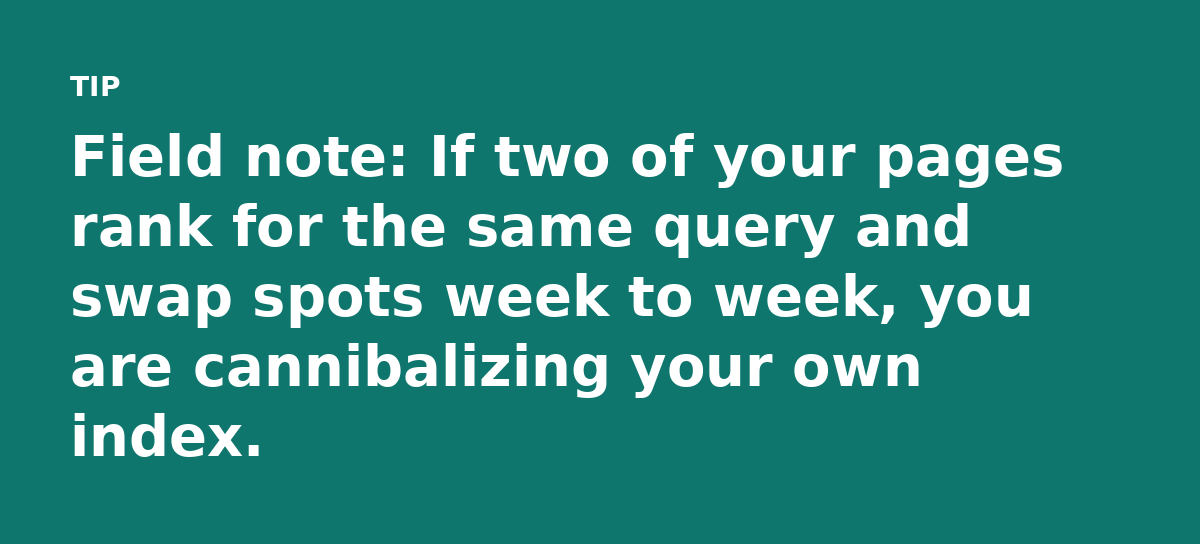
The Duplicate Trap Is Mechanical
Search engines fingerprint text using overlapping word sequences called n-grams. When two pages share long runs of identical phrasing, the crawler picks one to rank and buries the rest. Light paraphrasing keeps the same structure, so the match barely moves. That is why five rewrites of one topic can rank worse than one honest page: the algorithm rewards distance between your pages.
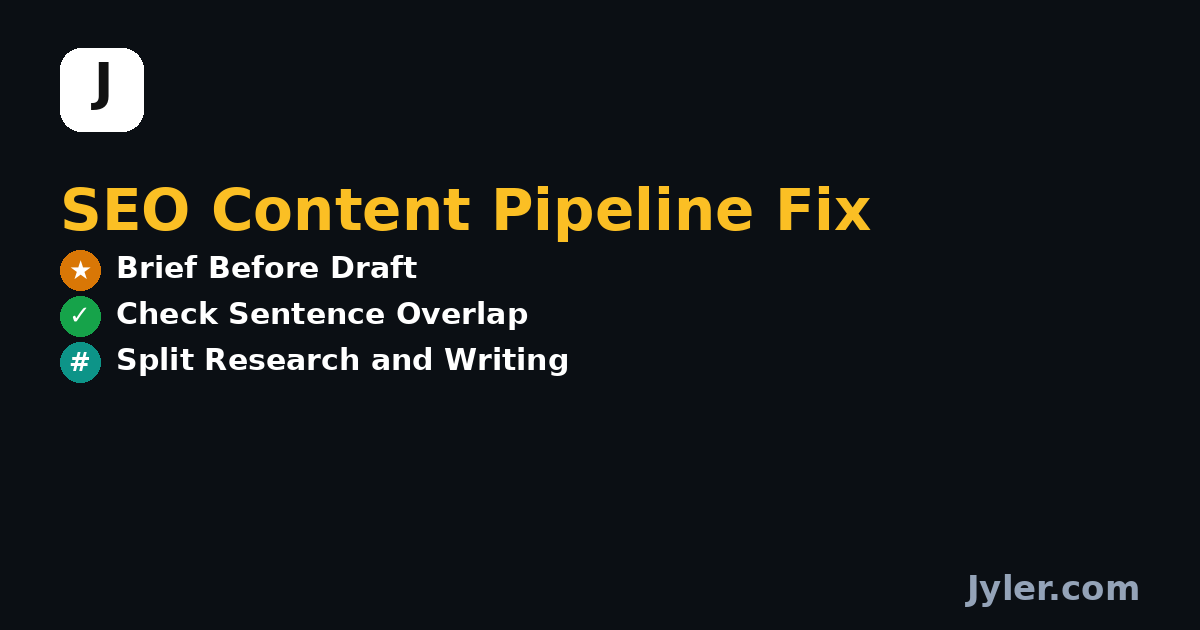
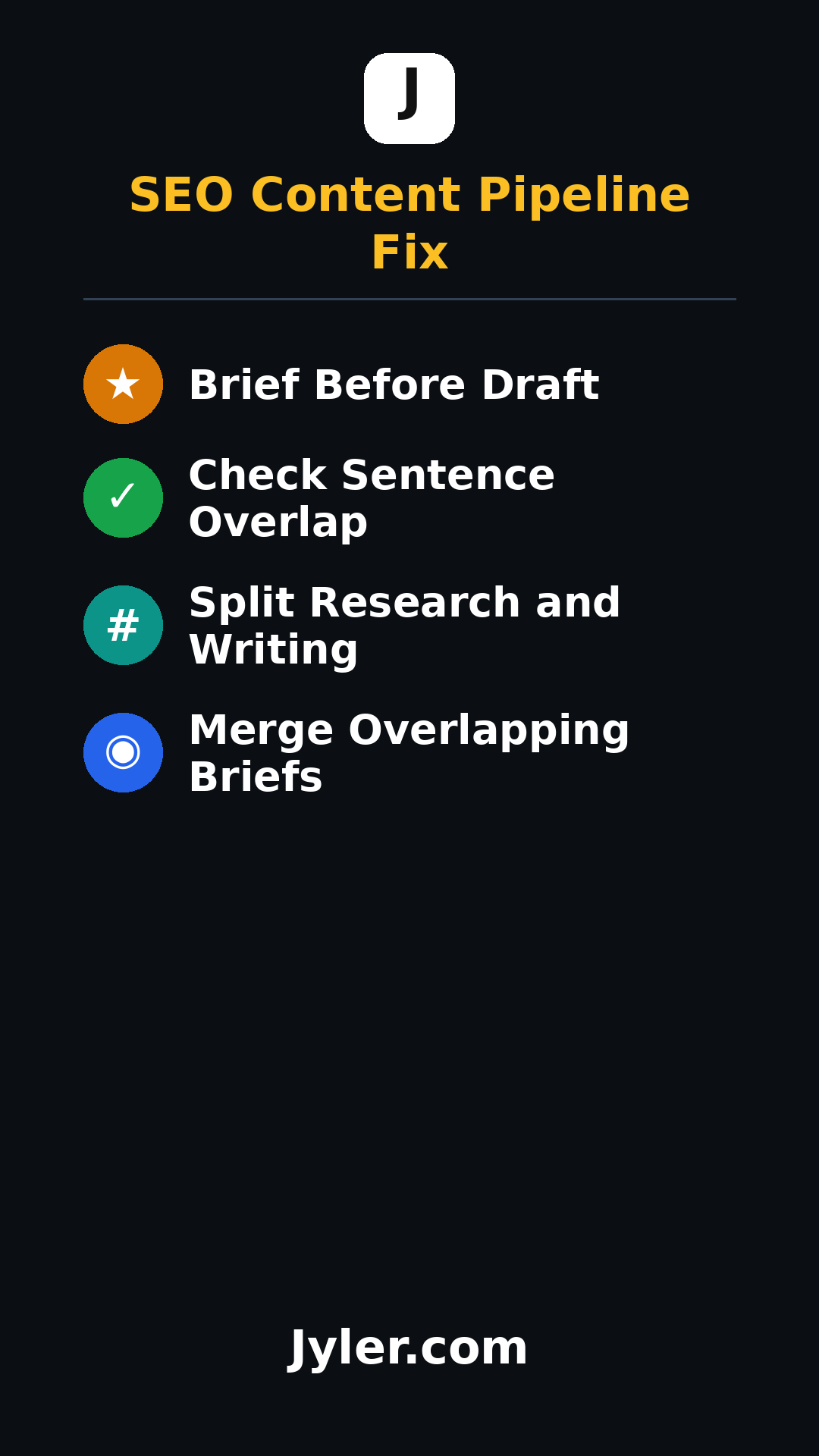
Fix One: Write the Brief Before the Draft
A brief is a data sheet. It names the target query, the reader’s actual job to be done, two primary sources and the single idea the page must prove.
Standardize the format. Every writer gets the same four fields. When the source material is fixed, the drafts stop drifting toward the same generic opening.
The brief also exposes overlap early. If two briefs point at the same query, you merge them before anyone writes a word.
Fix Two: Score Originality at the Sentence Level
Word count hides duplication. Two pages can both hit 1,200 words while 40 percent of sentences are recycled from something you published last year.
Run every draft through an n-gram overlap check against your own library before it goes live. Set a hard ceiling. One workable rule: no passage may share more than six consecutive words with an existing page.
That single threshold catches lazy paraphrase faster than any editor reading by feel.
Fix Three: Separate Research From Writing
Research and drafting use different muscles.
Have a researcher produce notes with source links and direct quotes, then a writer turns notes into prose. The editor checks flow and the keyword pass runs last, on clean copy.
Splitting the stages cuts rework. A writer who starts with real source material rarely needs three revision rounds.
Fix Four: Build a QA Pass That Catches Duplicates
The final check is a set of blunt questions: Does this page answer a query no other page on the site answers? Which page is canonical when two overlap? Two more gates ask whether the writer followed the brief and whether the linked sources still resolve. Small checks, run every time, keep the library from bloating with near-copies.
The Throughput Math Most Teams Ignore
Track hours per stage. Say research takes 90 minutes and drafting and editing take another three hours. One article costs four and a half hours of labor.
Four writers on twenty hours a week should produce around seventeen articles. In practice they produce nine, because the editor becomes the bottleneck.
Once you see the split, you stop blaming the writers. You fix the stage that consumes the most time.
What to Do This Week
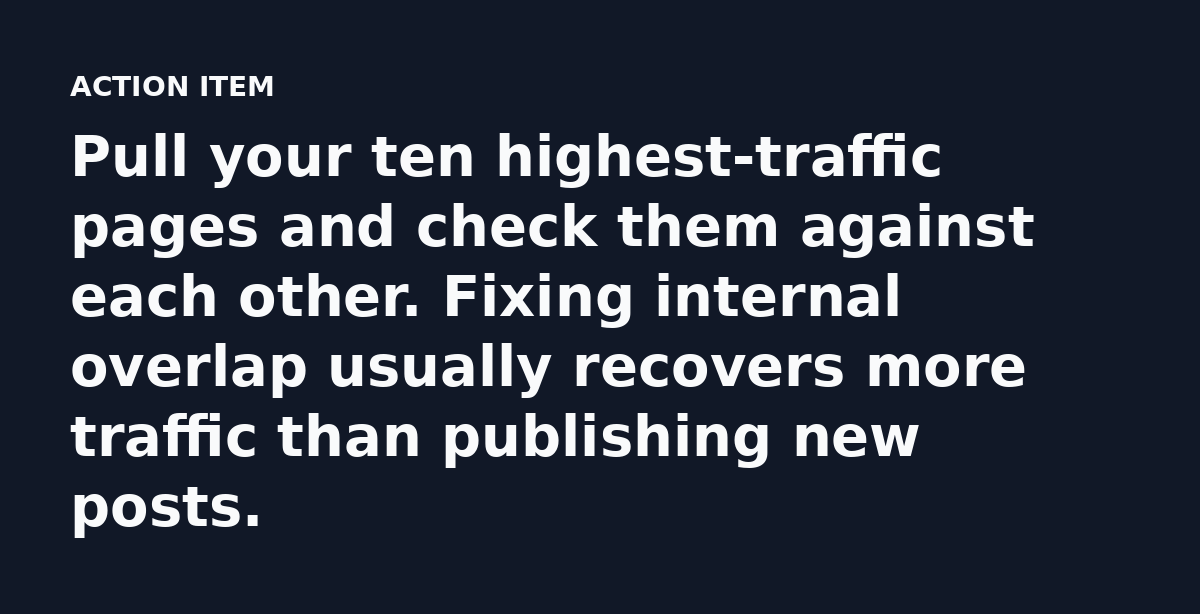
- Run an overlap check across your existing top pages.
- Rewrite the two worst offenders into one stronger page.
- Draft a single brief template with fixed fields and hand it to every writer.
- Set an n-gram ceiling and log which drafts fail it.
You can do all of this with the tools you already have, starting with a decision about order. Research, then brief, then draft, then verify.
The One Thing to Remember
Original SEO content writing scales through structure. Give every page a reason to exist that no other page already covers and the traffic follows.
Watch the 30 second summary
Video transcript: Write a data sheet before anyone drafts. Name the query, the reader’s job, two sources, and one idea. Fixed source material stops drafts drifting into the same generic opening. Word count hides duplication. Run every draft through an n-gram overlap check against your own library. Set a hard ceiling: no passage shares more than six consecutive words with an existing page. Research and drafting use different muscles. A researcher produces notes with source links and direct quotes. A writer turns those notes into prose. Splitting the roles keeps every draft fresh and distinct. If two briefs point at the same query, merge them before anyone writes a word. Fewer, stronger pages beat five rewrites that dilute your authority and confuse the crawler.
Need this run for you? See the writing service.