Key Takeaway
Content writing service pricing can swing 10x for the exact same word count. The gap usually comes from research, revision limits, expert access and speed. Read those four before you sign and you stop paying for drafts you cannot publish.
A pricing sheet gives you one number. It sits on top of five decisions the writer already made and you cannot see any of them. That is why two quotes for the same article land nowhere near each other.
Here is what those quotes leave out and what to ask before your money moves.
1. A per-word rate hides the scope
A $0.10 word and a $0.50 word both look cheap next to a $2.00 enterprise rate. The labels hide the work behind them. Ask what is included before the first invoice lands.
Does the rate cover a brief, a draft, edits and a final polish? If any of that is missing, the real price is higher than the sheet says.
2. Cheap rates bill you twice
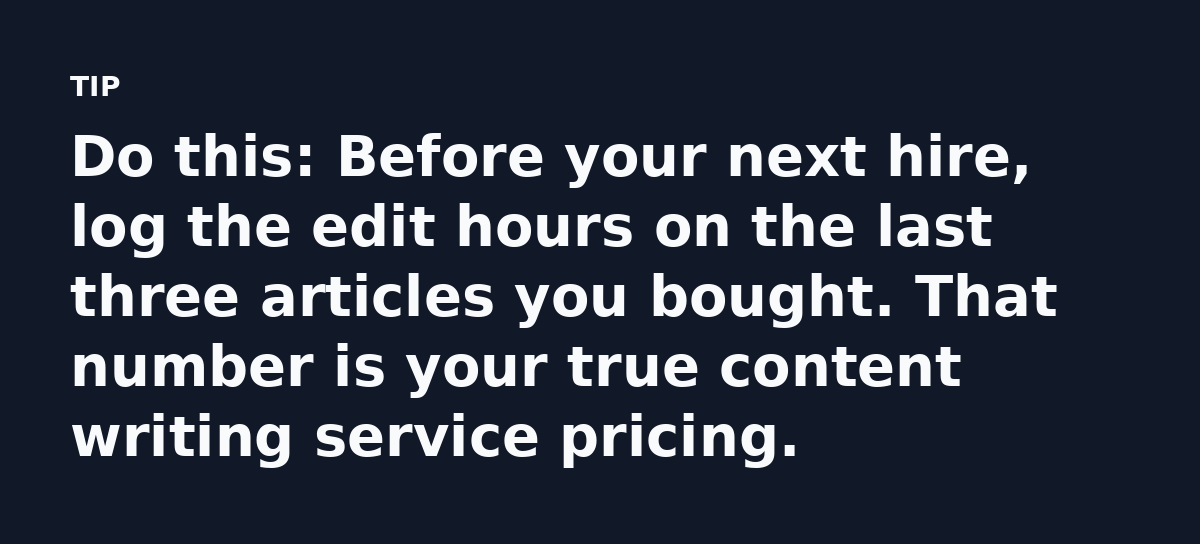
An $80 article that eats two hours of senior editing costs more than a $300 article that ships clean. Your team’s time is the hidden bill. Track the hours you spend fixing drafts, then add them at your own hourly rate.
3. The brief moves the price more than the writer
A one-line brief produces a guess. A brief with audience, goal, tone and source links produces a draft that fits on the first pass. Writers price risk. Vague inputs raise the risk, so they raise the quote.
You control the brief. That makes it the cheapest lever you own.
4. Research is the invisible line item
Writers who interview a real customer or read a competitor filing spend actual hours. Those hours sit inside the rate. A writer quoting $0.08 a word is not doing that work and it shows in the facts.
If your topic needs original data, expect to pay for the digging.
5. Revisions have a ceiling
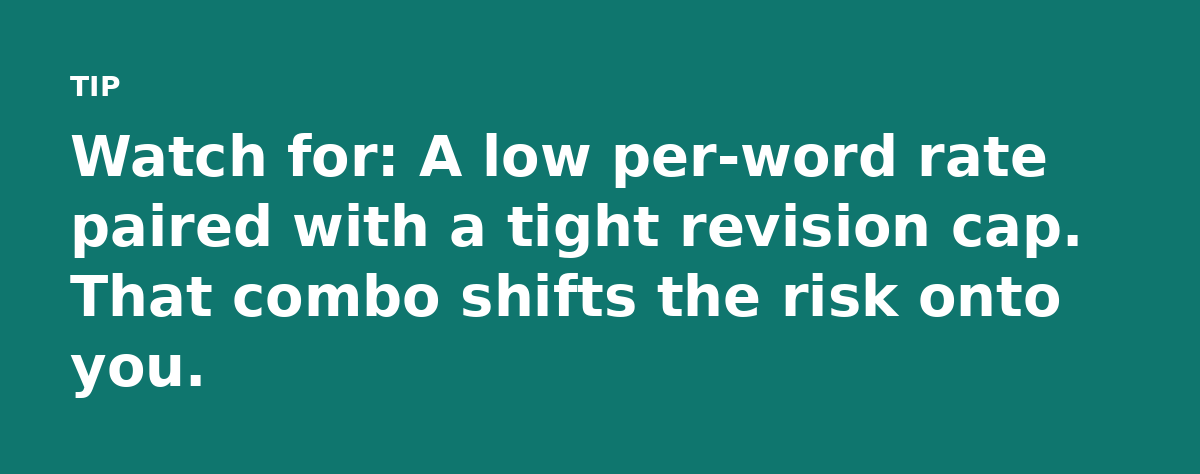
Most quotes include one or two revision rounds. Past that, you pay by the hour. A 1,500-word piece that goes four rounds can double its original cost.
Get the revision limit in writing. It is the single line that turns a quote into a budget.
6. Subject experts carry a measurable premium
A writer who knows your compliance rules writes fewer wrong sentences. Wrong sentences cost legal review time. In a regulated industry, the expert rate is often the cheaper option once review hours enter the math.
Pay for knowledge when mistakes cost more than words.
7. Turnaround time is its own price line
Rush work runs 25 percent to 50 percent higher in most freelance markets. Plan a two-week runway and the same writer charges the standard rate. Speed is a choice you pay for, so choose it on purpose.
8. Retainers trade volume for a lower rate
Commit to four pieces a month and per-word pricing drops. The writer gains predictable income. You gain a lower unit cost and a calendar that fills itself.
Retainers work best when your topics repeat. Pick the ones you publish often.
9. Judge cost per published piece
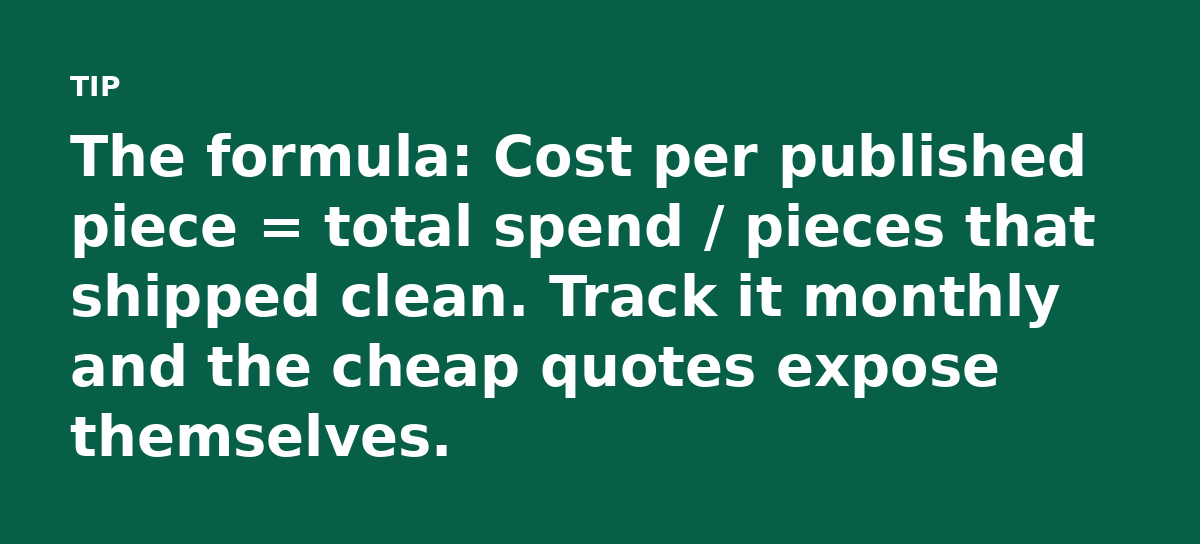
Per-word pricing rewards length. Your reader does not. Divide total spend by the pieces that go live without a rewrite. That figure tells you what content writing service pricing really costs.
What to do before you ask for a quote
- Write a short brief with a clear goal and two source links.
- Ask for the revision limit and the extra-round rate in writing.
- Name your deadline early, then ask what standard speed costs.
- Test one writer on one piece before you commit to a retainer.
Run that test and you learn more in two weeks than any sales call will teach you. Keep the winner. Move on from the rest.
The one move that changes your next deal
Stop comparing per-word rates. Start comparing cost per published piece.
Ask every writer for a brief, a revision limit and a delivery date. Those three answers separate a real partner from a lottery ticket. Then test one writer on one job.
If you would rather skip the hiring, briefing and revision chase, a done-for-you content service handles the pipeline from brief to published draft. See how our content writing service pricing works and get a quote built around pieces that ship.
Watch the 30 second summary
Video transcript: A per word rate hides scope. Ask what is included: brief, draft, edits, final polish. If any is missing, the real price is higher than the sheet says. A cheap article that eats hours of senior editing costs more. Track the fixing time and add it at your own hourly rate. A one line brief produces a guess. Give audience, goal, tone and sources, and writers price less risk. The brief is your cheapest lever. Most quotes include one or two revision rounds. Past that you pay by the hour. Get the limit in writing before you sign.