Executive Summary
A content writing quote rarely matches the final invoice. The gap usually comes from two quiet line items: revisions and research. This worked example walks one project from a $600 quote to an $880 bill and shows you how to close that gap before you sign.
The Quote Said $600. The Invoice Said $880
A small B2B software company needed eight blog posts. The writer quoted $0.15 per word. At 500 words each, that came to $600. Clean number. Easy to approve.
The invoice arrived at $880. Nobody lied. Every extra charge was printed in the agreement, buried on page two. The buyer just never read that far.
Where the extra $280 came from
- $180 in revision rounds beyond the two included in the quote
- $100 for research the writer billed as “subject matter interviews”
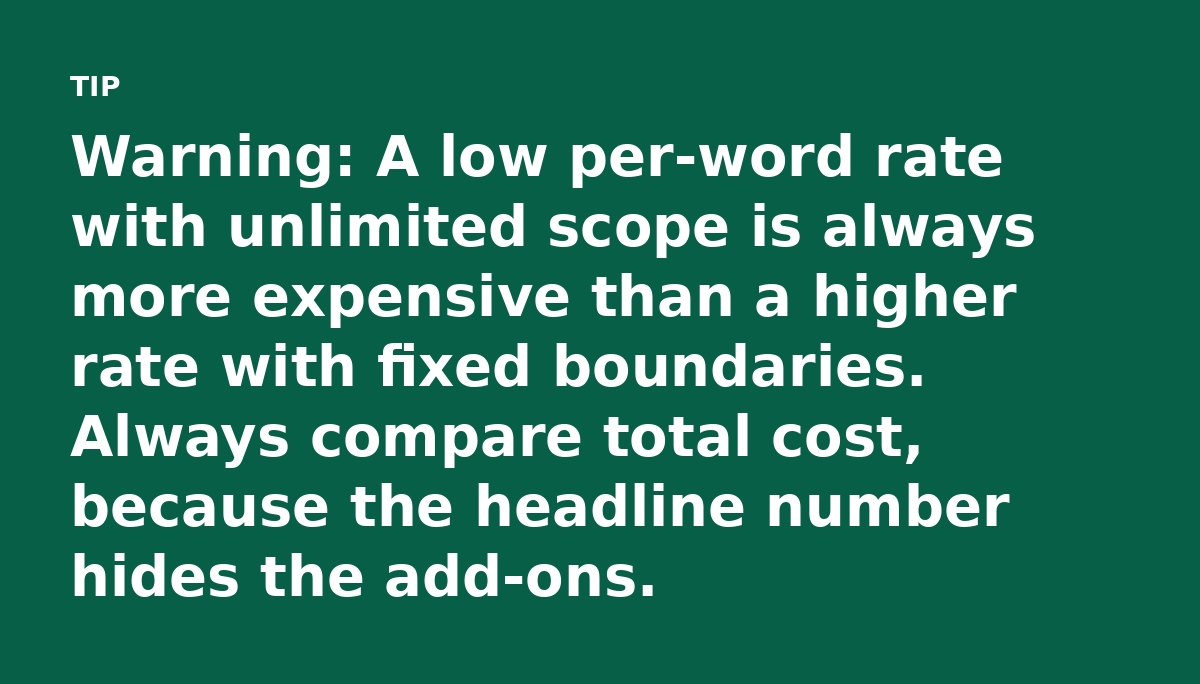
Neither line item appeared in the pitch. Together they pushed the real rate to $0.22 per word.
The Revision Clause Is the Most Expensive Sentence on the Page
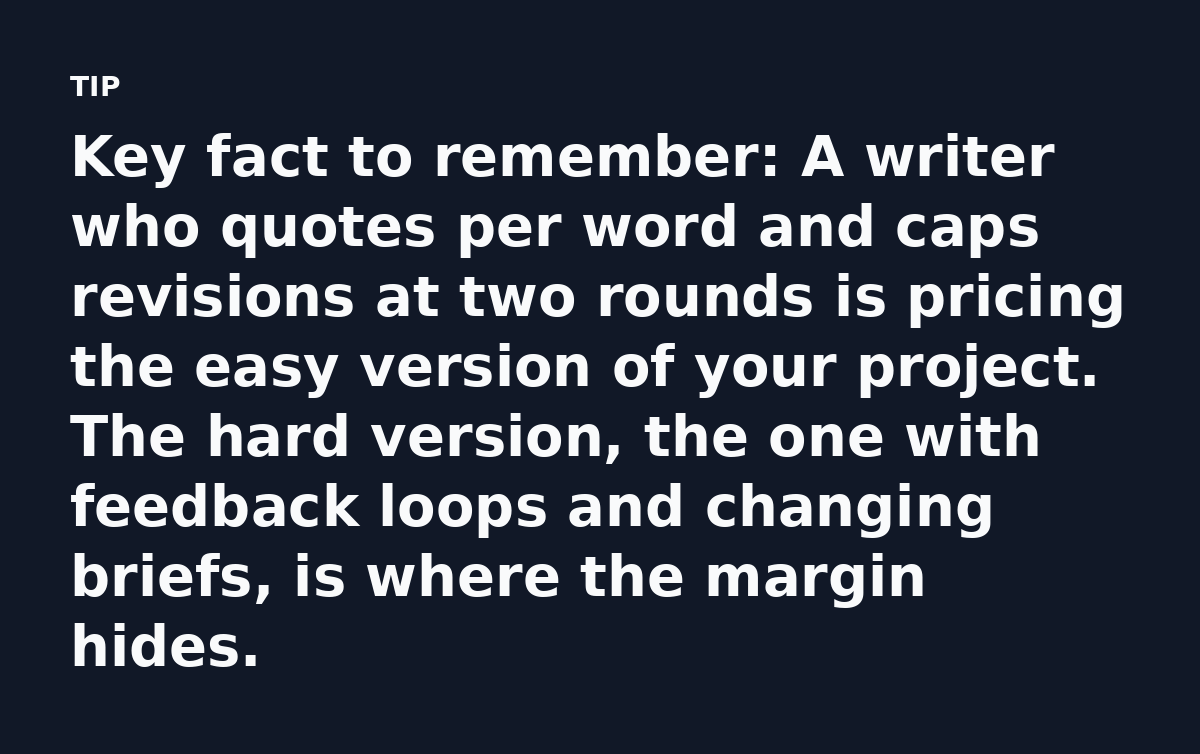
“Two rounds of revisions included” sounds generous, but it rarely is. The trouble is what counts as a round.
If one round means one email with consolidated comments, then two rounds is plenty. If a round means every time you send a note, you have just bought a meter that runs until your team stops talking.
Watch the wording. “Reasonable revisions” is softer than it looks. It gives the writer room to decide when your request becomes a new project.
A real pattern from agency projects
Most revisions arrive as scope creep wearing a friendly mask. A client reads the draft and asks for a new section or a shift in angle. That is a rewrite and good writers charge for it.
Why Research Shows Up Twice
Some quotes include research. Others assume it. When it is assumed, the writer bills discovery later and you get surprised.
Ask one direct question before signing. “Does this price include topic research and fact checking?” If the answer is vague, expect a line item in the final invoice.
Research is real work. An interview can take an hour and verifying a statistic across two sources takes time. The cost is fair, but the mistake is not pricing it up front.
The rush fee math
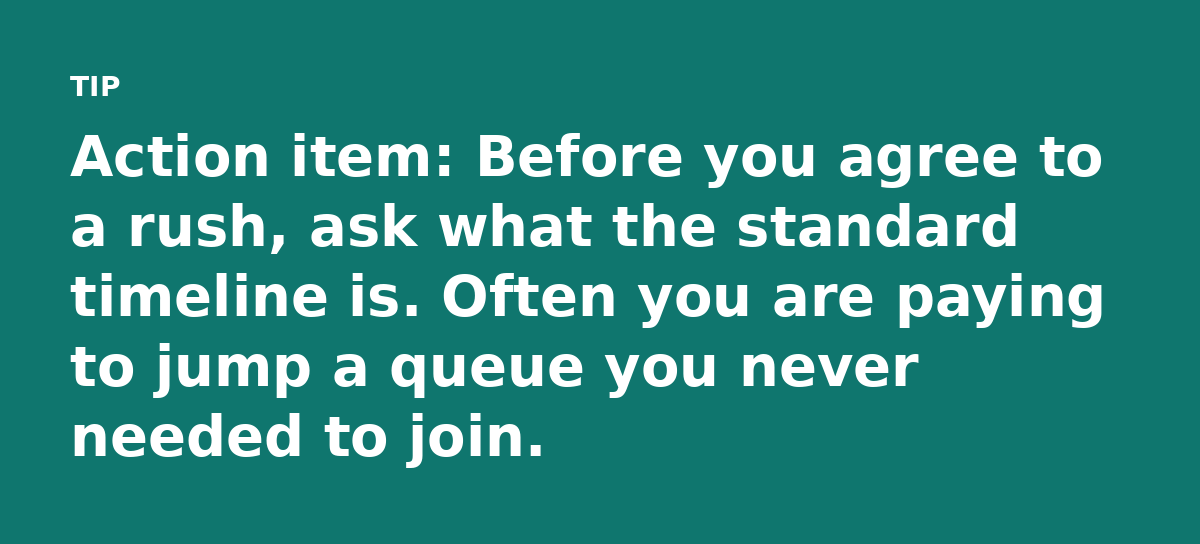
Rush fees usually run between 25% and 50% of the base price. On a $150 base, a $60 rush add-on is a 40% bump for a deadline the writer did not cause.
How to Read a Content Writing Quote
A useful quote answers four things: the base rate and the word count it covers, the number of revision rounds and what counts as one round, whether research and fact checking sit inside the price and the rush policy with its exact trigger.
If a quote skips any of these, it is an opening offer.
Turn the vague terms into numbers
Replace “reasonable revisions” with “two rounds, each submitted within five business days, consolidated in one document.” Replace “rush available” with “rush means delivery under 72 hours, billed at 30%.”
The Worked Example, Reworked
Return to the $600 project. The buyer moves to tighter terms: two revision rounds clearly defined and research capped at one interview per post. The turnaround stays at five days, with a 30% rush clause if needed. The final bill lands at $700. That is $180 less than the surprise invoice, for the same eight posts.
What to Do Before You Sign
- Get the revision cap in writing and define one round
- Confirm whether research and fact checking are included
- Ask for the rush trigger and the exact percentage
- Request a sample final invoice for a similar project
Then multiply the base rate by the expected scope and add the likely add-ons; that number is your real budget.
The One Thing to Do Next
Take your last content invoice and divide the total by the word count. That is your true rate. Now ask your next writer to beat it within the terms above. It reframes the negotiation around what lands in your account.
Read the full guide: Content Writing Service Pricing: 9 Things Nobody Tells You Before You Buy