Executive Summary
The real cost gap between a staff writer and outsourced content writing services is smaller than most owners assume and it flips depending on your monthly volume. Salary is only the visible number. Ramp-up time and management load decide the true price per published piece. Here is what each model costs and how to choose this quarter.
Myth 1: A full-time writer is the budget-friendly choice
Fact: salary hides most of the bill. Add benefits, software, a manager’s review hours and the downtime while a role sits open.
Run one simple formula. True cost per published piece = (salary + benefits + tools + management time) ÷ pieces shipped per month.
Say a writer earns $65,000 and benefits add roughly 25% to reach $81,250. Tools run $1,200 and a manager spends four hours a month editing at $50 an hour, which adds $2,400. The annual total sits near $84,850.
Ship eight articles a month and each one costs about $884; ship four and it jumps to $1,768 per piece. A freelance briefed properly often lands between $300 and $800.
So in-house wins at high volume.
Where the math surprises owners
Recruiting is a cost too. A writing role can take 30 to 60 days to fill; the new hire then needs 30 to 90 days before output matches the brief. That gap is real money with no articles to show for it.

Myth 2: In-house writers always produce better quality
Fact: quality follows the brief more than the payroll. A staff writer without direction drifts, while a remote writer with a tight brief and a subject interview can match the room.
What drives quality is a clear angle and examples of what good looks like. When those exist, the author’s address matters less than you think.
When they do not exist, the best writer on staff still guesses.
Myth 3: You can hire your way to scale
Fact: headcount moves in steps while demand moves in spikes. You cannot double output next Tuesday by posting a job ad.
A launch week needs fifteen posts while a quiet month needs three. A fixed team is built for the quiet month, so it cannot absorb the spike.
Outsourced content writing services absorb spikes because you add capacity per project. The trade is less control over the calendar.
Things to remember
A flexible bench of two or three tested freelancers covers most spikes.
Myth 4: All outsourced content reads the same
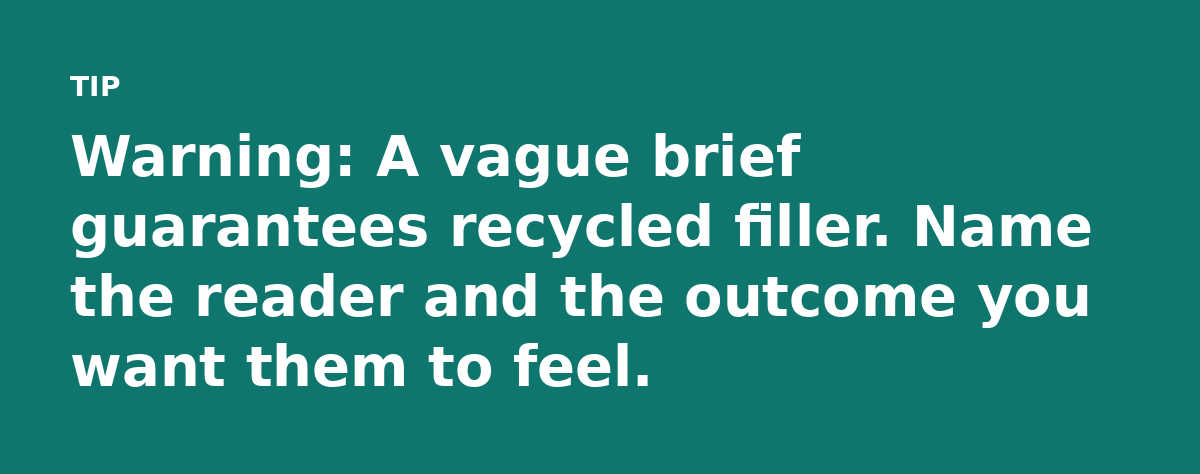
Fact: sameness comes from lazy inputs, so a terse brief gets you terse, generic work.
Fix it with your own materials. Share two recorded customer calls and examples of strong and weak work; writers follow evidence.
Ask for one sample before a full assignment, since one page tells you whether the voice fits. Pay for that sample so the writer takes it seriously.
Myth 5: Outsourcing removes the management work
Fact: it moves the work. Someone still owns the brief and the final check before publishing.
You need one point person who gives each active writer two hours a week. Without that, deadlines slip and the quality you paid for never shows up.
The same is true in-house. Even a staff writer needs an editor to turn drafts into finished pages.
The cost you cannot skip either way
Editing is the hidden line item in both models, so budget 30 to 60 minutes per piece for review regardless of who wrote it.
How to decide for your next quarter
Start with volume: under six pieces a month, outsourcing usually wins on cost and speed. Above ten steady pieces a month, a staff writer can beat the hourly math.
Between six and ten, run a short test: give one writer a batch of four posts with a full brief, then measure revision time and reader response.
Then compare per-piece cost across both paths. The winner is the one with the lower total cost per live article.
Action plan
- Calculate your true cost per published piece using the formula above.
- Track revision minutes for every draft so the hidden editing cost becomes visible.
One thing to do first
Pull your last ten published articles and count the hours spent getting each one live. That single number settles the in-house versus outsourced argument faster than any pitch. Cost lives as much in the time around the writing as in the writing itself.
Read the full guide: 7 Things Nobody Tells You About Hiring a Website Content Writing Service