Key Takeaway
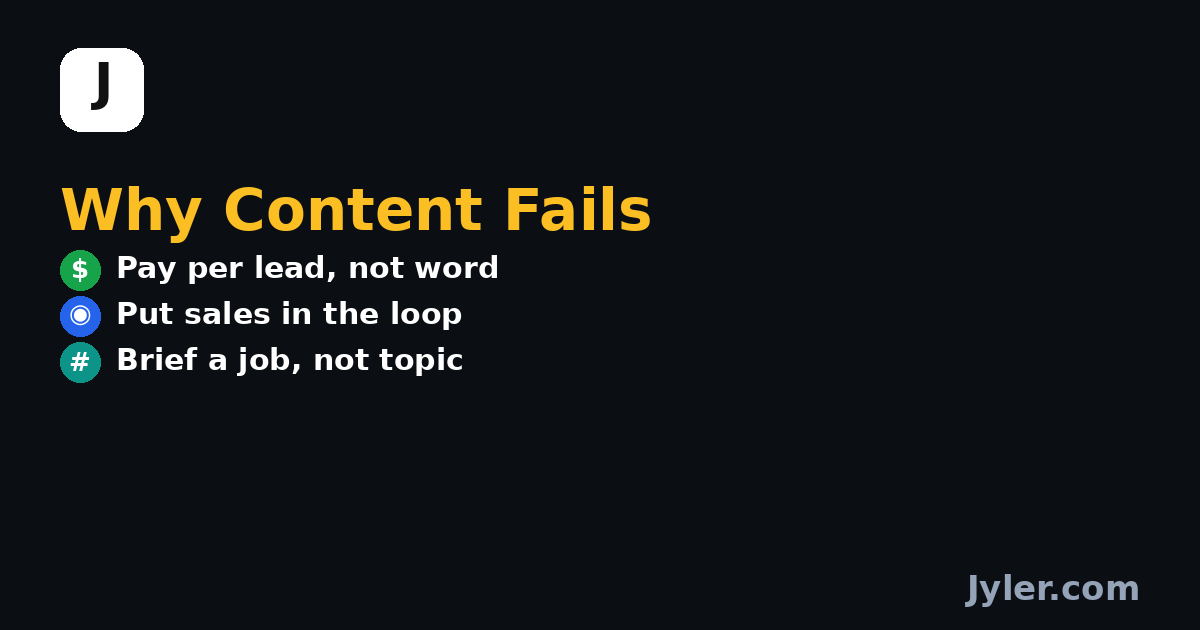
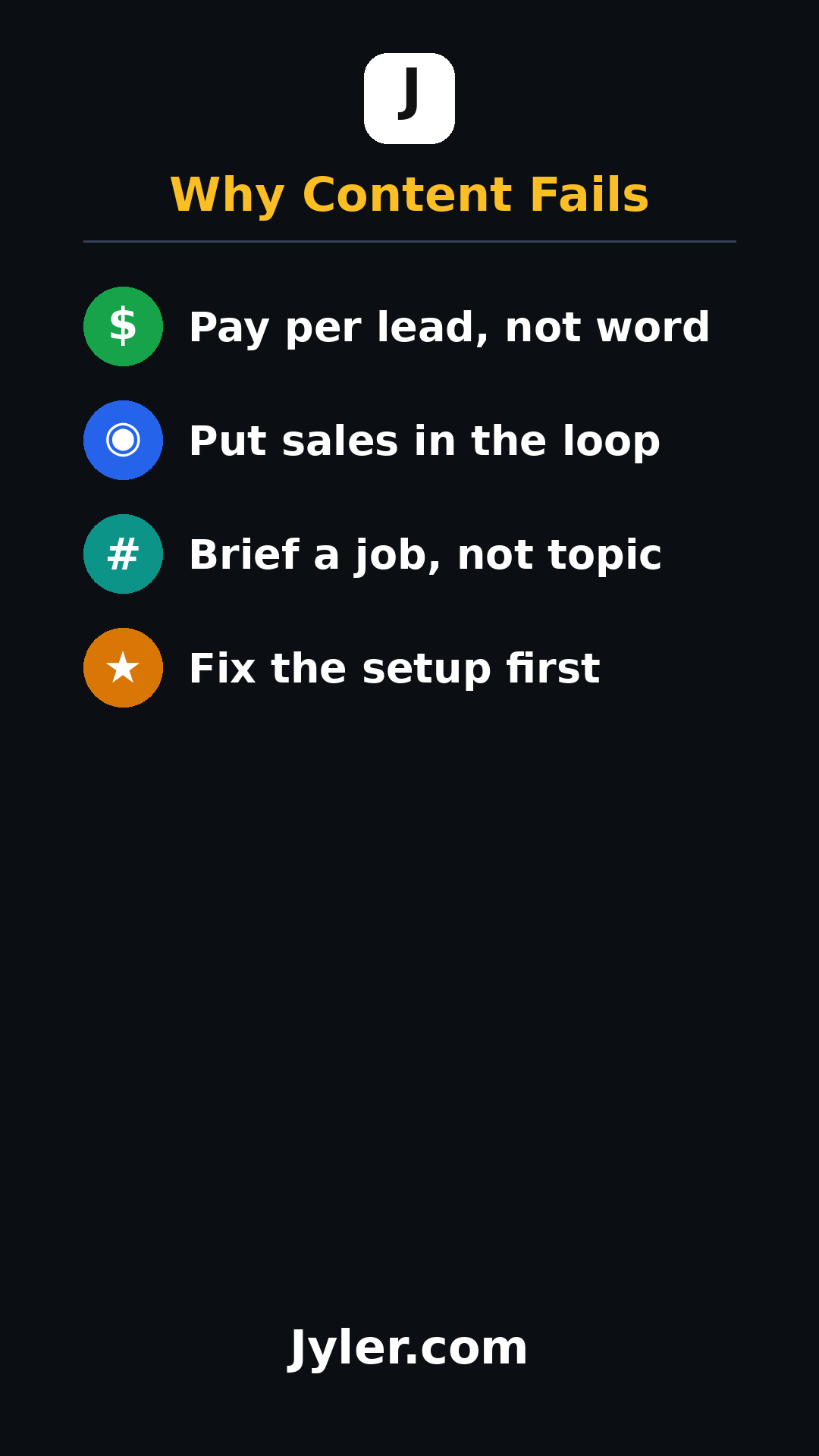
Most content programs die for reasons that have nothing to do with writing skill. The damage happens before a single word gets written: vague briefs, no clear owner, wrong numbers on the dashboard. Fix those four things and even an average writer will produce work that sells.
A Quiet Budget Drain
Content marketing costs about 62% less than outbound and pulls roughly three times the leads. That number gets quoted in every pitch deck. Then the program stalls by month four.
The writing was usually fine. The setup around it was not.
If you are paying for a done for you content writing service, you are buying output. What you do with the brief and the feedback loop decides whether that output earns its keep.
Mistake 1: Paying Per Word Instead of Per Result
A freelance post runs $150 to $400. An agency post runs $500 to $2,000. A done for you content writing service often works on a retainer, somewhere between $2,000 and $8,000 a month.
None of those numbers tell you if the money works. Cost per word is a vendor’s price tag. Cost per qualified lead is your actual math.
Run this: total content spend divided by leads sourced from content. If you spend $3,000 a month and pick up six real leads, your cost per lead is $500. That number you can compare against paid ads.
Action step
Before you sign anything, ask the provider how they report leads, not pageviews. A provider who cannot answer that is selling words by weight.
Mistake 2: Nobody Owns the Buyer
Roughly 57% of a B2B buying decision is finished before a prospect talks to sales. So your content is doing the selling while the buyer is alone with a browser tab.
Now look at who briefs the writer. Usually it is a marketing manager who never hears a live objection. The sales team hears the objections daily and never talks to the writer.
That gap produces posts nobody needed. They rank for terms no buyer types and answer questions nobody asked.
Fix it: put one salesperson in the loop. Ten minutes of “here is what kills deals this month” beats a week of keyword research.
Mistake 3: Briefing a Topic Instead of a Job
“Write about email deliverability” is a topic. It gives the writer a subject and no target.
A real brief names four things: the buyer, the action you want, the objection to beat and the proof you own. Skip one and the writer guesses.
Here is the difference in practice. A topic brief produces a 1,500-word explainer. A job brief produces a page that answers the exact fear in the buyer’s head at 11pm.
Warning
If your brief is one sentence long, you are not outsourcing content. You are outsourcing your thinking. That always costs more in rewrites than it saves up front.
Mistake 4: Treating Content as a One-Time Task
One post published and forgotten is a cost. A post that gets refreshed twice a year is an asset.
Search rewards pages that stay current. Updating a page that already ranks is cheaper than launching a new one. Most teams do the opposite and wonder why the traffic line flattens.
Put it on the calendar: every quarter, pick the three pages closest to ranking and improve them. That single habit beats publishing ten new posts.
Mistake 5: Measuring the Wrong Number
Traffic feels good. It also lies. A thousand readers who never raise a hand are worth less than thirty who do.
Track replies, demo requests, saved pages and newsletter signups. Those are hand-raises. Pageviews are weather.
Ask your provider for a monthly line that says how many people took the next step. If the report only shows sessions and bounce rate, you are watching the wrong dial.
Things to keep in mind
Numbers that go up are not always numbers that matter. Make sure at least one metric on the report is tied to revenue or a real conversation.
Mistake 6: Outsourcing Writing When the Gap Is Input
This is the big one. A done for you content writing service writes well. It cannot invent your customer stories, your pricing logic or the reason buyers pick you over the shop down the street.
If those things live only in your head, the writer fills the hole with generic advice. That is not a writing failure. It is an input failure.
Feed the writer a recorded call, a customer email or a support ticket. Raw material turns average content into something only your company could publish.
Quick test
Hand your last three source notes to a new hire. If they cannot spot the buyer, the problem and the offer in two minutes, the brief is too thin.
The One Thing To Do Next
Pick the single piece of content closest to producing a lead. Rewrite the brief around one buyer, one action and one objection. Add a real customer detail from a call recording.
Watch what changes in the replies. Then apply the same brief format to the next piece and the next.
If you want that handled end to end, our done for you content writing service builds the brief, the research and the reporting around your buyers, not around word counts. Start with one page and see the difference a real brief makes.
Watch the 30 second summary
Video transcript: Cost per word is a vendor’s price tag. Divide your total content spend by leads and compare that against paid ads. Buyers decide before talking to sales. Ten minutes of what kills deals this month beats a week of keyword research. Name the buyer, the action, the objection and the proof. A topic brief gives the writer a subject and no target. Most content programs die before a word is written. Vague briefs and wrong dashboard numbers sink them. Fix the setup and average writing sells.