Key Takeaway
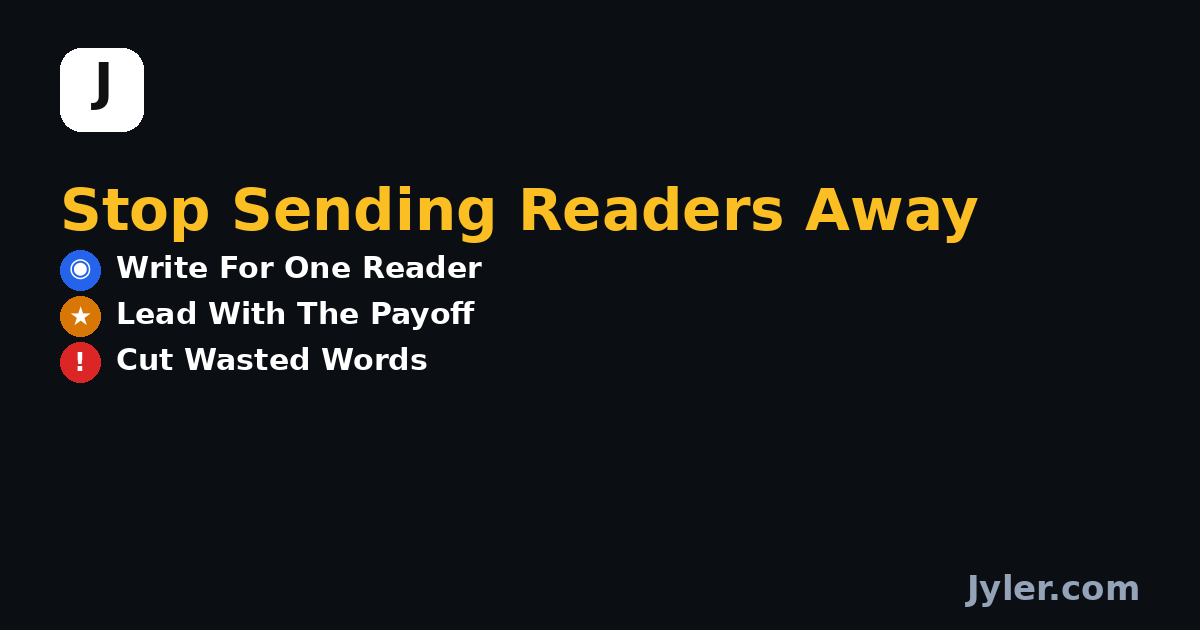
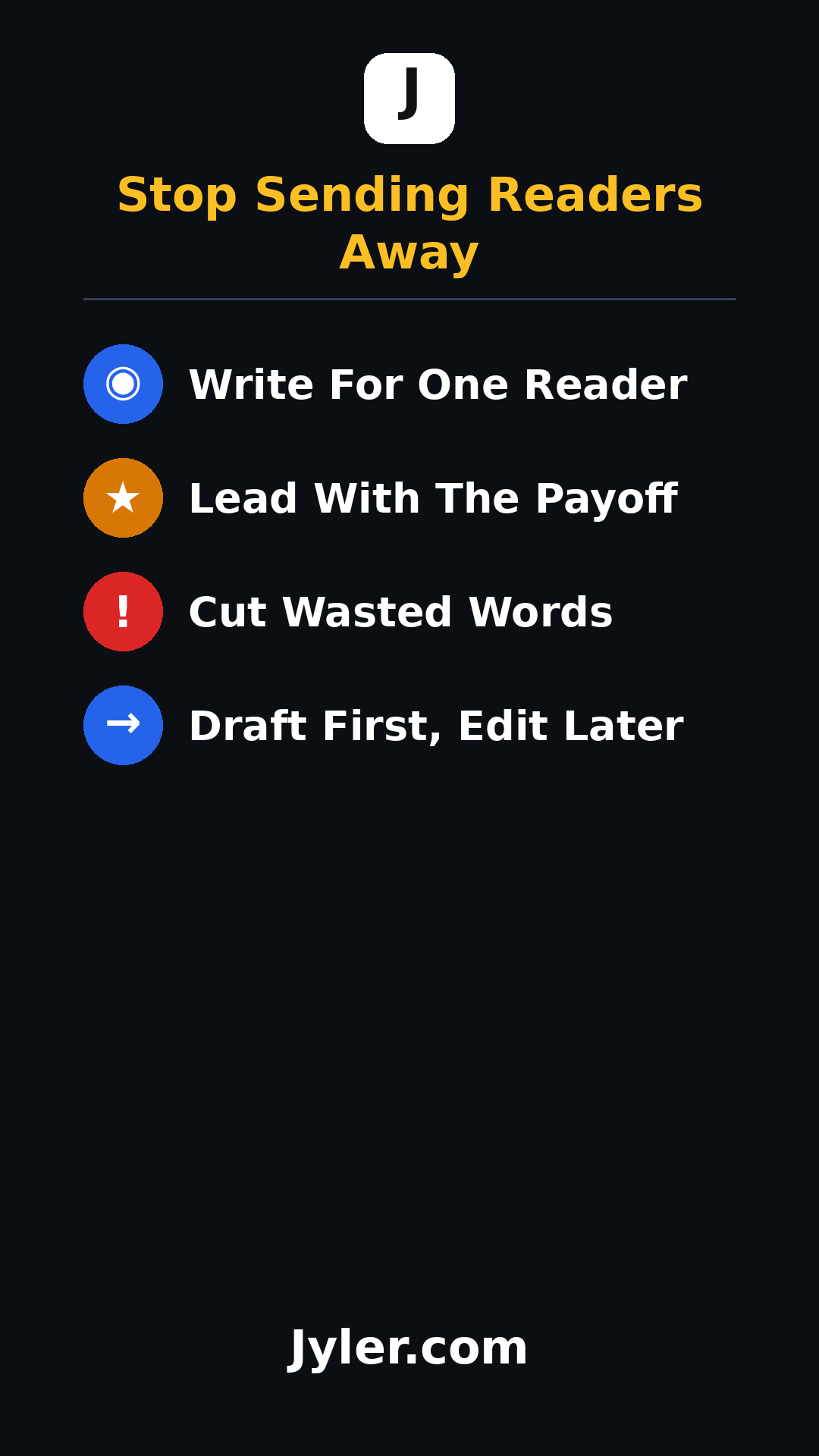
The content writing mistakes that cost you readers happen before you type a word. They start with the person you write for and the promise you make in your first line. Fix those two and the rest of the draft moves faster.
Readers quit before they finish your first screen
Common traffic estimates suggest most visitors give a page about 15 seconds to prove it is worth their time. Around half never scroll past what loads in the first screen. Your opening line does more selling than anything below it.
Readers hand over attention only when the next sentence looks better than leaving. If you spend your first paragraph warming up, you lose the room.
Mistake #1: Writing for everyone
Aim at everybody and you write sentences that fit nobody. A post about “improving business operations” helps no one. A post about how a two-person plumbing crew cut invoice errors by 40 percent gets read and shared.
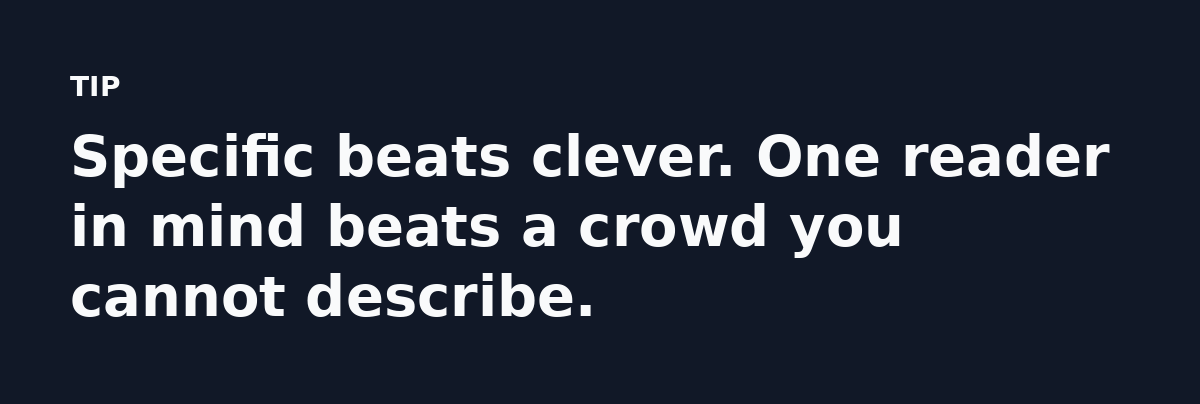
Pick one reader. Give them a job title and a recurring problem. The words get sharper the moment you can picture the person on the other side of the screen.
Mistake #2: Burying the payoff
Writers love backstory. Readers want the answer. If your main point shows up in paragraph six, most people left at paragraph two.
Put the outcome in the headline and again in the first sentence. Then earn the details one step at a time.
Mistake #3: Chasing a word count
A 2,000-word post with 600 words of value wastes 1,400 words of your reader’s time. Long content works when every section adds a new fact or example. Padding shows.
Cut until the piece still makes sense without the sentence you just deleted. Then cut one more. If a line does not help the reader act, it can go.
Quick fix: Highlight the single sentence in each paragraph that carries the idea. Delete the rest and read it again. Most paragraphs get shorter and clearer.
Mistake #4: Editing while you draft
Editing too early kills momentum. You stall on word choice and then blame writer’s block. The block is usually your inner editor cutting in before the draft exists.
Draft fast with the door closed, then fix later with the door open. Separate the two jobs and a blank page stops feeling heavy.
Mistake #5: Making claims with no proof
A blanket claim to help businesses grow tells a reader nothing. A client that moved from 12 leads a month to 34 in 90 days tells them everything. Numbers and short stories do the persuading.
Run a proof test on every claim
Read each claim out loud. Ask what number or example sits behind it. If you cannot name one, the claim is a guess. Mark it and go find the fact.
Mistake #6: Leaving the reader with nothing to do
An article that ends on a summary asks the reader to do the thinking. A better close names one next action. Send the draft to a single reader for a five-minute check.
Mistake #7: Ignoring how the piece looks
A strong idea in a wall of text still loses people. Short paragraphs and clear subheads let a skimmer get the point in seconds.
Break any paragraph past four lines. Add a subhead every two or three paragraphs. The page should be readable on a phone with a thumb.
Mistake #8: Drifting off the core idea
Tangents feel productive in the moment. They split focus and leave the reader unsure what the piece was about.
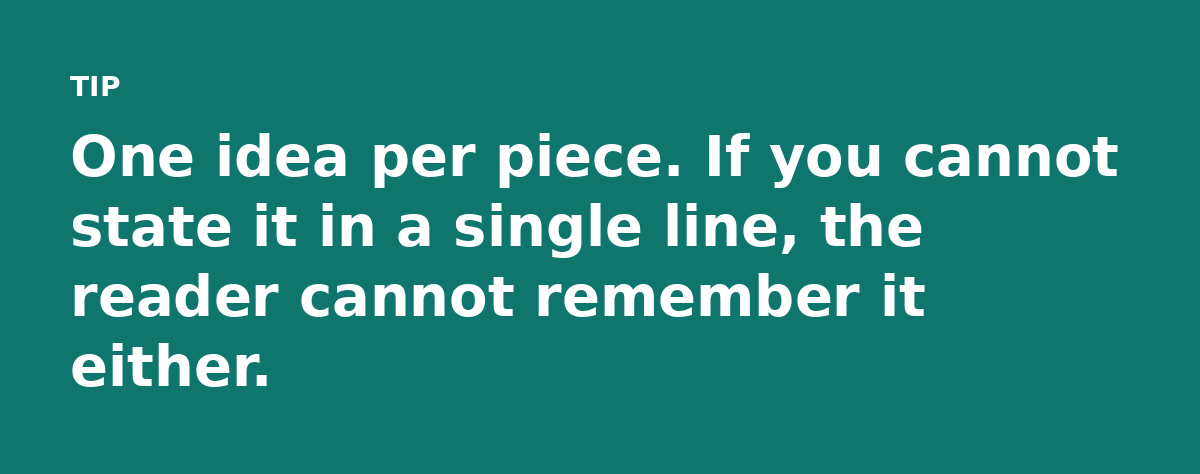
Write the takeaway on a sticky note before you start. If a new paragraph does not serve it, save that thought for a separate post.
Habits that keep quality steady
Read the draft aloud. Your ear catches clumsy sentences faster than your eye. Replace “utilize” with “use” and “in order to” with “to”.
Target an eighth-grade reading level. Keep most sentences under 25 words. Short sentences carry weight when you mix in a longer one that explains why the short one matters.
What to do next
Take the last thing you published and find its first line. Ask if a stranger would keep reading after it. If not, rewrite that one line and republish.
Do that for five posts this week. The pattern will show you which mistakes you repeat.
Watch the 30 second summary
Video transcript: A post for everyone helps no one. Pick a single reader with a job title and a recurring problem, and your words instantly get sharper. If your main point lands in paragraph six, readers left at paragraph two. Put the payoff in the headline and first sentence, then earn the details. A long post with little value wastes your reader’s time. Cut anything that does not help them act, then cut one more line for good measure. Editing while you draft kills momentum and creates the block. Draft fast with the door closed, then edit with the door open as a separate job.