Executive Summary
A private equity takeover rarely changes the work on Monday morning. It changes the scoreboard. The new owners care about cash, so the people who can show those numbers clearly keep their seats.
Here is what shifts and how to get ahead of it.
The First 90 Days Feel Friendly. Then the Spreadsheets Arrive.
Most deals land with a warm speech. Leadership says nothing big will change. That holds for a quarter or so.
Then reporting requests start. A weekly call adds a tab and finance wants pipeline split by stage. Someone asks why a discount got approved on a Tuesday.
The message is plain. Old wins do not count the same way anymore.
A $40,000 deal signed at a 30 percent discount used to be a win. Now it may look worse than nothing, because the money takes eight months to arrive and the gross margin barely covers the cost of the rep.
Cash Moves to the Top of the List
Private equity funds raise money from investors and answer to them. Most funds aim to return that money within five to seven years.
So the questions turn to cash. How long do customers take to pay? Which product line actually makes money?
Here is the math they run. Customer acquisition cost equals total sales and marketing spend divided by new customers won. Spend $60,000 in a quarter and close 30 accounts and your cost is $2,000 per customer.
If that customer pays you $150 a month, you need more than a year just to break even. That is the kind of number a new owner spots in week one.
Your Reporting Load Will Grow
Expect more meetings and more sheets. Data you gathered once a month may now be wanted weekly.
This is where most teams break. Reps hate logging calls and managers rebuild the same report by hand every Friday, so errors creep in and trust drops.
The teams that cope automate the boring part. Connect the CRM to a simple dashboard so pipeline and collections update themselves. Clean input matters more than fancy charts.
Pipeline Math Gets Tighter
New owners stop trusting gut feel. They want coverage.
Pipeline coverage equals open pipeline value divided by quota. Carry $100,000 in quota and $400,000 in open deals and your coverage is 4x.
Most sales teams want somewhere between 3x and 4x. The right figure depends on deal size and win rate. A team that wins one in five deals needs more pipe than a team that wins one in two.
What Stays the Same
Customers still buy for their own reasons. A feature that saves someone two hours a week still beats a slick pitch.
What you control is how fast your team learns its own numbers.
How to Get Ready Before the Ink Dries
- Pull your last four quarters into one sheet. Revenue, margin, churn and days to collect.
- Know your win rate by lead source. Referrals and cold email rarely perform the same.
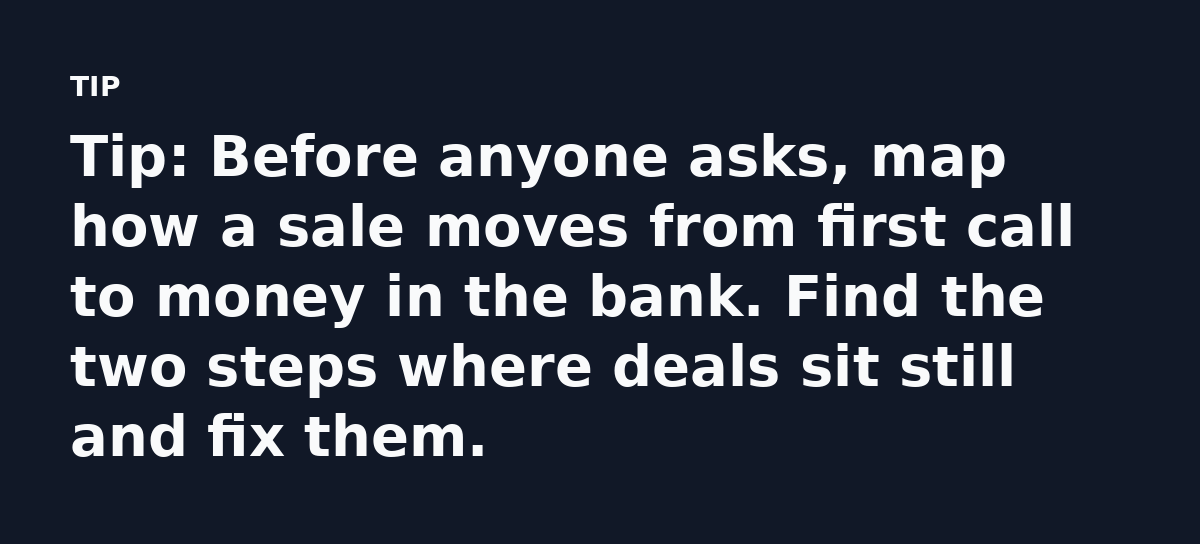
- Write down the two biggest reasons deals stall. Ask three reps the same question and compare answers.
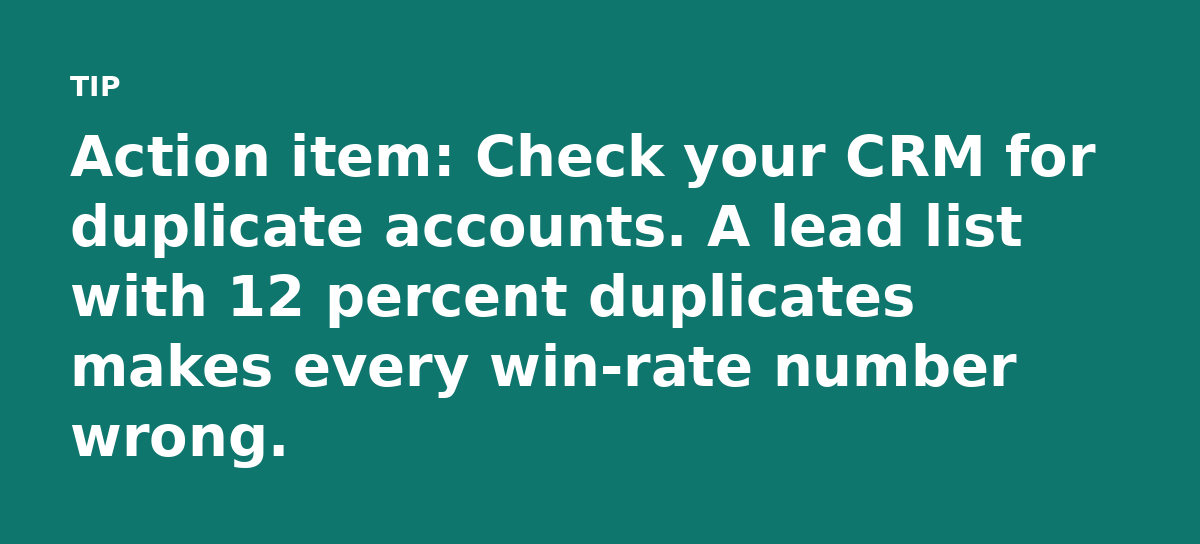
- Fix your contact data before a new owner inspects it. Wrong emails and dead phone numbers waste everyone’s time.
The One Habit That Protects Your Job
Show your work. When a number moves, explain why in one line. Owners want to understand the business.
A manager who says pipeline dropped 18 percent because outbound paused in week two and two large deals slipped sounds in control. A manager who shrugs sounds like a risk.
What to Do This Week
Pick one number that shows cash coming in, such as collected revenue or average days to payment.
Build a simple weekly view of that number and share it with your team every Monday. When the takeover questions arrive you will already have the answer on one page.
That single page is often the difference between being seen as a cost and being seen as the person who runs the engine.
Watch the 30 second summary
Video transcript: The first quarter feels friendly, then the reporting requests start. A discounted deal that took eight months to pay now looks worse than no deal at all. Owners answer to investors and want their money back in five to seven years. Know your acquisition cost per customer and how long they take to pay. Data you gathered monthly is now wanted weekly. Do not rebuild reports by hand. Connect your CRM to a dashboard so pipeline and collections update themselves. Owners stop trusting gut feel and want coverage. Divide open pipeline by quota. Most teams aim for three to four times, depending on deal size and win rate.