Key Takeaway
A winback campaign is the right move for a list nobody has emailed in two years. The danger hides before the first send. Old addresses can become spam traps and one careless blast can drag your domain down for months. Check the list before you write the email.
What Is a Winback Campaign, Exactly?
A winback campaign is a sequence of emails sent to contacts who stopped opening or clicking. The goal is simple. Wake up the people who still want to hear from you and let the rest go.
It works when the list is cold but still real. It backfires when the list is full of addresses that no longer belong to a living reader.
How Long Is Too Long to Leave a List Alone?
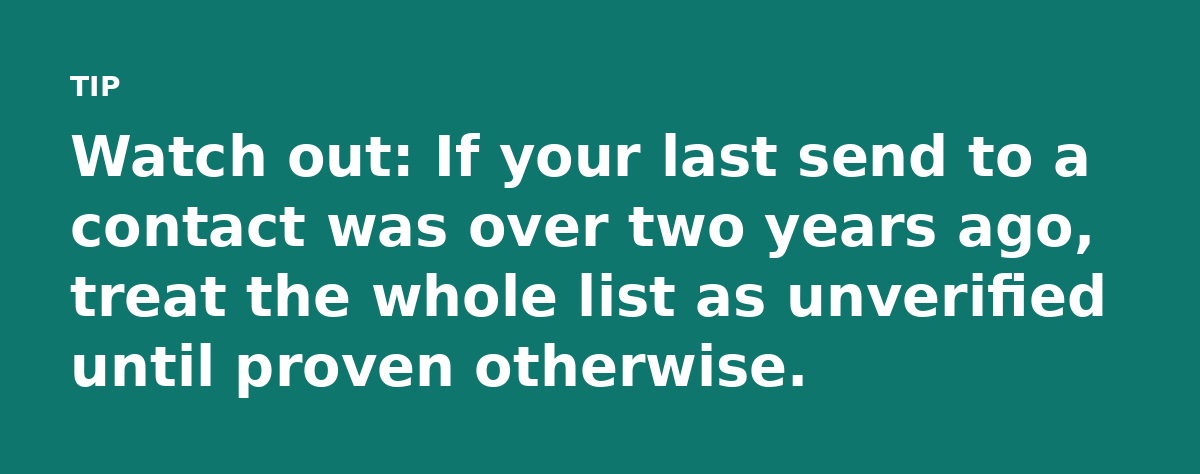
Twelve months of silence is a warning. Twenty-four months is a repair job. Internet providers recycle addresses that sit dead too long. A closed email account or an abandoned work inbox can get handed to a new person or converted into a monitoring address.
That second kind is the one that hurts, because it never bounces and never opens.
Where Did These Contacts Come From?
This is the first question and probably the hardest. Pull the source for every address. Purchased files and scraped pages are trouble, because you cannot show the person chose you.
If the trail ends at a spreadsheet with no signup record, that address is a liability. Skip it.
Can I Prove They Opted In?
Proof means a timestamp or a saved form submission tied to that email. Good platforms log this. If yours does not, dig through old capture pages or checkout receipts.
No proof, no send. This single rule prevents most deliverability disasters.
What Is a Spam Trap and Why Does It Matter?
A spam trap is an email address run by a provider or a blocklist company. It accepts mail like a normal inbox. Nothing tells you it is fake.
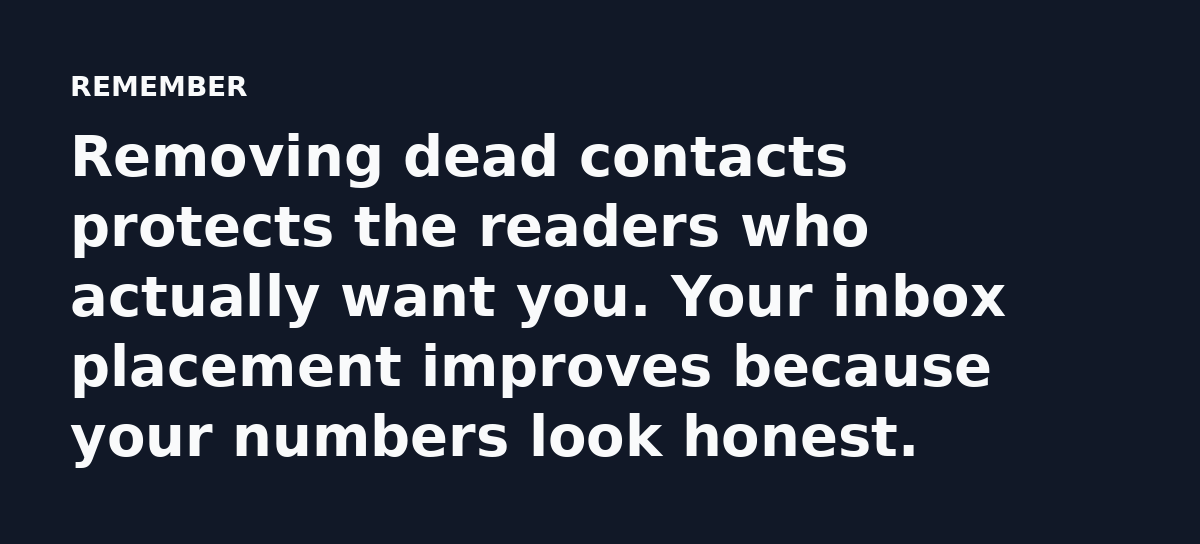
You find out later, when your open rate collapses and fewer messages reach the inbox. Hit enough traps in a short window and your domain lands on a blocklist.
Can I Just Blast Everyone and See Who Bites?
No. According to public reports, one company inherited 2,000 contacts and did exactly that. The winback went out to the full list. Three months later they were still digging the domain back out.
A full send to dead addresses raises bounce rate and complaint rate at the same time. Both signals tell providers your mail is unwanted.
How Do I Sort the List Before Sending?
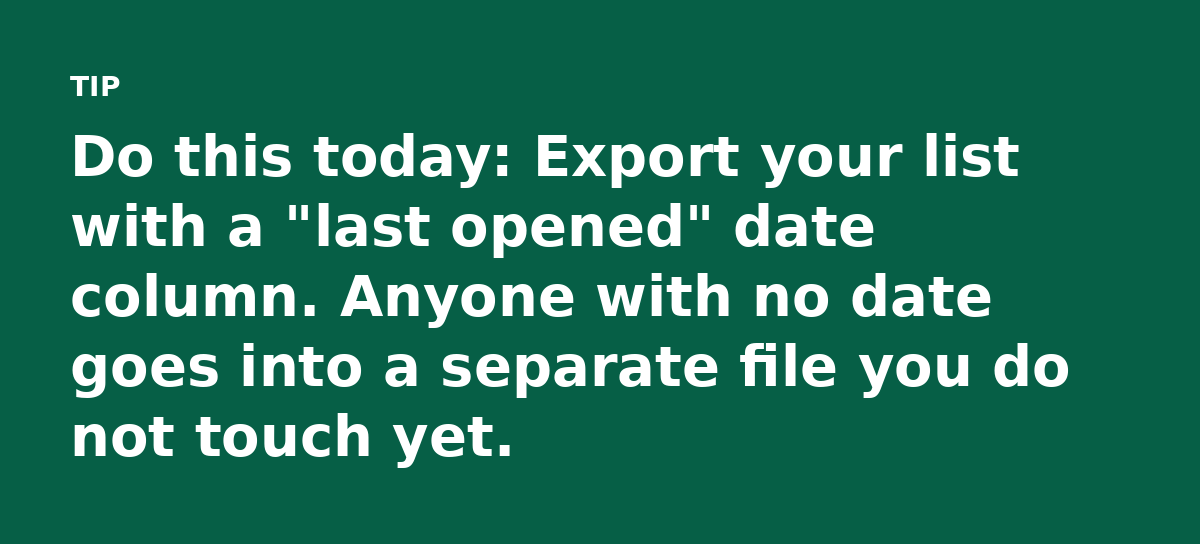
Segment by last known activity. Put the people who opened in the past 90 days at the top. Next comes the 90 to 180 day group. Then the truly cold names.
Send only to the warmest group first. Your domain stays healthy because engaged readers open and reply.
What Does a Safe Re-engagement Sequence Look Like?
Keep it short and plain. Two emails across ten days works for most lists, written in a human voice.
Email one asks a simple question. “Still want to hear from us?” Email two offers a clear way out. No image-heavy templates. No hidden links.
What If Nobody Opens the First Email?
Do not resend the same message to the same dead group. Wait, then try one plain-text note from a real reply address. If that gets silence too, remove them.
When Should I Cut Someone Loose?
Suppress any contact who ignores two re-engagement emails. You keep the data and stop mailing them.
A smaller list of live readers beats a big list of inactive ones every time.
What Numbers Should I Watch During a Winback?
Two numbers decide whether you can keep going. Keep your bounce rate under 2 percent. Keep spam complaints under 0.1 percent.
If either climbs past those lines, pause the send. Review the segment before you continue.
How Do I Warm Up a Domain Fast?
Start small. Send 50 to 100 messages a day from a new or damaged domain. Add volume only when engagement holds steady.
Large lists need a slower ramp. Rushing the ramp is how a clean domain gets flagged.
How Do I Stop This From Happening Again?
Email your list at least once a month. Run a sunset policy that removes non-openers after a set window.
Consistent sending keeps addresses fresh, so a winback never becomes a rescue mission.
The One Thing to Do First
Before you write a single winback email, export your list and check where each contact came from. Delete or suppress anything you cannot trace to a real opt-in, then send to the warmest segment only.
Do that and your winback becomes a normal campaign. Skip it and you spend months rebuilding trust you already had.