A $60 article and the $4,000 month that followed
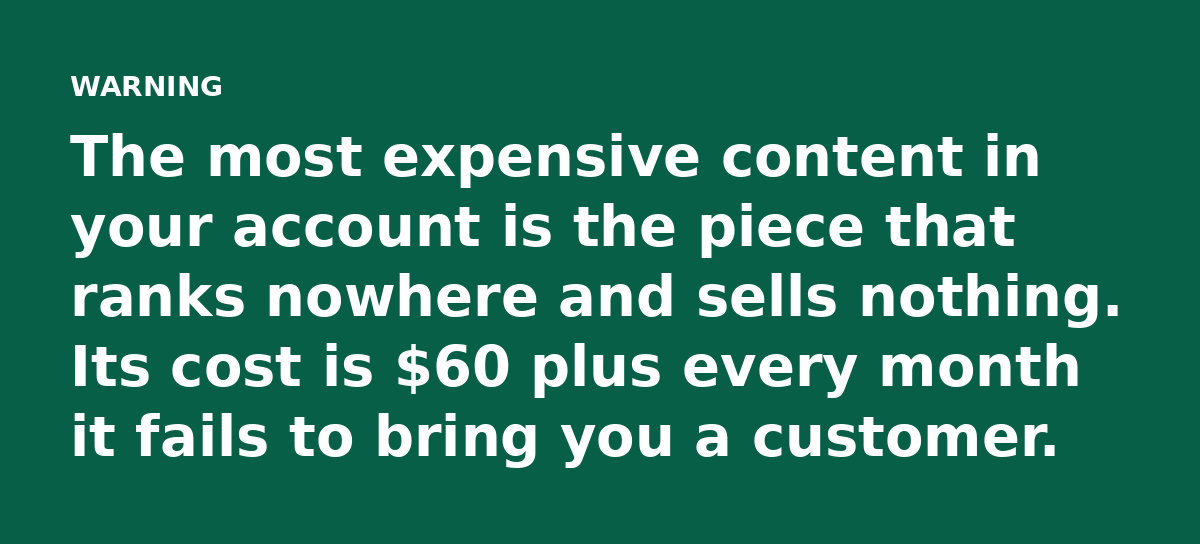
A plumbing company owner I know bought 20 blog posts at $60 each. One thousand two hundred dollars total.
By month four the posts had pulled 11 visitors from search. Total. His service pages, written by the same cheap vendor, ranked on page three for the phrase that pays his rent.
He then paid a second writer $3,000 to rebuild five of those pages. Same word count, a different outcome.
The cheap work cost him $3,000 plus the original $1,200 plus four months of a quiet website.
Run the math yourself before you buy
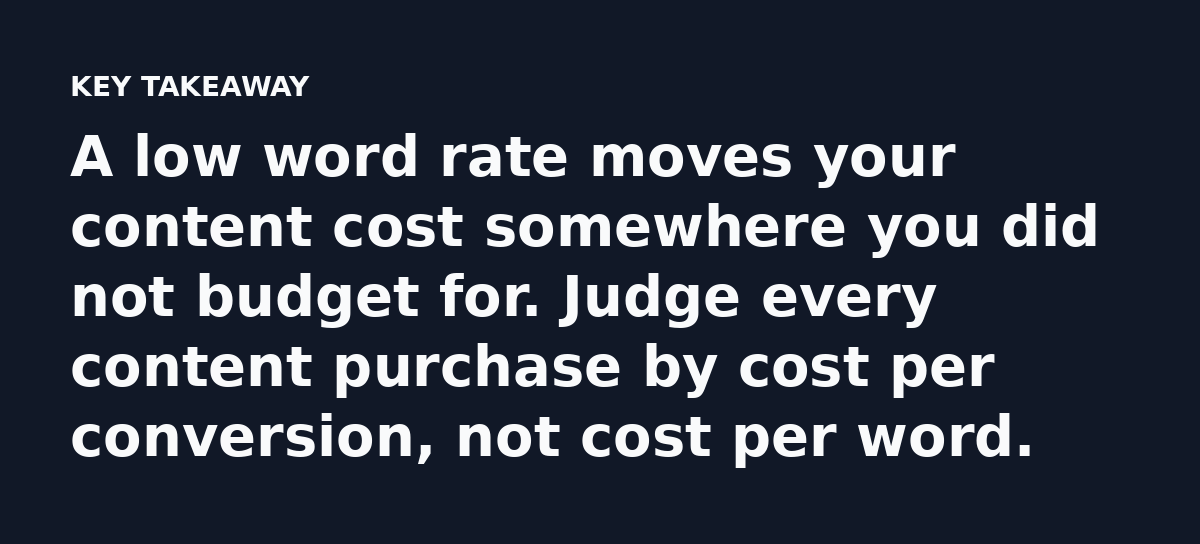
Cost per word is a vanity number you cannot deposit. Cost per conversion is the one that hits your bank account.
The formula is simple:
Cost per conversion = total content spend ÷ number of leads or sales it produced.
Now run two versions of the same article.
The cheap version costs $60. It draws 200 visits over a quarter and produces one lead. That is $60 per lead.
The careful version costs $450. It draws 1,200 visits and produces 24 leads. That is $18.75 per lead.
The expensive article was three times cheaper where it counts. The price tag lied to you. The math did not.
Where the cheap price is hiding its bill
Low-cost writers win work by producing volume fast. Speed leaves marks. You pay for those marks in two places.
First, rewrites. A draft that misses your tone or your offer comes back needing real surgery. You either fix it yourself at $0 cash cost and $200 in your own lost hours or you hire an editor.
Second, the leads that never arrive. This is the quiet one. You cannot see a lead you never got, so the loss feels invisible and you buy again.
How a cheap draft gives itself away
You can spot low-effort work before you publish. Read the first 100 words out loud. If you learn nothing new and feel nothing at all, the reader will too.
Check whether the piece names a real problem your customer has. A list of 10 generic marketing tips helps no one. An article about why a missed call at 6pm loses a $900 job does.
Look for specific numbers: prices, a concrete before and after in revenue. Vague praise of your industry is filler wearing a suit.
Finally, ask what action the piece asks the reader to take. If the only call to action is “contact us,” the writer did not think about the sale.
Test before you scale
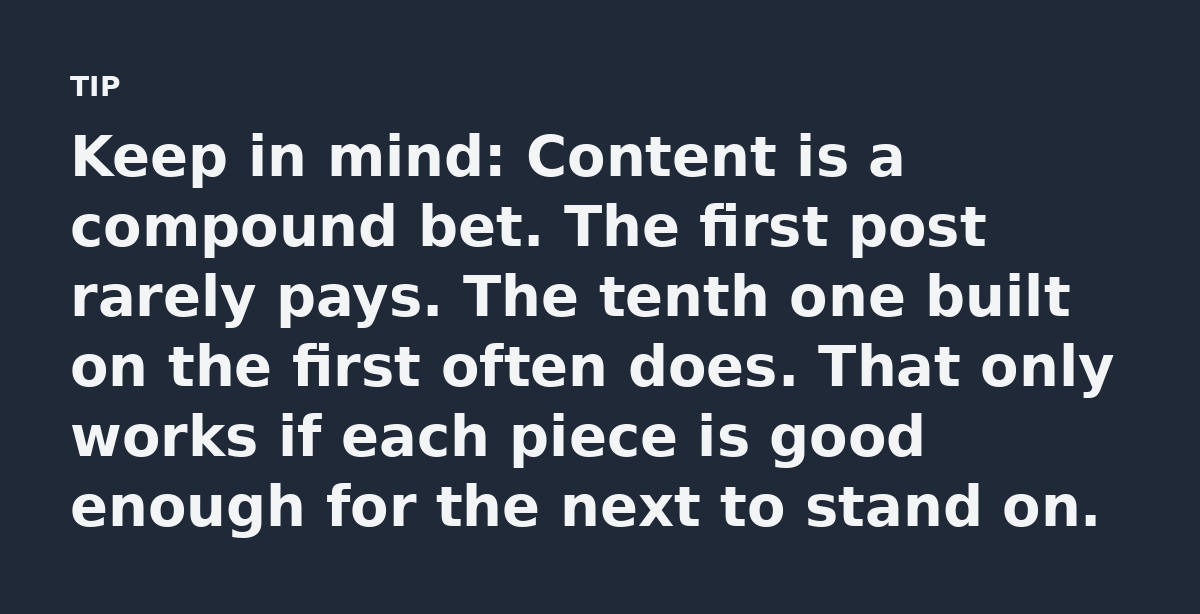
Do not commit to 30 posts with one cheap vendor. Buy three.
Give the writer one narrow topic with a clear buyer. Measure the traffic and the leads after 60 days. If the numbers hold, buy more. If they do not, you learned this for the price of three drafts instead of thirty.
This test works for any budget. A solo consultant can run it with a single page. A ten-person firm can run it across a category.
Track two numbers only at the start: visits and conversions. Everything else is noise until those two move.
What to pay for instead of cheap words
Pay for research. A writer who reads your sales calls or interviews your best customer will write something a competitor cannot copy.
Pay for structure. One clear problem per piece, one clear offer at the end. That is worth more than ten clever sentences.
None of this requires a big agency. A sharp freelancer at a fair rate beats a content mill every time and you can prove it with the conversion math above.
The one thing to do next
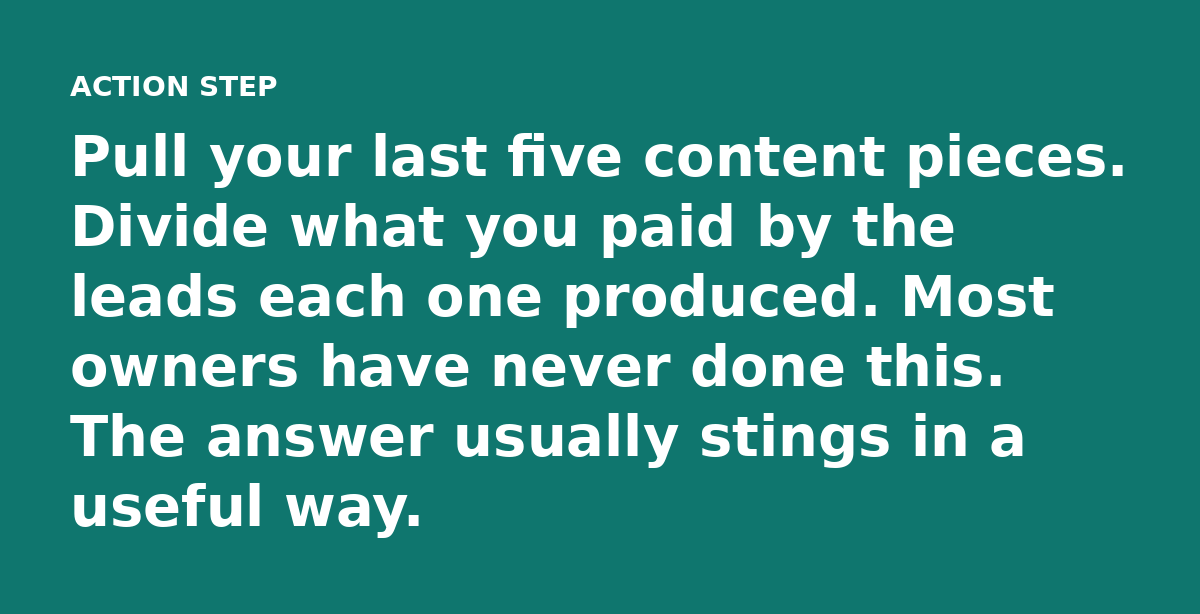
Before you hire another content writer, write down your target cost per lead. Say it is $30.
Then ask the writer what rate would let them hit it. Most will not know. That answer alone tells you who to work with.
Cheap content writing services sell you words by the thousand. Your business runs on conversions. Buy the second thing. Count the first.
Read the full guide: Done for You Content Writing Service: 6 Myths That Cost Business Owners Money