
Key takeaway
A 1,500-word service page costs $150 from a cheap freelancer. A mid-tier agency charges $2,000 for the same page. The gap is rarely talent.
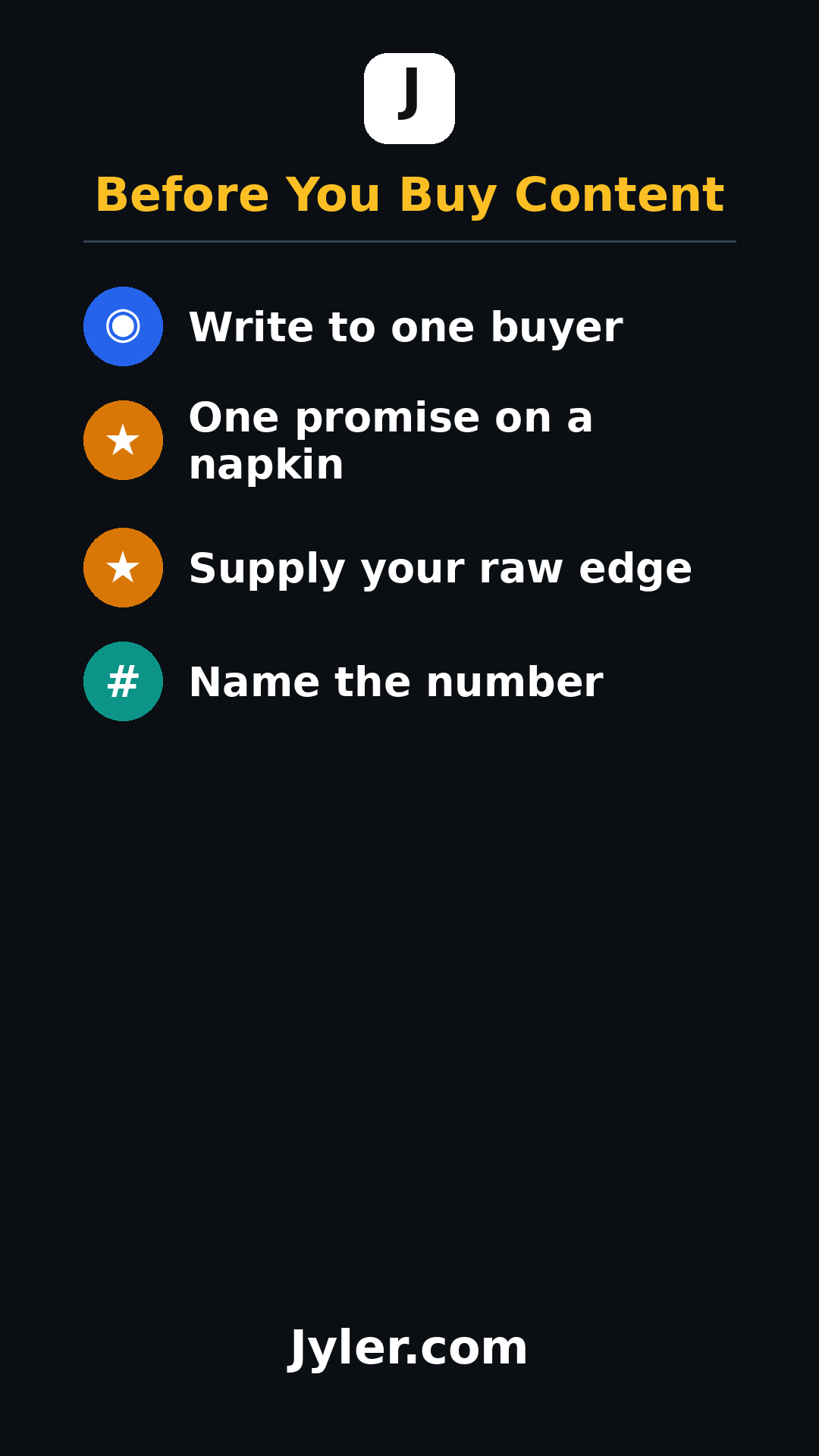
Before you hire a website content writing service, lock down four decisions: one buyer, one promise, the raw material you supply and the number the page must move. Get those right and cheap drafts still win. Miss them and every dollar leaks.
One buyer at one decision
A page written for everybody sells to nobody. Pick the person and the exact moment they arrive.
A plant manager searching “industrial pump repair” at 2am wants a phone number and a service radius. They do not want your mission statement.
Feed your writer that scene. Job title. What broke. What they already tried. A one-paragraph buyer note beats a ten-page brand guide for a single service page.
The offer has to fit on a napkin
A strong page carries one clear promise. “We clear a blocked drain in two hours or the visit is free” outsells a paragraph about your founding year.
If the offer needs a chart to explain, no writer can rescue the page. Fix the offer first, then write.
Price per word is a trap
Freelancers charge roughly $0.10 to $0.50 per word. Agencies run $1 to $3, sometimes higher. That spread sounds like quality. Often it is just overhead.
A $0.15 writer working from a tight brief and your call recordings will outwrite a $2 writer working blind. You are buying context, not adjectives.
Ask what the fee includes. Briefing calls, revisions, an SEO pass, internal links. If a couple of those are missing, price the rest yourself.
The raw material only you can supply
Writers cannot invent your edge. Hand over what only you know. Ten customer questions from your sales inbox. The objection that kills most deals. The warranty terms rivals refuse to match.
Record one sales call and share the transcript. Real buyer phrases produce copy that reads like a human wrote it and survives any plagiarism check.
No material means the writer fills space with generic claims. That is how a page ends up sounding like every competitor on the results page.

Two rounds of edits, then ship
Endless rewrites burn budget and flatten the voice. Build two revision rounds into the contract. Round one for facts and structure. Round two for tone.
After that, publish. A live page that helps one buyer beats a perfect draft sitting in a shared drive. Writers bill for time, so every extra pass adds cost without adding sales.
What the page has to move
Agree on the number before the first word. A page built to rank for “emergency plumber near me” succeeds on calls. A pricing page succeeds on form fills. One page, one job.
Set the target in plain terms. “Twenty demo requests in ninety days.” Now you can judge the work instead of guessing whether it feels nice.
The $12,000 page nobody read
A contractor paid an agency $12,000 for a new site. Every page opened with the company story. Traffic doubled and the phones stayed quiet. The buyer arrived with a burst pipe and read about the year the firm was founded.
The team cut the intros to one line and moved the emergency number above the fold. Calls climbed the following week. The words were fine. The order of the page mattered more.
Measure the page, not the word count
Track scroll depth and clicks on the main button. Google Search Console shows which queries pull the page in.
Impressions with no clicks means the title is failing. Clicks with no conversions means the body is. Those two signals tell you where the next dollar goes. Fix the headline first. It is the cheapest edit with the fastest payoff.
Run the math before you sign
Doing it yourself costs your hourly rate times six to ten hours per page. At $80 an hour that is $480 to $800 in lost work. Add the research and the edits.
A done-for-you page at a fixed fee often lands under that once you count your own time. The trade is simple. You keep selling and someone else writes.
What to do next
Write a one-page brief today. Name the buyer, the problem, the promise and the number the page must hit. Add five real customer questions. That brief is worth more than any argument about price per word.
Then hand it to your writer and watch the drafts improve. If you want a team that asks for that brief and writes to it, start with our website content writing service.
Watch the 30 second summary
Video transcript: A page written for everybody sells to nobody. Name the person and the exact moment they arrive, then hand that scene to your writer. A strong page carries a single clear promise. If your offer needs a chart to explain it, no writer can rescue the page. Fix the offer first. Writers cannot invent your advantage. Share real customer questions, the objection that kills deals, and one recorded sales call. Real buyer phrases make copy sound human and survive any plagiarism check. Agree on the result the page must move before writing starts. Two revision rounds, then ship. A live page that helps one buyer beats a perfect draft in a folder.