Key Takeaway
A sales role-play interview trades prepared speeches for one live selling moment. Hand a candidate a made-up buyer and 15 minutes. Watch what they do. That short exercise reveals real closing ability better than any polished answer or stacked resume.
Why Candidates Sound Great Until They Have to Sell
Ask a rep to describe their process and you get a tidy story. Ask them to run that process on you and the story falls apart fast.
A wrong sales hire costs real money. Say you pay a rep $60,000. Add four months of ramp time and a $12,000 recruiter fee. The total can clear $150,000 before you even know the hire is wrong.
So the interview has one job. Find out if the person can sell.
What a Sales Role-Play Interview Actually Is
You play the buyer. The candidate plays the rep. You agree on a product and a buyer type before the timer starts.
Then you sit back and let them run the call. No coaching. No hints. You react the way a real prospect would, good mood or bad.
Fifteen minutes is plenty. Most first calls either build momentum or lose it in the opening two minutes. You will feel the difference in your gut.
Set the Scene in Five Minutes
Pick something the candidate already knows. Their last product works fine. If they sold payroll software, you are a small business owner shopping for payroll software.
Write the buyer on one line. “Owner of a 12-person landscaping company. Uses spreadsheets. Got burned by a vendor last year.”
Give the candidate the key facts about their product and one hard constraint. Then say go.
Keep your buyer realistic
A buyer who says yes to everything teaches you nothing. A buyer who fights every point shuts the rep down. Aim for a real prospect’s mood. Interested and short on time.
A sample minute of the call
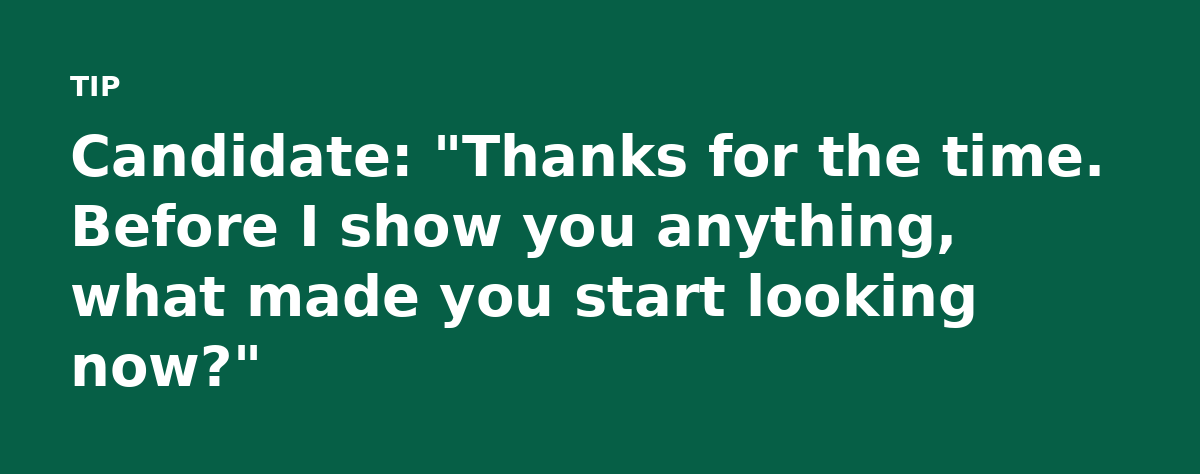
That one question does more work than any feature list. It hands the conversation to the buyer and buys the rep information for free.
How to Score What You Hear
Bring a scorecard. Score four things from 1 to 5 as the call moves along.
- Opening. Did they earn 30 more seconds or did they pitch into silence?
- Questions. Did they ask about the buyer’s problem or recite features?
- Listening. Did they use what you said or stick to a script?
- Close. Did they ask for a clear next step with a date on it?
Add the four numbers. A score under 12 deserves a second look before you move forward. A strong rep clears 16 without trying.
Probing Questions That Break the Script
After the role play, ask questions a prepared answer cannot cover. The good ones sound plain and short.
- “Why did you ask about their team size first?”
- “What did you hear that made you change direction?”
- “Where did you lose them and what would you try next time?”
- “How would you handle this if I said the budget was frozen?”
Strong reps answer fast. They point to a specific moment in the call. Weak reps drift into theory about sales in general.
Signals Worth Writing Down
You are watching for habits that either grow a pipeline or quietly drain it.
Good signs: the candidate pauses before answering and repeats your words back. Bad signs: they talk over you and reach for a discount the second you push back.
Another tell sits in the details. Reps who name a real number or a real person have run the motion before. Reps who stay vague have likely watched it from the sidelines.
What Happens Right After
Write two sentences before the candidate leaves the room: what went well and what you would coach first. Do it now, because details fade within an hour.
Then compare notes with anyone else who sat in. Do it separately first. Group opinions tend to collapse toward whoever speaks loudest.
A fair way to run it every time
Use the same buyer scenario for every candidate for a role. Same product. Same objection at minute four. That keeps your comparison honest.
Rotate scenarios across different roles so word does not leak. Ask candidates to keep the exercise private until they hear back.
The One Thing to Do This Week
You do not need a hiring overhaul. Pick your open sales role and write one buyer scenario. Run it on the next interview.
Score it out of 20 and ask the four probing questions. Then trust what you saw over what you heard.
That single change turns your sales role-play interview into the sharpest predictor you own of who can actually close.
Read the full guide: Sales Hiring Is Broken: How to Attract Reps Who Can Actually Sell