Key Takeaway
Bad process is what hurts SEO, whether the writing is in-house or outsourced. If you hand a writer a keyword and hope, you get pages that rank for nothing. If you hand them intent and proof, they can beat your in-house team at the one thing that matters: publishing helpful pages on a schedule.
Below are the mistakes that quietly cost business owners rankings and the exact fix for each one.
1. Sending a keyword with no search intent
Most owners brief a writer with a single line. “Write about project management software. 1200 words.” That brief is a gamble.
Search intent has four common shapes. Someone wants to learn, compare, buy or find a specific page. A writer who does not know which one you are targeting will produce a generic article that matches none of them.
Say the keyword is “invoicing for freelancers”. A searcher might want a definition or a comparison of tools. Two different pages, one keyword.
Fix it: Before you hire, paste the keyword into Google and look at the top five results. That is the format Google already trusts. Tell your writer to match it. Then add the one thing those pages lack.
Give the writer a defined job
Write the brief like a task. “This page must help a freelancer decide between invoicing software and a spreadsheet in under three minutes.” Now the writer knows when the page is finished.
2. Confusing word count with depth
Word count is a lazy proxy for effort. A 2000-word post that circles the same idea twelve times ranks worse than an 800-word post that answers the question in the first screen.
According to Google’s public helpful content guidance, pages made for people come first. Padding is easy to spot, readers bounce and those bounces are the signal.
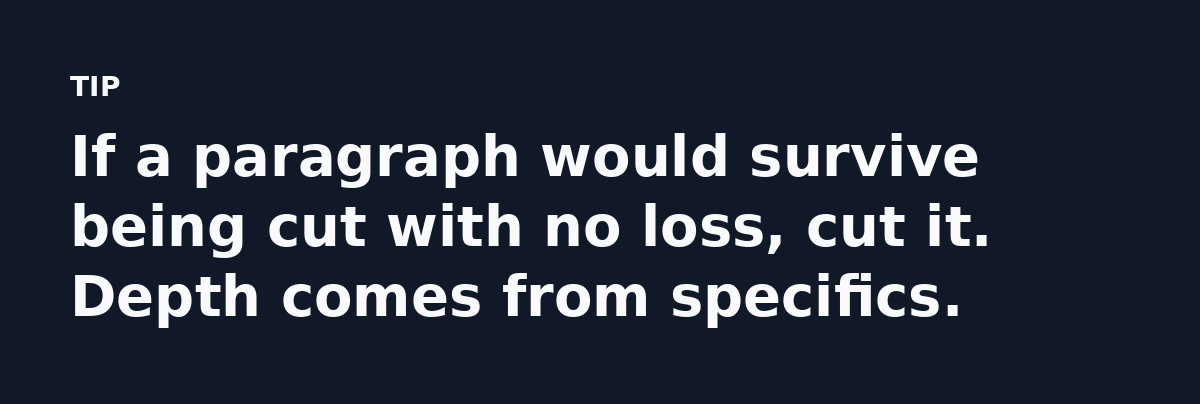
Fix it: Set a maximum length. Tell the writer the page must be complete in X words or less. The writing gets sharper because every sentence has to earn its place.
3. Leaving out first-hand experience
Experience is the first E in E-E-A-T. It is the hardest signal to fake and the easiest to outsource well.
A writer who has never touched your product cannot describe the moment a customer gets stuck. That detail is what separates a page that converts from a page that informs.
You have the experience and so does your support inbox.
Fix it: Record a 15-minute call with your writer. Walk them through a real customer problem. Send two customer emails. Now they can write from lived detail.
Proof beats polish every time
One real number from your business outperforms five well-crafted adjectives. “Cut invoice processing from 40 minutes to 6” says more than “streamline your workflow”.
4. Publishing before anyone reviews it
Outsourcing is not abdication. If content goes live straight from the writer’s draft, expect off-brand claims and keyword stuffing.
Your review does not need to be long. A ten-minute pass for facts and links catches the expensive problems.
- Check every number and claim
- Read the first sentence out loud. Does it sound like you?
- Make sure internal links point to pages that still exist
- Confirm the call to action matches the intent of the page
Fix it: Build a one-page checklist. Same one every time. It turns review from a debate into a routine.
5. Judging the page after two weeks
New pages rarely rank in week two. Google needs to crawl and index the page. That takes time. Panicking early leads to the worst move in SEO: constant rewriting.
Every major rewrite resets the page’s identity. You confuse the algorithm and delay the ranking you wanted.
Fix it: Pick a review window and stick to it. Check impressions first, then clicks. If impressions climb while position holds, the page is working. Give it room.

6. Treating each piece as a one-off
One article is a lottery ticket. Twenty interlinked articles are an asset. Outsourced teams often write in isolation.
Build topic clusters. One main page answers the big question. Supporting pages answer the smaller ones and link back. This shows Google you own the subject.
Fix it: Sketch your cluster on a single sheet before you brief anything. Main page in the middle, subtopics around it. Hand the writer the whole map.
7. Paying for outcomes
Per-word pricing rewards length. That is the opposite of what you want. It pays a writer to stretch.
A better arrangement ties pay to the job. A product comparison and a landing page each have a clear finish line. Pay for that finish line and quality stops competing with quantity.
Fix it: Set a flat rate per deliverable type. Then judge the work on whether it serves the reader.
What to do next
Pick one page you have already published. Run it through the seven points above. Most owners find three or four are broken.
Then change one thing in your next brief. Add the search intent and one real customer detail. Set a review window before you judge the result.
Outsourced content writing works when the process behind it works.
Read the full guide: Done For You Content Writing Service: 6 Myths That Cost You Money