
Key Takeaway
A portfolio shows you how a writer thinks, which matters more than tidy sentences. Seven warning signs surface before you sign a done-for-you contract. Screen for them early and you skip the costly part, which is finding out after three months of invoices.
The Portfolio Call That Went Sideways
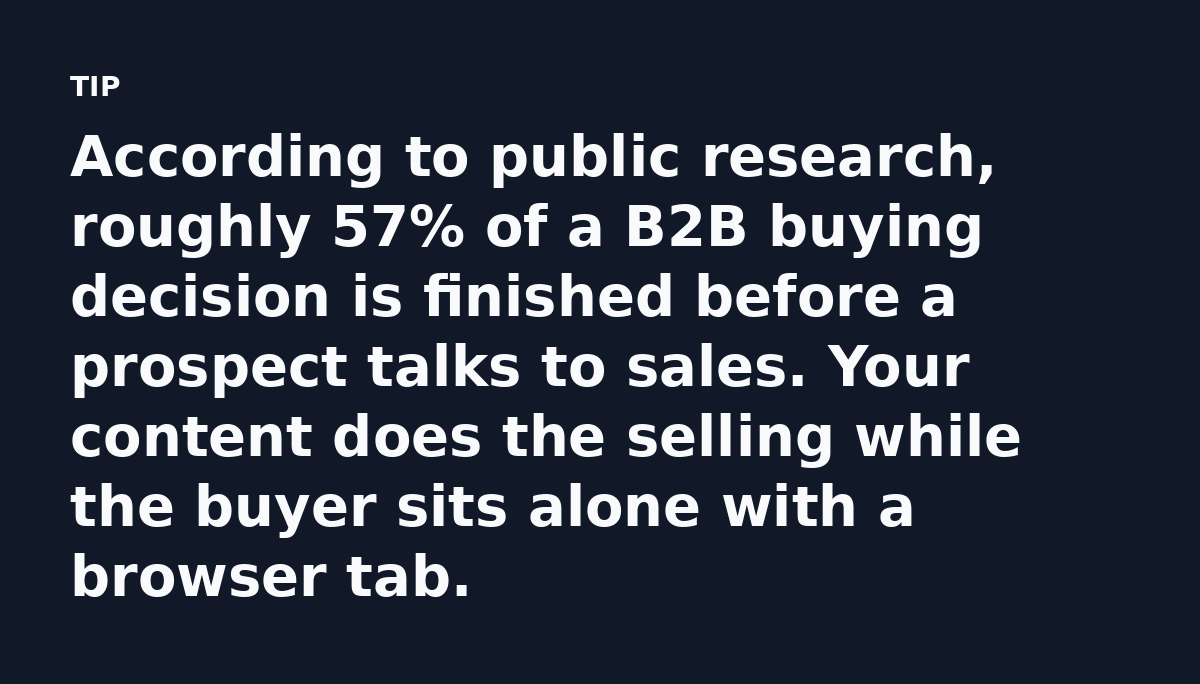
According to public reports, content marketing costs about 62% less than outbound and brings in roughly three times the leads. That promise is why people hire a done-for-you content writing service in the first place. Then the slideshow starts and the hard questions stop.
Two years ago I sat through a portfolio review that looked flawless. Twenty published pieces and two recognizable client logos. I clicked the first live link. Gone. The second one too.
We did not sign. The warning signs were sitting right there on the screen.
Red Flag 1: The Same Clips Under Every Name
A done-for-you service runs a bench of writers. You are not hiring one person. You are screening whoever gets your account at 9am on a Monday.
Open the individual bios and count the samples. If six writers list the identical three articles, that is one writer’s work wearing six hats.
Red Flag 2: Every Sample Talks About Content
Look at the topic mix. Ten posts about blogging and SEO tell you the writer has only ever written for other agencies. They have never had to learn a plumber’s schedule or a clinic’s intake process.
Ask for one piece written for a field they had to research from zero. That is the skill you are actually buying.
Red Flag 3: You Cannot Find the Buyer
Good writing names its reader. A portfolio where the same paragraph could serve a dentist or a software buyer is speaking to nobody.
Run a 60-second test. Read two paragraphs and try to say who the piece is for and what scares them. If you cannot answer, the writer never could either.
Red Flag 4: Dead Links and Pretty Screenshots
Ghostwritten work gets pulled when a client leaves. So a dead link is not automatically a lie.
The screenshot is the problem. It proves nothing and it copies easily. Ask for the story behind one live URL. What was the goal? What changed after it went up? A writer who watched the result can answer in detail.
Red Flag 5: Clean Sentences With No Stakes
Read for facts. Count the numbers and cited sources in each sample.
A writer who avoids verifiable detail will avoid yours too. Fluency is cheap. Specifics carry risk and risk is where the value lives.
Red Flag 6: Nothing Ever Asks for a Next Step
Check the endings. If every sample closes with a soft sign-off and no ask, the writer has never written to move anyone.
Those pages can rank and then just sit there. A thousand readers who never raise a hand do less for you than thirty who do.
Red Flag 7: They Forget the Brief Behind the Piece
Ask one question on the call. “For this article, who was the buyer and which objection did it answer?”
Real writers remember. Clip collectors change the subject.
A Screen You Can Run in 20 Minutes
You do not need a lawyer or a scoring sheet. Pick three samples at random from the provider’s portfolio. For each one, answer four questions.
- Who is the buyer?
- What action does the piece push toward?
- Which objection does it beat?
- What proof does it own?
If you can fill all four for all three pieces, the portfolio holds up. If your answers are empty, keep looking.
Then send a paid test with your own brief. One page. Same buyer, same action, same objection, same proof that you would give a full-time hire.
Important Facts to Keep Handy
Freelance posts run $150 to $400. Agency posts run $500 to $2,000. A done-for-you retainer often lands between $2,000 and $8,000 a month.
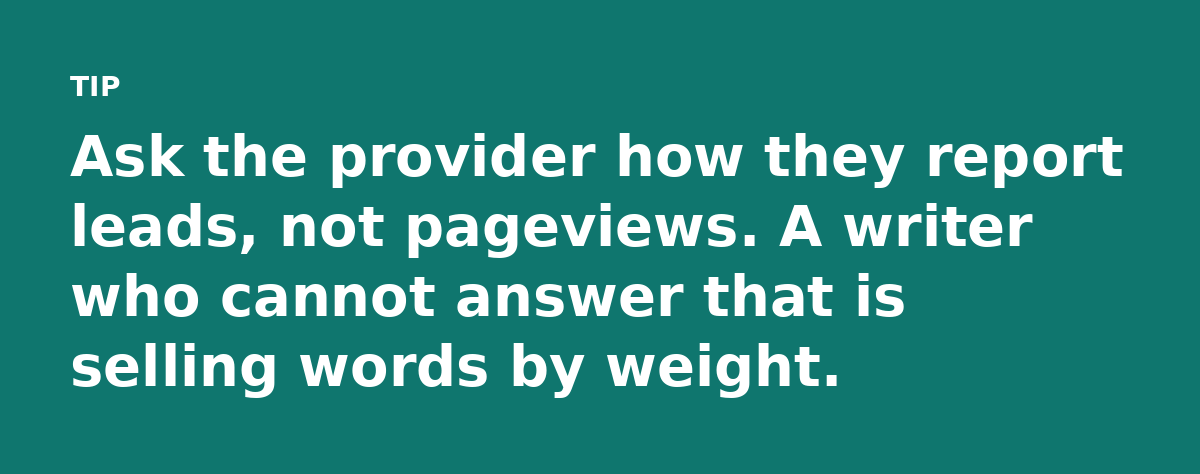
None of those numbers tell you if the money works. Cost per word measures volume. Cost per qualified lead is your real math.
The formula: total content spend divided by leads sourced from content. Spend $3,000 a month and pick up six real leads and your cost per lead is $500. Now you can compare it against paid ads.
The One Thing to Do Next
Before you sign, ask for three live URLs and one piece that never appeared anywhere else. Then hand the provider one recorded sales call and one customer email.
Ask them to rewrite a single brief around one buyer and one objection. If the new sample sounds like your customer, you found your service. If it sounds like everyone else’s blog, you just saved yourself a quarter of invoices.
That test costs you an afternoon. Skipping it costs you the whole contract.
Read the full guide: What Sinks a Done for You Content Writing Service (6 Costly Mistakes)