Key Takeaway
Content writing for beginners is simpler than most courses admit. You do not need a big vocabulary or a journalism degree. In 30 days you can learn to write short, clear copy that answers the reader’s one real question: what do I get and what do I do next?
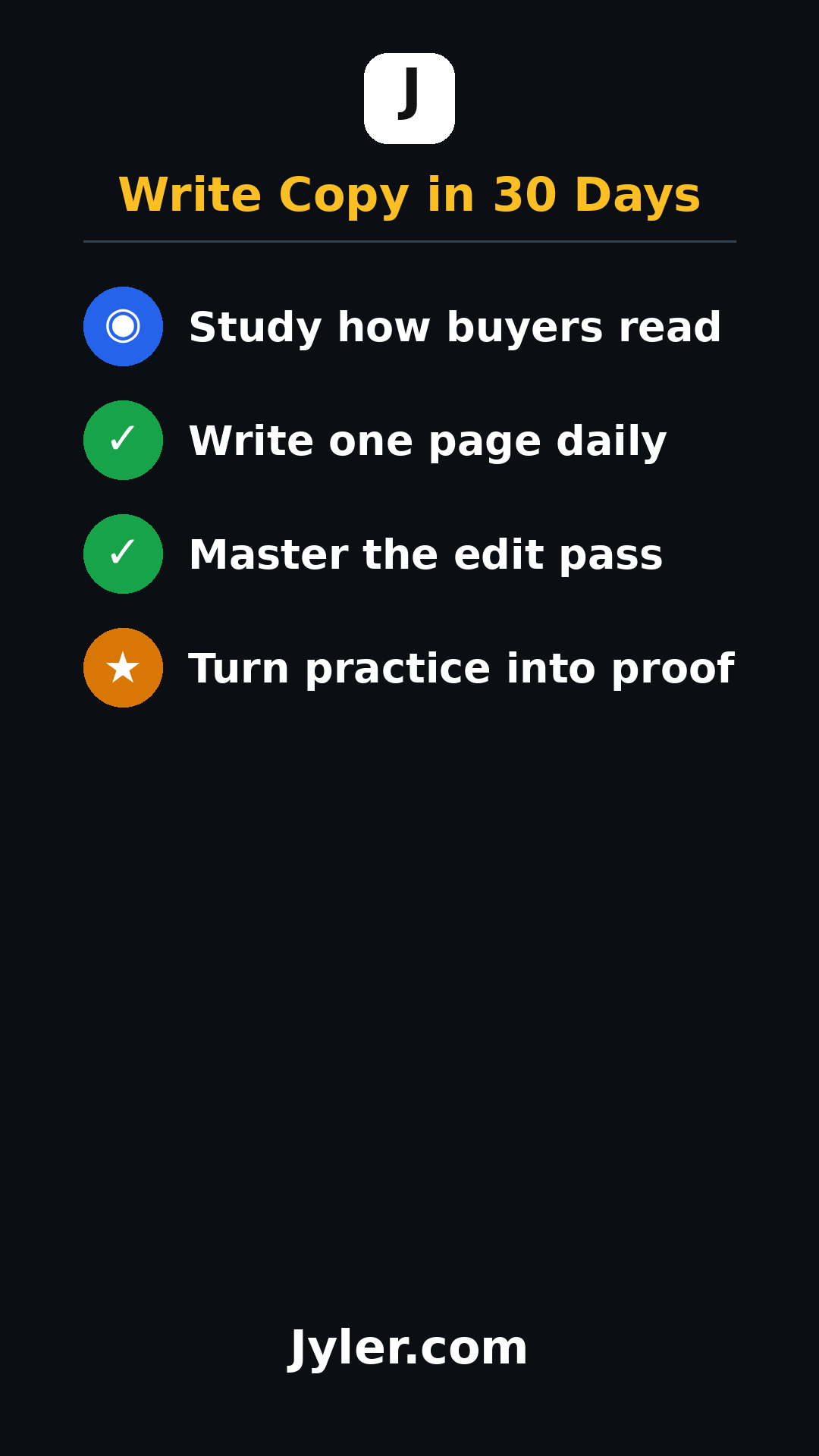
The plan below splits into four weeks, each with one job. Do the job and you finish the month with samples you can show a client or an employer.
Why content writing for beginners fails in week one
Readers read about 20% of the words on a page. Researchers have measured this across thousands of pages for years. So when a beginner spends the first week memorizing grammar rules, they are solving a problem the reader never had.
People skim and hunt for a reason to keep going. Your first skill is learning what makes them stop.
Clean prose helps. A clear promise helps more.
Week 1: Study how buyers read
Spend the first week reading, not writing. Study how the strongest pages open and ask who each one is for.
That study trains your eye to spot a promise and a payoff.
By day seven you should be able to point to the exact line meant to make a reader click.
One exercise that pays off fast
Pick a product you own and write one sentence about it in 12 words or fewer. Repeat with five different products. Short sentences force you to find the real benefit.
Week 2: Write one page a day
Speed comes from volume. From day eight to day fourteen, write 300 words daily on a topic you already know, such as a how-to post or a follow-up email for a past client.
Do not edit while drafting. Get the ugly version on the page first.
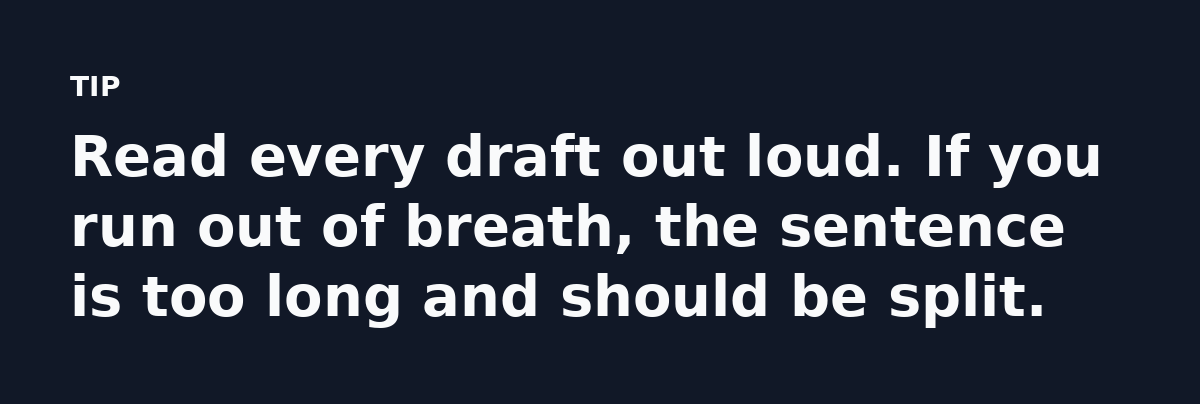
After each session, cut 20% of your own words. Deleting teaches you what matters faster than adding ever will.
Week 3: Learn the edit pass
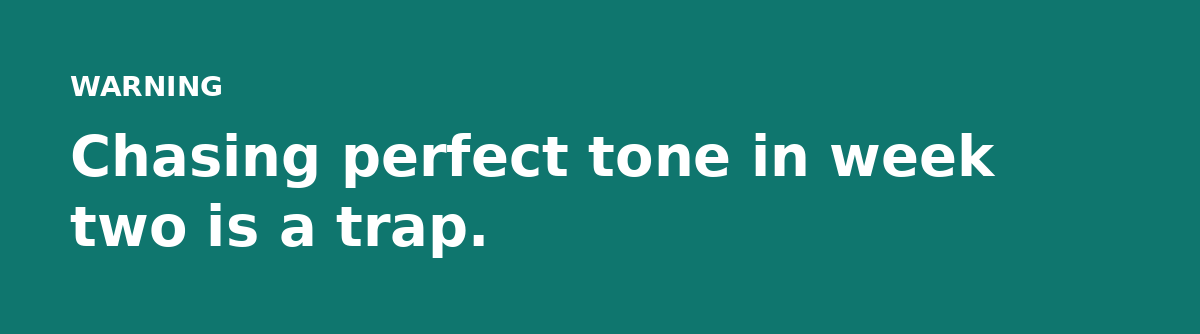
Week three separates the writers who grow from the ones who stall. You already have drafts, so now you learn to fix them with a repeatable method.
Run two passes on every draft. The first pass checks structure and asks whether the opening makes a claim. The second checks every line and asks whether each sentence earns its place.
Keep a short checklist next to you.
- Can a stranger understand line one?
- Is any sentence trying to do two jobs at once?
- Can you delete every adverb and keep the meaning?
- Does the piece end with a clear action?
If a draft fails one box, fix that and leave the rest alone. Small edits compound.
Week 4: Turn practice into proof
Nobody hires a writer with an empty folder. From day 22
Watch the 30 second summary
Video transcript: Spend week one reading, not writing. Study how top pages open and who they serve, so you can spot the line that makes readers click. From day eight to fourteen, write 300 words daily on what you already know. Do not edit while drafting, then cut 20 percent of your words. Run two passes on every draft. First fix structure and your opening claim. Then check each line and ask if it earns its place. Nobody hires a writer with an empty folder. Finish the month with real samples you can show a client or employer.