Key takeaway
A content brief is one page that tells a writer what to write and which search phrase the page must win. Owners who skip it pay for content that never ranks. This piece walks through the mistakes that cause that and the fix for each one.
What a content brief actually does
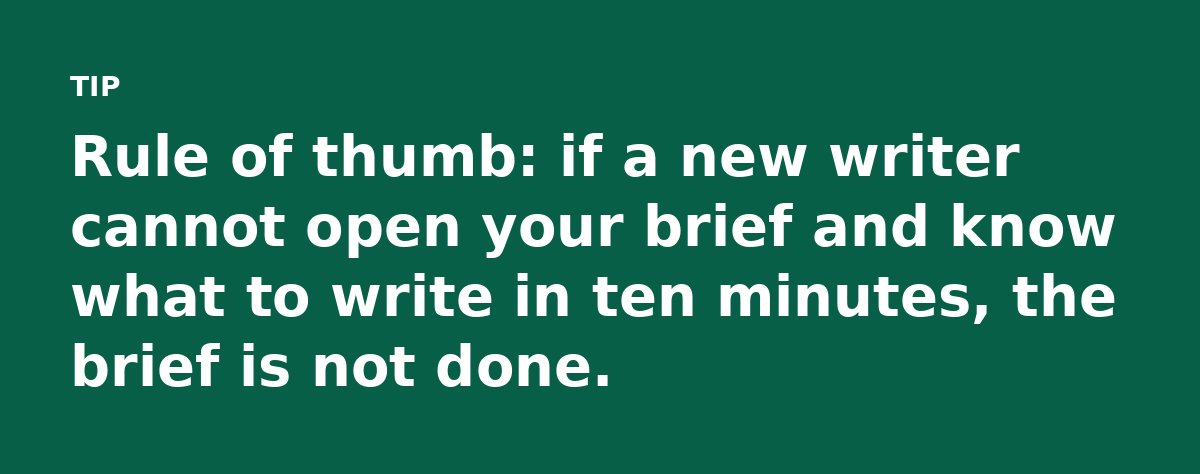
A content brief fits on one page. The exact search phrase goes at the top. Then the intent behind that search, plus the reader you are writing for. It also lists the questions the page has to answer.
When that page does not exist, your writer invents all of it. Their guesses are reasonable. They are also not your market.
The mistakes and how to fix them
Mistake 1: You hire the writer before you research the keyword
Most owners start with a writer. The research should come first and it should decide whether the page gets written at all.
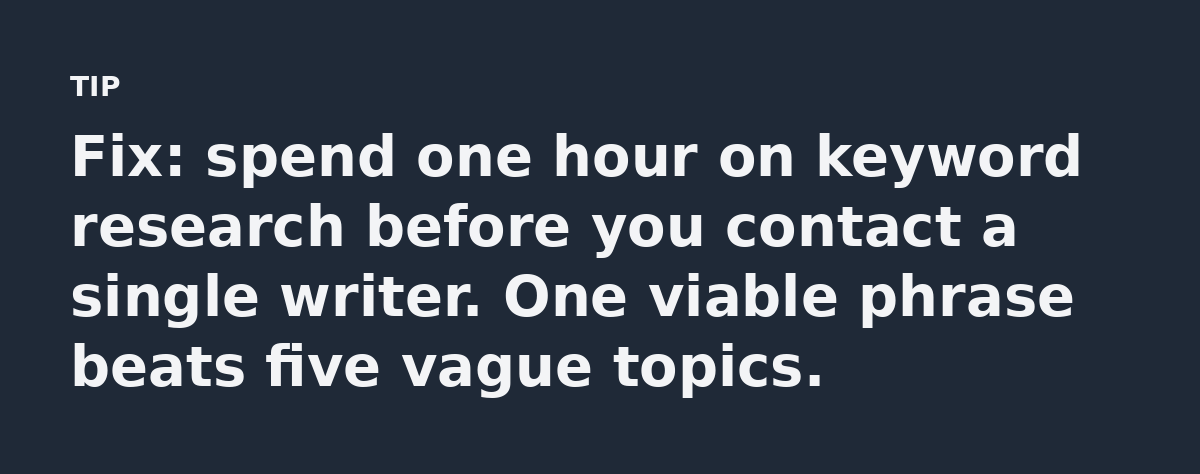
Pull the phrase you want to rank for, then check its monthly search volume and who already holds page one. If the top five results are a major brand and a national news site, a small budget will not move them. Pick a phrase you can win.
According to public click-through studies, the first organic result takes about 27.6% of clicks. Position ten gets under 2%. Ranking on page one and ranking on page three are different jobs.
Mistake 2: You hand over a topic instead of a phrase
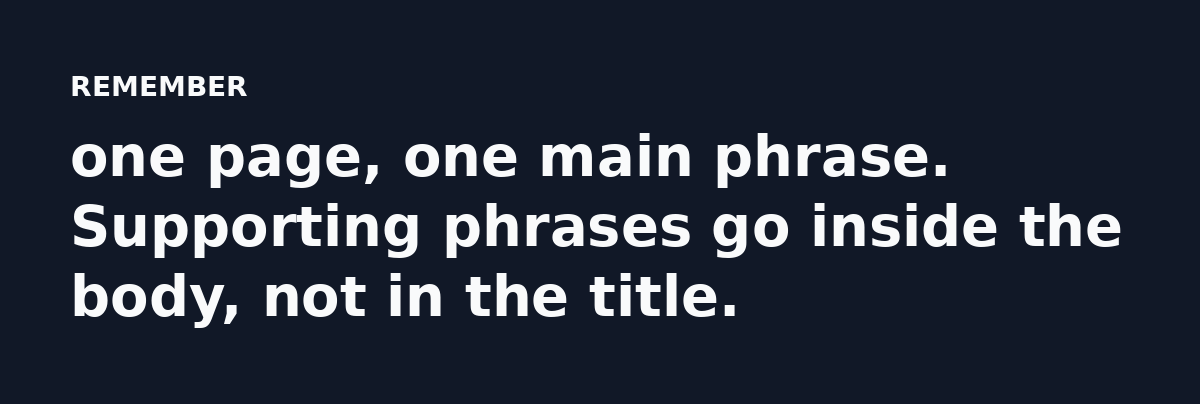
A topic is not a phrase. Hand a writer only the subject and the page comes back broad and generic because no single phrase anchors it.
Give the writer the phrase the page must win, such as how to send an invoice to a client. Now the writer knows the searcher is mid-task and writes sharper examples and headings.
Mistake 3: You ignore search intent
The same words can mean different things. Someone typing best email marketing software wants a comparison, while someone typing how to write a cold email wants steps. Send both groups the same page and both leave.
Open the current top three results for your phrase and note the format. If they are all how-to guides, a sales page will not rank there. Match the format the searcher already expects, then beat it on detail.
Mistake 4: You never describe the reader
A freelancer and a procurement manager read the same topic differently. The freelancer wants speed. The manager wants cost and compliance paperwork.
Add one line to the brief: who is reading this and what they already know. That line kills half the rewrites you would otherwise pay for.
Mistake 5: The brief says nothing about structure
Specify the headings and the questions each section must answer. Add the internal links you want and the call to action.
Search engines use headings to understand a page, so structure matters. A writer who picks their own headings will bury your main phrase under a vague one.
Mistake 6: You pay by the word
Word count rewards padding. You get 1,500 words where 700 would rank higher. Pay for a finished page that answers the searcher. Set a sensible range instead of a hard number.
Mistake 7: You have no way to tell if it worked
Write the target phrase at the top of the brief and save it. Six weeks after publishing, check where the page ranks and whether it pulls impressions in Search Console.
Without a target there is no scoreboard, so you cannot separate a good writer from a lucky one. You keep guessing on every hire.
Your one-page brief template
Fill this in before you hire anyone. It takes about twenty minutes.
- Main search phrase, plus its monthly volume
- Search intent: is the searcher buying or just learning?
- The reader in one line: their role and what they know
- The questions the page must answer, ranked
- The H1 and the H2s
- Two internal links and one call to action
- The target phrase you will track after launch
What changes once the brief exists
The rewrite cycle drops because writers stop guessing at your intent.
Hiring gets easier too. You are comparing writers on the same job, not on their sample reels.
A content brief is cheap to write and expensive to skip.
Read the full guide: Website content writing service: what business owners miss