The quick win and key takeaway
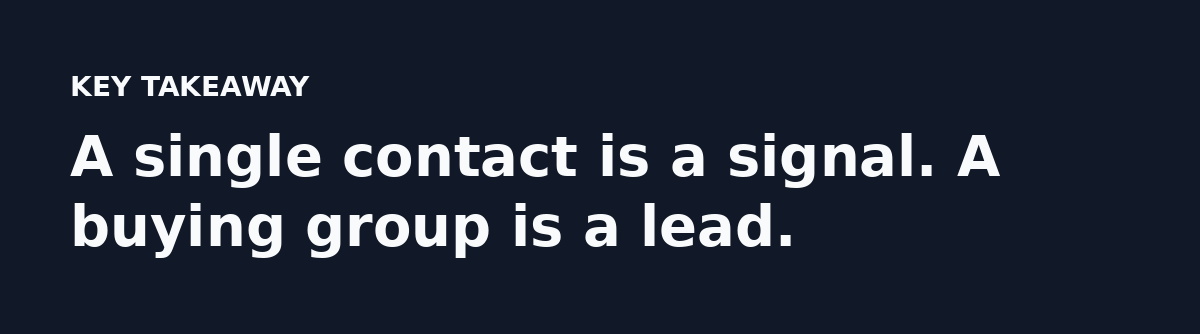
B2G lead generation starts when several people at one agency show interest in the same problem. The buying cycle often runs 9 to 24 months.
That shift changes your target list and your follow-up timing. It also tells you which roles need the next conversation.
One download. A long decision.
A program manager downloads your guide on permit software and your sales team calls the next morning. The contact goes quiet and the rep marks the lead dead.
Nine months later the agency posts a request for proposal (RFP) for permit software.
Government rules shape that pattern: a purchase may need sign-off from several departments and elected officials. Each person has a different reason to say yes and can slow the deal down.
Why the group matters more than the title
A department director may own the problem while procurement controls the process. Your content has to help both roles do their jobs.
Four roles to map
- Program lead: owns the service problem and the outcome.
- IT lead: checks security and system fit.
- Finance: needs a cost case and a budget line.
- Procurement: controls the path to an RFP.
That is four different conversations.
B2G lead generation that scores the account
A lead score that gives full marks to a first form fill works for a low-price sale with one buyer. It fails when six people share the decision.
Start with two signals: how many roles from one agency engage and how many weeks the activity repeats. A download from one person is weak, but three people from the same agency over six weeks is stronger.
Use a simple definition: a qualified B2G lead is an account with at least two engaged roles and repeat activity within 30 days. Adjust the number to fit your market.
Publish what a committee can use
A datasheet tells people what you sell. A buying group needs help understanding the problem and the options.
Write a guide that helps an agency scope the work; add a checklist that gives the committee requirements it can use. Neither needs to mention your product on page one.
That approach builds trust before the RFP appears. It also gives your sales team something useful to send when a contact says, “We are still exploring.”
The objection: we need leads now
Public budgets move on their own schedule. Calling sooner will not compress a review cycle, but disappearing can lose the deal.
The agency will not skip its own process. Being known before the RFP is the advantage.
That is why follow-up should be tied to the account and the budget cycle: check in at 90 days, then return each quarter until the agency publishes a notice or tells you the timing.
Do not treat silence as rejection. A contact may be waiting for a budget request to move forward or may lack authority to reply.
Use more than one touchpoint
Turn one webinar into a short video and one guide into a checklist so the same agency sees you in different places.
Pair a webinar with a newsletter mention and add a paid placement when your account list is small and specific, so you stay familiar without sending too much email.
Track which roles open which formats to learn who is engaged and what they care about. That gives you a reason for the next call.
A 30-minute plan for this week
- Pick one agency with two active contacts.
- Build a four-role map covering program, IT, finance and procurement.
- Match one useful asset to each role.
- Send a short note about the problem they are working on.
Do the same for four more agencies to build five account maps.
What to watch
Finance and procurement titles are strong signals when they join an account already showing repeat interest. A spike in downloads from one person can wait. A second engagement in the same week deserves a helpful follow-up.
A monthly lead report will look flat long before the RFP appears.
The one thing to do next
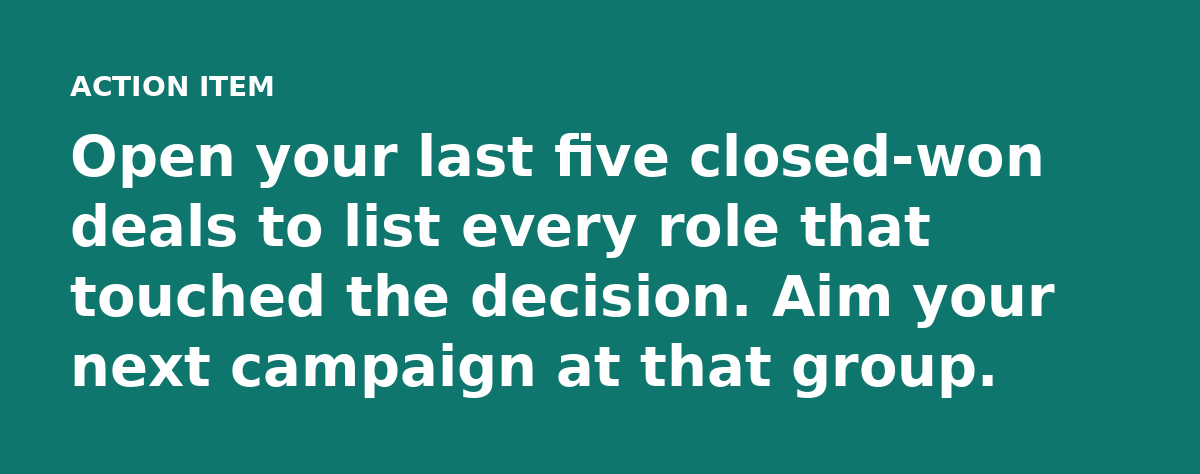
Open your CRM and group contacts by agency. Find one account with two engaged roles and write an account plan.
That plan should name the people involved and the next useful asset they need. Update it after each conversation.
A year of useful notes makes the first RFP call easier.
Need this run for you? See the outreach service.