Executive Summary
B2G lead generation borrows the shape of B2B lead generation and then breaks most of its rules. Government buyers move on budget cycles and follow procurement law. This comparison shows where the two playbooks split and what to change first.
Two Buyers, Two Different Rooms
A commercial deal usually has one person who can sign. Government deals rarely work that way. The person who loves your product may have zero authority to buy it.
You are selling to a group. An end user writes the requirement and a contracting officer controls the process. A budget owner decides if money exists and security or legal staff can stop the purchase late. Miss one and the deal stalls with no clear reason.
Where the Names Come From
B2B teams buy lists from data vendors and scrape social profiles. Government contacts sit in public view. SAM.gov lists federal opportunities and state portals publish bids. City council agendas name the departments behind projects and vendor award notices reveal who holds the current contract.
That paper trail is your edge. You can spot a need before the agency posts a formal request. Commercial teams rarely get that much warning.
A directory gives you names. A procurement record gives you timing.
What a Strong Lead Actually Looks Like
In B2B, a strong lead has a title and some sign of interest. In government, those details help but they do not predict a sale. A strong B2G lead has a buying path.
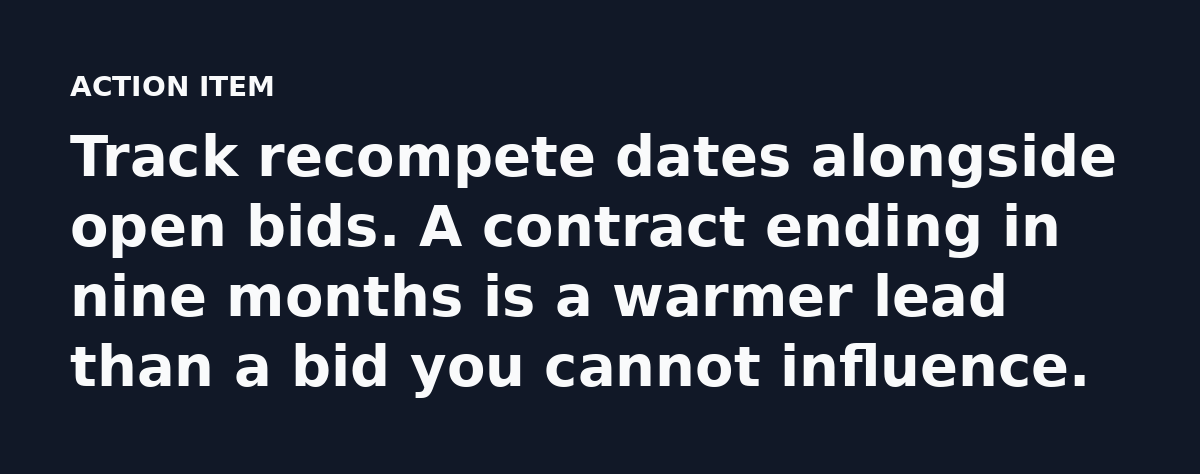
Look for an approved budget line and a contract that expires soon. Better yet, find both on the same account.
That shift changes your scoring. A director at a large agency with no budget is a weak lead. A program manager at a mid-size county with a funded project is a strong one.
Slow Beats Fast
Sales advice says call within five minutes, but government buying does not reward speed. A solicitation can run 90 to 180 days before award. Push too hard and you look like you do not understand procurement.
Use the waiting time to learn the requirement by reading the statement of work. Note the contract end date.
Speed still matters in one place: you want to reach the buyer before the requirement is locked. That window opens early and does not stay open for long.
The Qualification Test That Saves Months
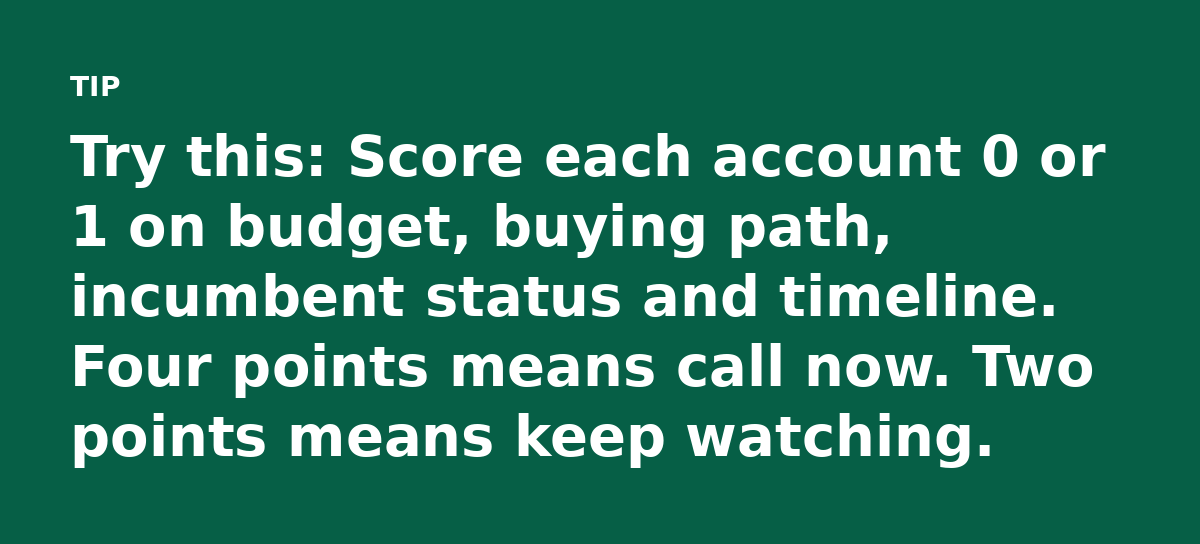
Run every government contact through four checks before you spend real time on outreach.
- Budget: Is there a funded line item or just interest?
- Path: Can they buy through a posted bid or a sole-source request?
- Incumbent: Who holds the work now and when does that deal end?
- Timeline: Is the purchase tied to a fiscal deadline or a project start date?
Four yes answers earn a meeting request. Fewer than that means move on.
The Trap That Burns Good Lists
Public email addresses look like leads, but many are shared inboxes. A message to a general procurement address can sit unread while the actual buyer uses a direct line you never found.
Verify a named person and a direct contact. If you cannot, call the main line and ask who owns the program.
This is where most B2G lead generation budgets leak. Teams pay for volume and never check whether a human opens the reply.
A Small Example From the Field
A software vendor pulled thousands of contacts from a state directory. The first email got hundreds of opens and two replies, but neither reply became a deal.
The deal came from a conference panel six weeks later. One attendee ran a county IT team and the vendor had already flagged that county’s expiring contract in its notes. That single detail turned a hallway chat into a meeting.
Public records and one real conversation closed the deal.
What to Change This Week
Shrink the list. Pick 50 government accounts tied to active projects or expiring contracts.
- Record the budget owner for each account.
- Write down the procurement route they can use.
- Note the next fiscal deadline or contract end date.
- Set a reminder for the recompete window.
Then send one message per account naming the solicitation or the contract date instead of a generic pitch.
A vendor who arrives after the request for proposal is competing only on price.
The One Thing to Do First
Stop building big contact lists. Build a small map of money and timing.
Start it today with one agency.
Need this run for you? See the outreach service.