Executive Summary
Government buyers rarely answer cold email. Their budgets and buying windows are public long before a solicitation appears. This guide shows how to use those public signals to reach buyers before a solicitation.
How B2G Lead Generation Differs From Normal Selling
B2G means business to government. You sell to public agencies, from a city parks department to a federal office. The buyer is an agency with money and a deadline.
According to public spending data, state and local governments spend roughly $2 trillion a year on goods and services. Federal agencies add more than $700 billion in contracts. That is a huge market, but it does not behave like the private sector.
A cold list of government email addresses is close to useless. Agencies rotate staff and filter vendor mail hard. Generic inboxes swallow most of it.
Read the Budget Before You Read the RFP
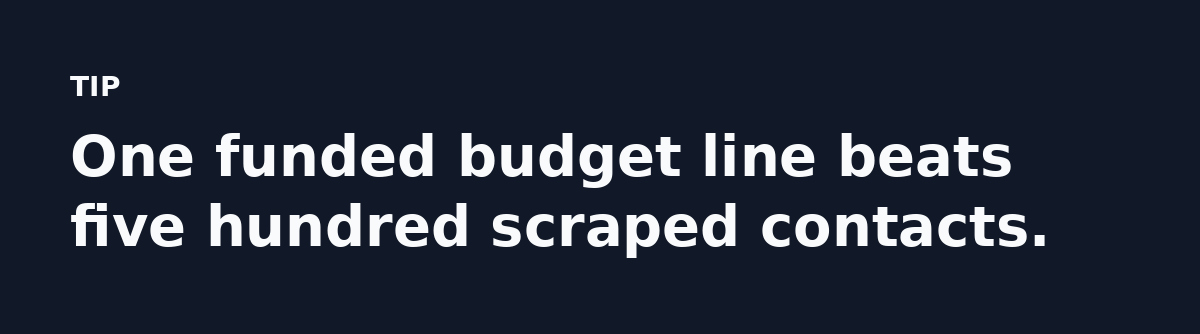
By the time an RFP is public, the agency already knows what it wants. Your odds of shaping the deal are small.
City council packets and school board agendas are published on a schedule. Look for line items that describe a problem you solve. A county sheriff requesting storage for body camera footage is a lead. So is a school district adding a line for substitute teacher scheduling.
Federal buyers post forecasts on SAM.gov, the public procurement site where agencies list upcoming requirements months ahead. Save a search for your product category and check it weekly.
Signals Worth Tracking
- A new budget line that did not exist last year.
- A renewal date on an existing contract in your category.
- A pilot program or grant award that needs vendors.
- A job posting for a role that owns your problem.
Use Contract Vehicles to Skip the Long Queue
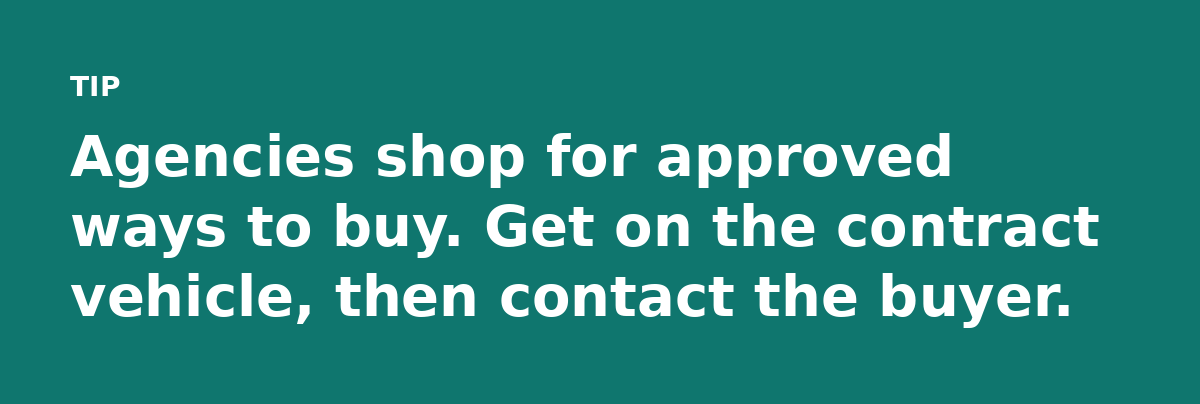
Cooperative contracts let agencies buy without running a full RFP. According to public procurement guides, NASPO ValuePoint and Sourcewell are common routes for state and local buyers. GSA schedules cover federal purchases. If you hold a spot on one, an agency can buy in weeks instead of months.
Check which vehicles your target agencies already use. A city that buys through a cooperative contract will move faster with a vendor already on it, which changes who you call first.
Build a Lead File With Four Fields
Keep the file small and honest. Four fields carry most of the value.
- Agency and department. The exact unit that holds the budget.
- Budget owner. The role title outlasts the person in it.
- Contract vehicle. How this agency is allowed to buy.
- Renewal or funding date. The month money becomes available or expires.
If a row is missing two of those fields, it is a name. Park it until you can fill the gaps.
Score the Lead Before You Spend a Call
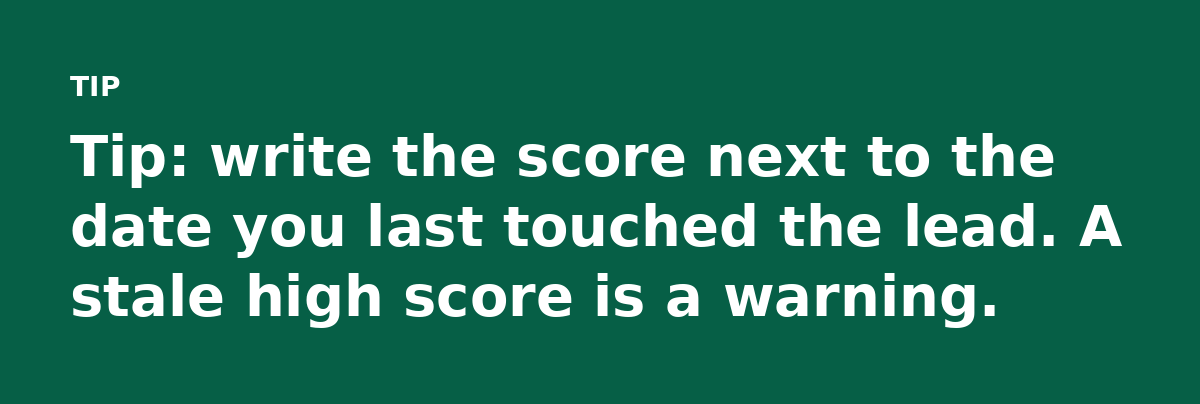
Use a simple 100 point score. It forces you to separate noise from real opportunity.
- Budget confirmed: 30 points.
- Buying vehicle you can use: 25 points.
- Renewal or funding inside 12 months: 25 points.
- Known contact who owns the need: 20 points.
Anything under 50 goes to a watch list. Anything above 70 gets a personal email this week.
Time Your First Touch to the Fiscal Clock
Federal agencies close their fiscal year on September 30. Many state and local cycles end June 30. Unspent money can vanish, so buyers rush late in the year. That late-year rush is when buyers are most receptive.
Reach out during budget planning, because by the time the contract is signed the scope is gone. For a June cycle that means early spring; for the federal cycle, late spring into summer.
Write the First Email Like You Read the Budget
Keep it short and name the line item or public document. State the problem in one sentence and ask for 15 minutes.
Here is a real shape: “Your capital plan lists a new permit system for next year. We helped two counties cut permit review from 11 days to 4. Can we talk for 15 minutes before the scope is locked?”
Skip the feature dump and the long deck. The buyer sees that you did the homework most vendors skip.
Stay Visible Between Buying Cycles
Most agencies buy the same categories every few years. A lost bid is a renewal date with a known owner.
Log the award date and the incumbent, then check in six months before the contract ends with a short note on a rule change that affects their category. This keeps you visible when the next window opens.
What to Do This Week
Pick one agency you already serve or want to serve and pull its latest budget document. Find one line item that touches your product, then fill the four fields. Score the lead and send one email that references that line.
Do that five times and you have a working B2G lead generation habit.
Need this run for you? See the outreach service.