Key Takeaway
B2G lead generation fails when teams treat public sector contacts like private sector leads. Government buyers answer to budget cycles and contract rules, so shape your process around both and reply rates improve fast.
According to public spending data, federal contract spending runs above $700 billion a year and state and local buyers spend hundreds of billions more.
Agencies publish contract vehicles and budget calendars in advance.
1. B2G Lead Generation Starts With a Written Definition
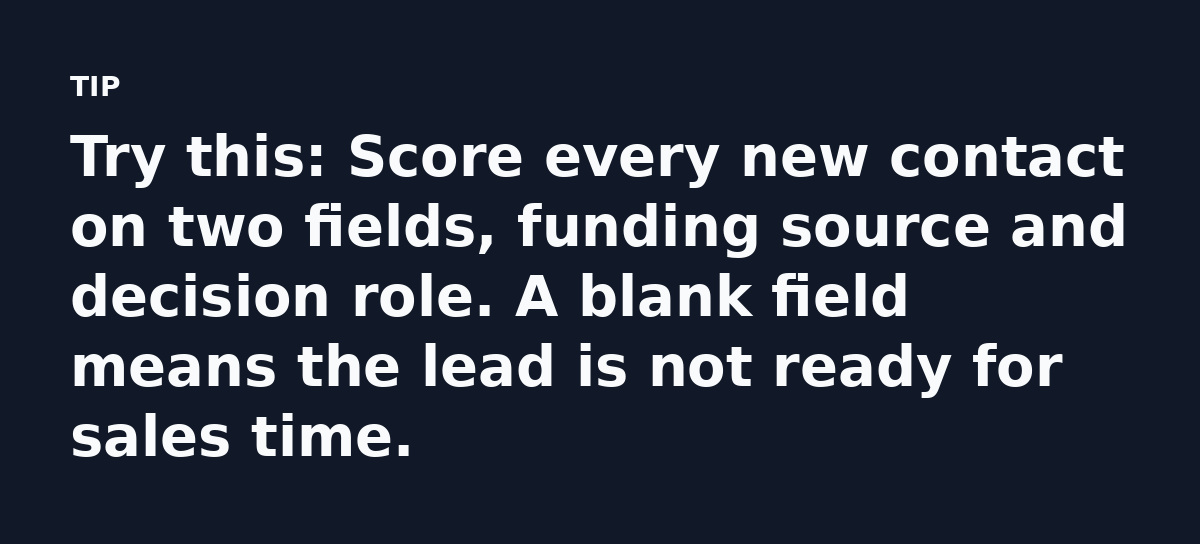
Write the definition down. A qualified B2G lead has four parts: an agency, a named contact with buying influence, a live problem and a funding path.
A whitepaper download is a signal, but a pre-solicitation briefing attendee is a lead. Mixing the two floods your list with noise.
Make those four parts required fields in your CRM.
2. Map the People Who Say Yes
A government buying committee includes a program manager, a contracting officer, a technical lead and an end user.
The contracting officer controls the process and the program manager controls the need. Send each person material they can act on.
Explain the contract steps before the product. Technical leads and end users want proof the thing works in their environment.
Where Leads Actually Stall
Most B2G deals die inside the agency before a proposal reaches the desk. A champion must be able to explain your value to a director, so give that person a one-page brief they can forward without editing.
3. Read Contract Vehicles as Intent Data
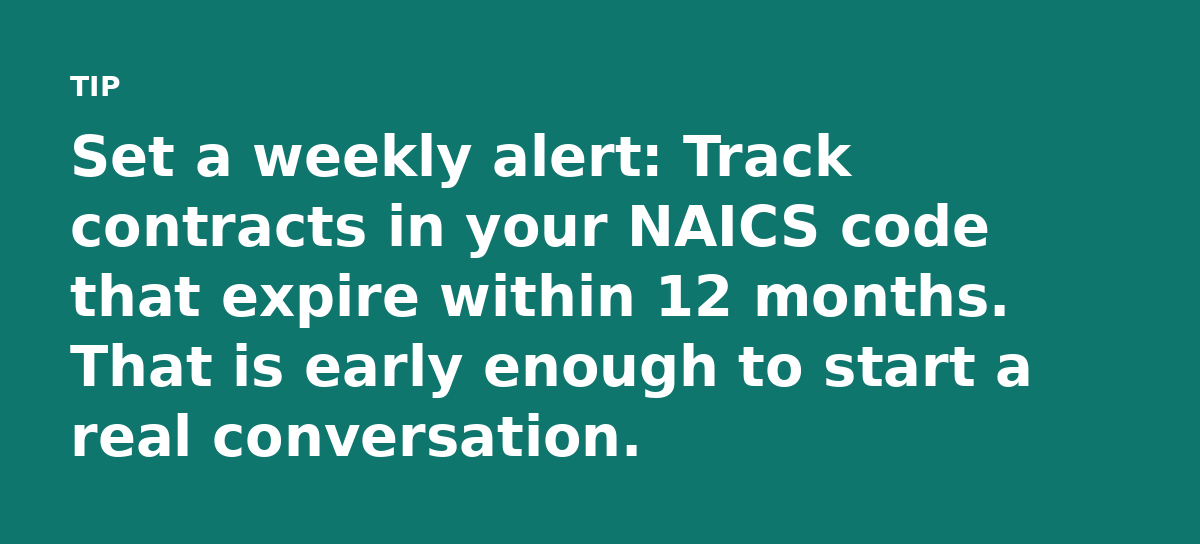
Contract vehicles tell you who is already approved to sell. GSA Schedule and state cooperative contracts are public, so use them.
Search award history on USAspending.gov.
Check which vendors hold the vehicle and how their past performance reads. Weak delivery records leave room for a challenger.
4. Build Proof a Procurement Team Can Forward
Your content has to survive an internal forward to a director who has never heard of you.
Publish one-page case studies with a number in the title. Add past performance references with agency names when the contract allows it.
Your capability statement should fit on one page, with NAICS codes and your UEI near the top. List contract vehicles in plain text so a reviewer can copy them into an email.
A clean PDF with the right codes beats a glossy brochure with vague claims.
5. Time the Ask to the Budget Clock
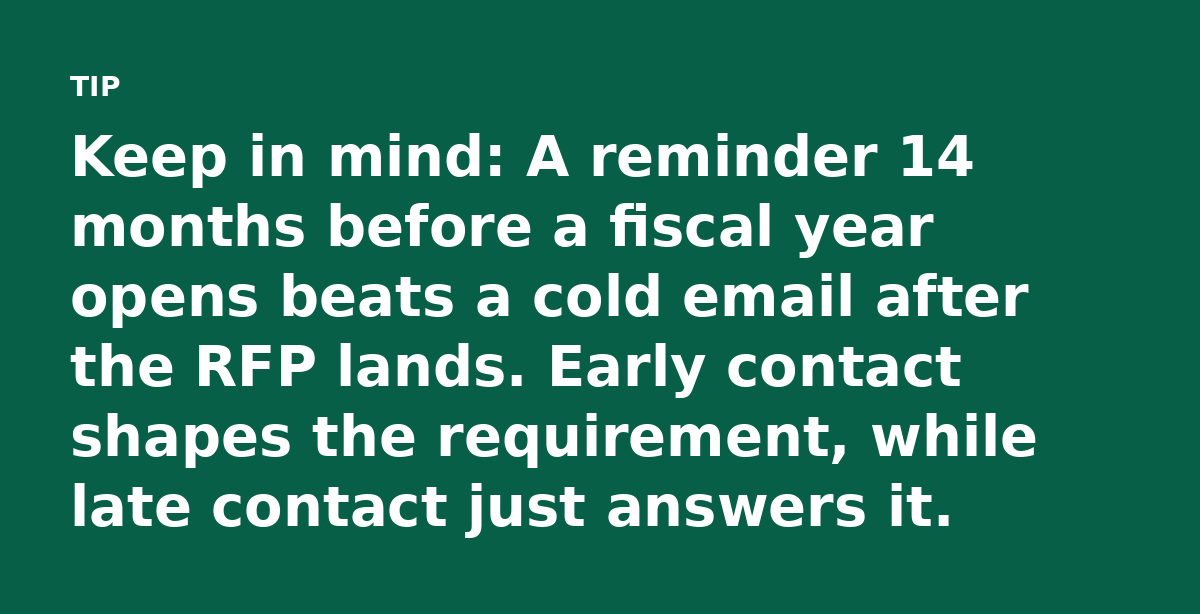
The federal fiscal year starts on October 1. Agencies often spend remaining funds in the last quarter, while new initiatives get planned much earlier.
During pre-solicitation, ask what the agency is studying and who owns the requirement.
State and local cycles vary. School districts and cities often align to July 1, so learn the calendar for your top ten accounts and store those dates in your CRM.
6. Qualify With Questions That Kill Bad Deals
Bad B2G leads eat months. Ask four questions before you invest in a demo.
- Does the agency have money set aside for this need?
- Is there a contract vehicle you can use?
- Who signs the award?
- When does the current contract end?
Vague answers mean nurture and clear answers mean pursue.
A friendly contact with no budget cannot produce an award.
7. Score Pipeline Stages Instead of Lead Volume
Lead volume flatters a report but says little about revenue. Track
Need this run for you? See the outreach service.