Key Takeaway
An article writing service takes a topic and hands back a finished piece you can publish. Two providers can quote the same price and still deliver very different work. The gap comes down to editing and whether anyone helps you ship the post.
This guide shows you how to read a package before you pay for it.
The Real Problem With Buying Words
You run a business. Writing a researched 1,200-word post can eat three hours you do not have, so you hire it out.
Then the first draft lands. It reads okay, but it also sounds like every other post in your space. You paid for words and got filler.
That is the honest risk with any article writing service. Volume is easy to buy. Judgment is harder to find.
What an Article Writing Service Actually Does
Strip away the sales page and the work splits into a few jobs.
- Research. Someone reads your sources and finds the angle worth writing.
- Drafting. A writer builds the piece to a brief with a named reader and one clear point.
- Editing. A second person tightens structure and flags weak claims.
- Publishing. The file gets formatted and loaded onto your site or blog.
Low-cost packages skip editing and publishing.
How to Read an Article Writing Service Package
Word count
Length is the easiest thing to compare and the least useful. A tight 800-word post often beats a padded 2,000-word one. According to Google’s public guidance, pages that show first-hand experience are rewarded.
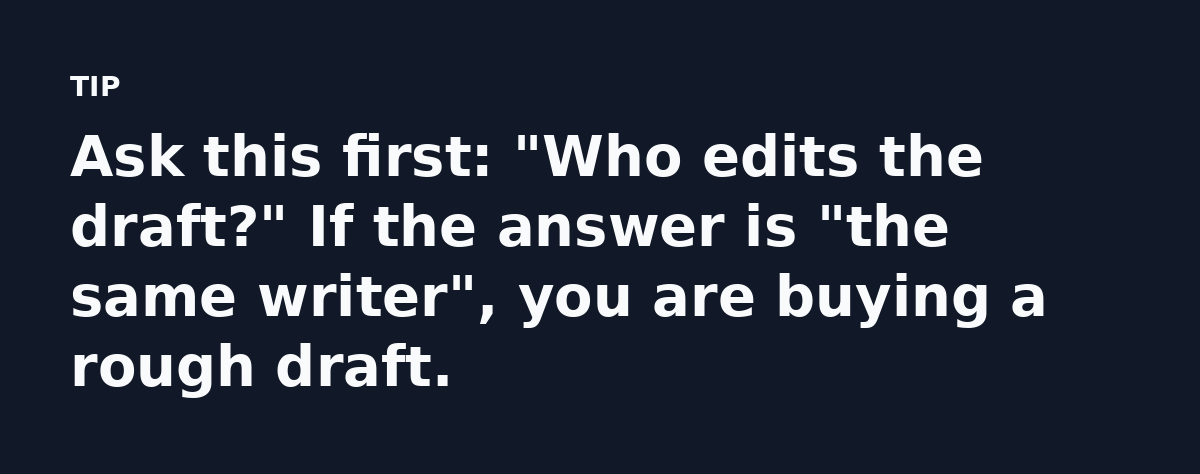
Who edits
Look for a named editor or a described edit pass. A real second reader catches the flat opening and the claim that needs a number.
Revision limits
Packages usually allow zero, one or two rounds of changes. Two rounds is workable. A single round means you live with the first correction, while zero means you fix it yourself.
Publishing support
Some services stop at the Word file. Others add internal links and upload to your CMS. If you plan to publish weekly, this step matters more than a longer draft.
The Half of the Job Everyone Forgets
Writing and publishing are different jobs. A finished draft sitting in a folder earns nothing.
Publishing means a title tag, a meta description, internal links to related posts and an image. It also means a category and an author byline. Miss these and the piece never gets found.
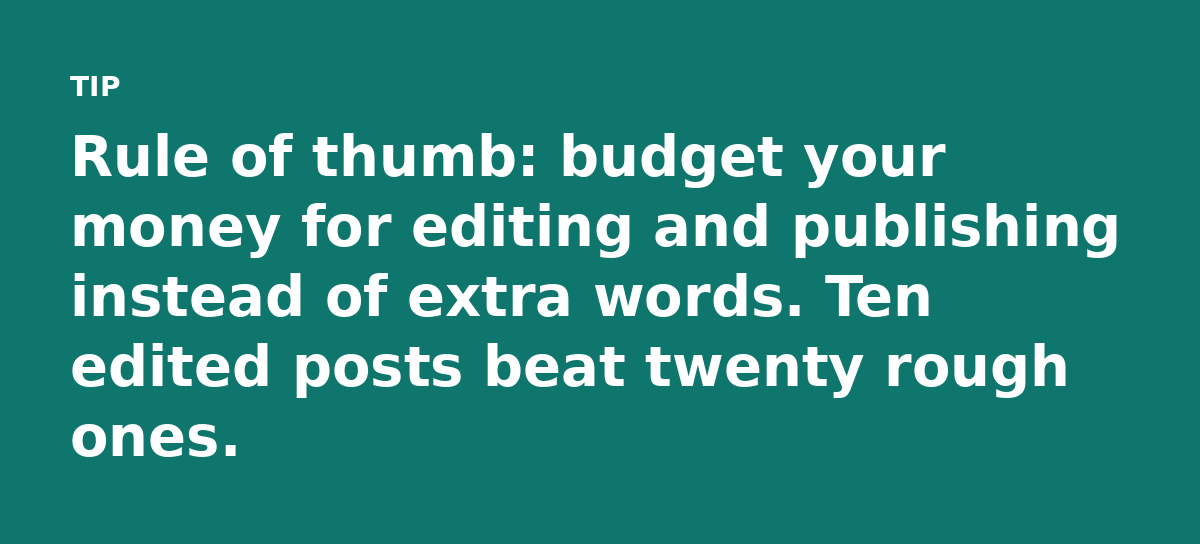
The old press-release model, where you send one announcement and hope, does not build a library. Steady publishing does. One post a week gives you 52 pages a year, which is a real asset.
What Should You Pay?
Market rates for outsourced articles run from about $50 at the low end to $500 or more for research-heavy work. The price tracks time spent rather than talent alone.
Research and editing take the longest. A basic post with no interviews can take one hour. A piece built on data or expert quotes can take five.
If a quote looks too low, ask what gets skipped. The answer is usually editing.
Questions to Ask Any Article Writing Service
- Can I see two samples in my industry?
- Who does the fact-checking?
- How do you handle a draft I dislike?
- Do you publish or does the file come to me?
Vague answers are your signal. A serious provider will show samples and explain the edit process without hedging.
Match the Package to Your Goal
Start with what you need the post to do. If it is meant to rank, depth and accuracy carry the weight. If it is meant to nurture an email list, voice and a strong point matter more.
A single service can cover both. The package you pick should reflect the job rather than the biggest bundle on the page.
Your First Order
Do not buy a year upfront. Buy one article. Give the brief you would give a new hire. Include the reader and the one point.
Then judge two things. Did the draft follow the brief? Was the editing real?
If both hold, scale up; if editing was missing, move on. One paid test tells you more than ten testimonials.