Key Takeaway
B2G lead generation runs on public signals: budgets and bid notices.
What B2G Lead Generation Really Means
State and local governments in the US spend more than $3 trillion a year. Federal agencies award hundreds of billions in contracts. Small businesses win close to a quarter of federal prime contract dollars.
That money moves through published channels.
B2G lead generation is the work of turning those public records into a short list of buyers you can help. A real lead here is a person with a budget and a deadline.
Start With the Buying Unit, Not the Contact List
Most business lists break in government because one contact is never enough. A contract touches an end user, a procurement officer, a budget owner and often an IT reviewer. You need all four in view.
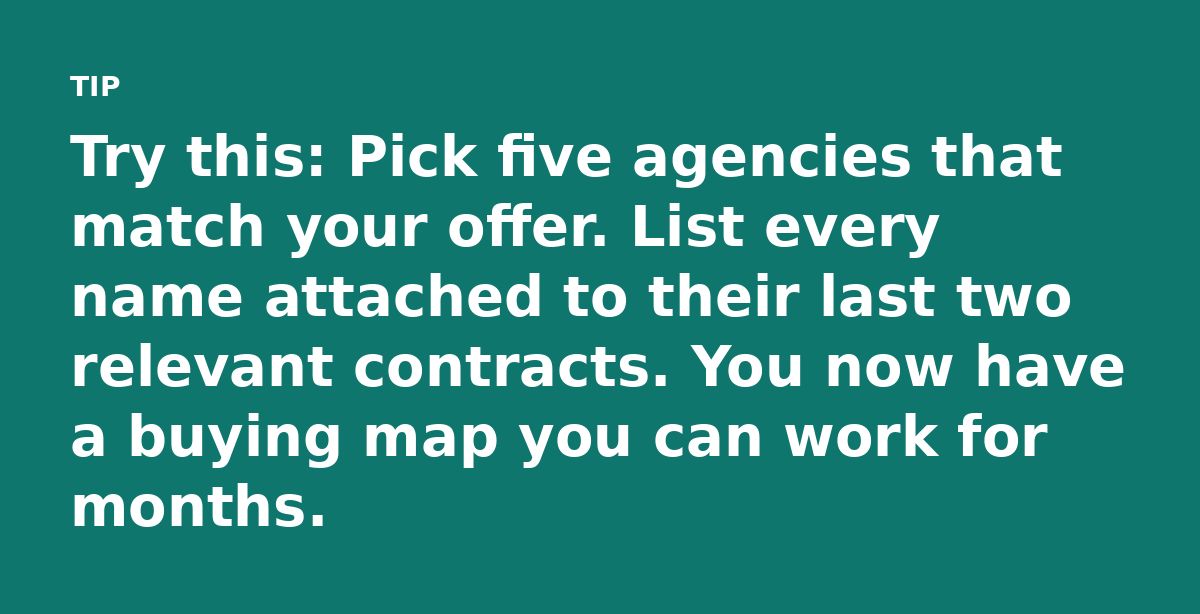
Build a record for each agency. Add names as you find them and note the role each person plays in the decision.
Score Leads on Fit and Timing
A simple score keeps your team honest. Rate each agency from 1 to 5 on four things: fit, open budget, access and past spending with vendors like you. Add the numbers.
Lead score = fit + budget + access + history.
Anything above 14 earns a call this week. A score between 10 and 14 earns research. Below 10, leave it alone until a new notice appears.
The score stops your team from chasing big names with no budget. It also pushes quiet agencies with real money up the list.
Where B2G Leads Actually Come From
Skip the scraped inbox dumps. Four sources carry real weight.
- Public bid portals and procurement notices.
- Published budgets and capital plans.
- Council and board meeting minutes.
- Contract award databases.
Each source tells you who spends and on what. Pair a bid notice with the budget line behind it to build your pitch.
Read a Bid Notice Like a Buyer
A bid notice looks like paperwork, but it names the problem, the scope, the deadline and often the current vendor.
Find the pain line
Scan for phrases like “current system is end of life” or “manual process”. Those lines tell you what the agency fears.
Check the last winner
If one vendor won the past two cycles, look for the gaps they left, such as slow support or thin training.
Note the deadline math
Work backward from the award date. Contact should start well before the notice drops. A notice is a chance to lose to an incumbent who helped shape the requirements.
Know the Two Calendars
Federal agencies close their fiscal year on September 30, while most states start their budget year on July 1. Spending often surges in the final quarter as agencies use funds or lose them.
Use that pattern to time your outreach. A lead that scores high early may go quiet for weeks. Plan calls and content around those windows. Do not read silence as rejection.
How to Qualify Without Wasting Calls
Four questions save hours each week.
- Is there a named budget line?
- Has this agency bought the service before?
- Do you know anyone in the decision chain?
- Is a review or deadline coming up?
Two yes answers earns a call. One yes earns a nurture email. Zero means move on and check again next cycle.
The Objection You Will Hear Most
“We already have a vendor.” It is the standard reply in public sector sales. Treat it as information.
Ask what the current contract covers and when it ends. Many agencies stay with a vendor past term because switching feels risky. Lower that risk with a small pilot or a clear migration note.
Build a Follow-Up Cadence That Fits Public Work
Government timelines run long. A single email gets ignored, but a steady, useful cadence gets remembered when budget opens.
Send four touches over six weeks. Lead with a short note about a relevant award, then send a one-page summary of how a similar agency solved the problem. Offer to join a pre-bid call and close with a plain check-in.
Track replies and meeting requests. Those numbers predict revenue far better than open rates.
A Simple Weekly Routine
Block two hours each week to pull new notices and update your scores. Use the last 20 minutes to email one contact you already know.
Keep a running note of what each agency bought and when. After a month you will spot patterns your competitors miss.
What to Do First
Find one agency’s budget and read the last two contracts it awarded. Email one person named in those documents with a specific question about their process.
Do it this week and repeat with the next agency.
Need this run for you? See the outreach service.