Key Takeaway
A strong B2G lead has a budget line and one person inside the agency who wants the problem fixed. Chase those signals and your pipeline shrinks to the deals you can actually close.
Vendor emails fill a city IT director’s inbox every week. Two get a reply.
Government buyers follow procurement rules and wait on budget approval.
Why Government Buyers Move at Their Own Speed
The federal fiscal year ends September 30. Many states and cities close their books on June 30. Money not committed by then disappears, which is why March and April are often the busiest months for public sector sales.
A state or local software deal often runs 9 to 18 months from first conversation to signature. Federal deals can stretch longer. Your lead scoring has to survive that timeline.
The B2G Lead Generation Checklist
Work through these in order. Each step filters the list before the next one adds cost.
1. Start With the Agency
Pick the agencies that buy what you sell. Pull their last 24 months of awards from USAspending.gov or a state contract database. If an agency has never bought your category, it is unlikely to start now.
Build a target list of 20 agencies. That is enough to spot patterns and small enough to research properly.
2. Map the Buying Committee Before You Write a Single Email
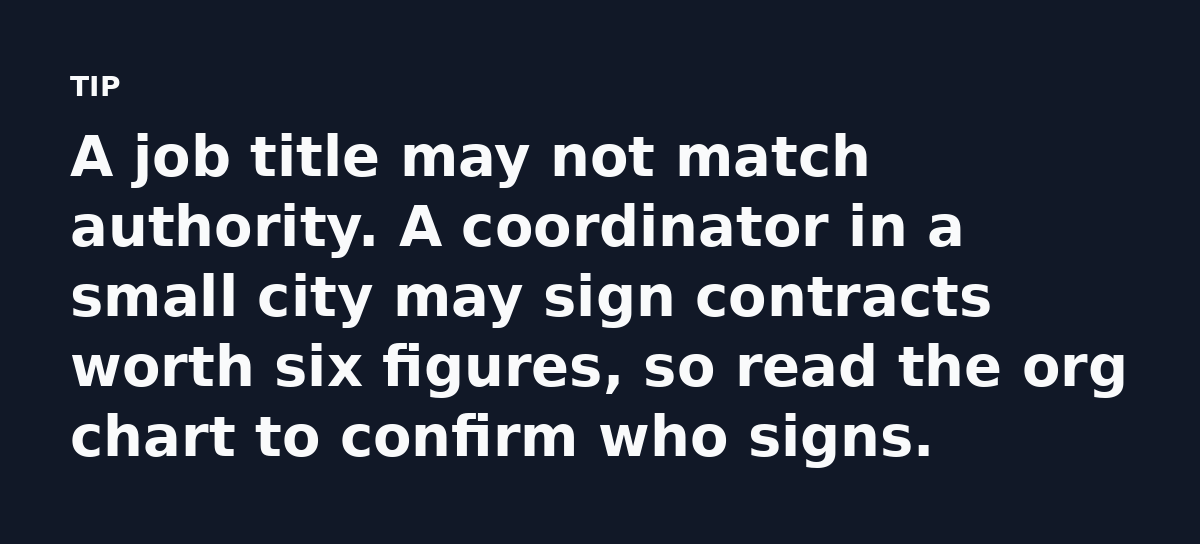
Government purchases rarely have one decision maker: a program manager defines the need, IT security reviews the risk, procurement runs the process and finance releases the funds.
Find at least two names per agency. A single contact fails when that person changes jobs, which is common in public service.
3. Score Leads on Funding and Timing
Use four signals: agency fit, funding evidence, timing window and access to a champion. Score each from 1 to 5. Twenty is a perfect lead.
Sixteen or higher means call this week and anything below ten gets dropped.
Funding evidence is the hard part. Look for approved budgets, bond measures, grant awards and council minutes that mention the problem you solve. Public records are free and few competitor teams read them.
4. Time Outreach Around the Fiscal Calendar
Push for meetings in late winter so signatures land before the fiscal close. A proposal that lands in July waits for the next budget cycle.
5. Publish Proof Instead of Pitch Decks
Public sector buyers search for case studies from agencies like theirs. A one-page story about a county that cut permit review time from 11 days to 4 beats any brochure.
Name the agency type and the measured result, then describe the problem in plain terms. Procurement teams want references they can call.
6. Use Contract Vehicles as a Shortcut
Many agencies buy through contract vehicles such as NASPO ValuePoint or a GSA Schedule. If you hold one, say so in the first line of your email. It removes the “we would have to run a full RFP” objection before it forms.
If you do not hold a vehicle, partner with a reseller who does. That path closes deals faster than waiting for an open bid.
7. Watch the RFP Trail for Buying Signals
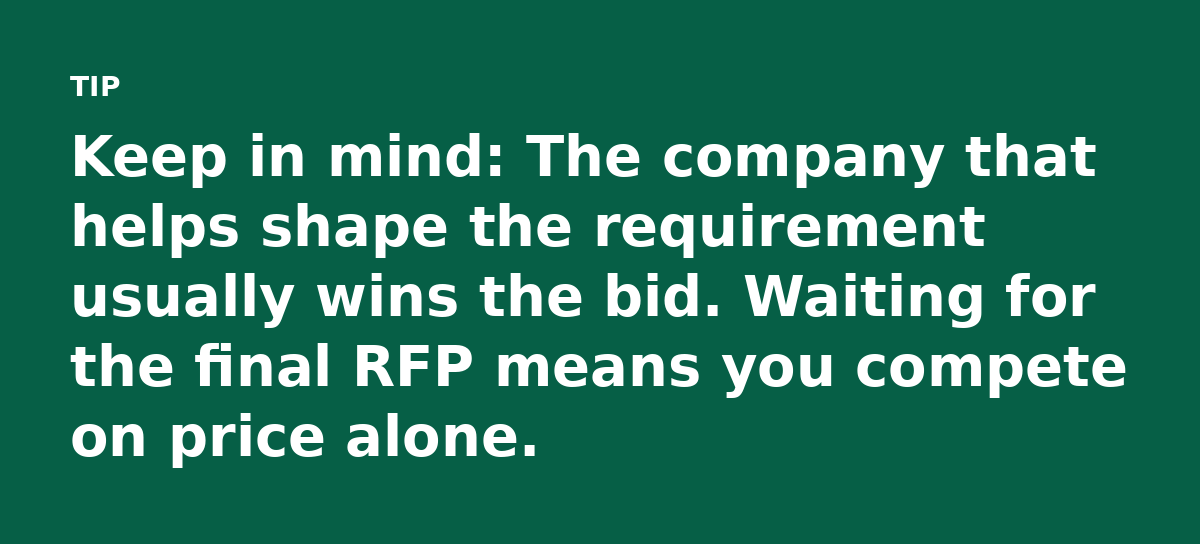
Before a formal bid, agencies publish requests for information, market research notices, draft scopes and vendor day notices. These are early warnings, often six to nine months ahead of the real solicitation.
Set alerts on SAM.gov and your state procurement portal. A response to an RFI is cheap and puts your name in front of the buyer while the requirements are still soft.
8. Qualify Hard on the First Call
Ask whether money is set aside, who else has to approve it, what deadline the agency faces and whether a vendor has failed at this before.
Agencies remember failed rollouts and will explain what went wrong if you ask plainly.
9. Hand Leads to Sales With the Context Attached
A lead record with only a name and email is incomplete. Attach the agency budget cycle, the committee map, the last contract award and the exact problem statement.
Sales should open the record and know what to say in the first 30 seconds.
Where Most Government Lists Go Wrong
- Buying a scraped list of government emails with no agency context. Bounce rates climb and domain reputation suffers.
- Skipping small agencies. A rural county with 200 staff can still sign a $60,000 contract without a competitive bid.
Under federal contracting rules, the small-business goal is at least 23% of prime contract dollars. That goal creates room for new vendors with agency knowledge.
What to Do This Week
Pull the last two years of purchase records for one agency you suspect needs your product and score it with the 20-point model. Then find two people inside who work on the problem.
Send one email that references a real budget document or a past award and asks how the agency handles the issue now.
B2G lead generation rewards public records and patience more than clever copy.
Need this run for you? See the outreach service.