A state agency can take 9 to 24 months to move from a first content download to a signed contract. Most vendors give up in week three. That gap is where B2G lead generation is won or lost.
Government buyers move in groups. They research for months before anyone answers a cold email. Your job is to stay visible long enough to be the obvious choice when the RFP drops. Here is what separates teams that close public sector deals from teams that burn budget on bad lists.
Executive summary: Qualified B2G leads come from repeated touches. Build for the buying group and keep a follow-up track that runs for two years. Do both and your results no longer depend on luck.
Count the Touches, Not the Form Fills
One download tells you almost nothing. A contact who watched a webinar, downloaded a paper, opened two emails and then filled out a form is showing a pattern.
Do this: Give every action a score: webinar attendance gets 3 points, paper downloads get 2, email clicks get 1 and demo requests get 10. Set a threshold and call a contact qualified only after it clears.
Not that: Dumping every form fill into the sales queue on Friday afternoon. Most of those people are exploring a problem; they will go quiet and your rep will mark them dead.
One agency contact can hit your site six times before replying to a single email. Count the visits.
B2G Lead Generation Lives Inside the Buying Group
Government rarely buys from one person. A technology decision touches IT, finance, procurement, the program office and sometimes an elected official.
Do this: Build a contact map for each target agency. Learn what each one needs to defend the purchase to their own boss.
Not that: Chasing a single CIO title and calling it a strategy. If the CIO loves you but procurement has never heard your name, the deal stalls.
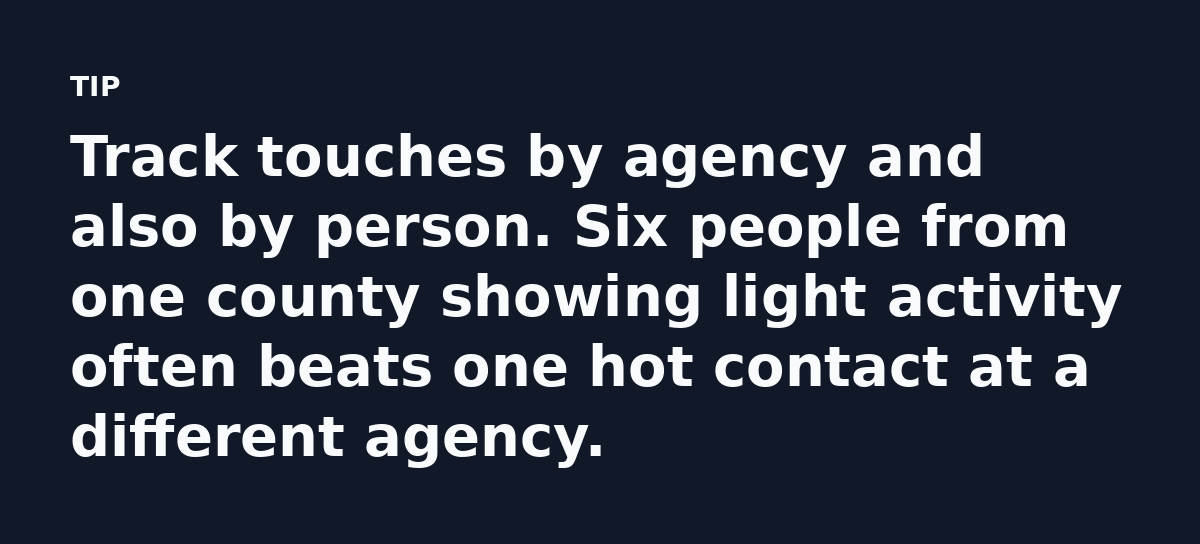
Watch for the quiet cluster: marketing teams often see several contacts from the same agency download the same content piece. Nine months later that agency issues an RFP on the topic.
Keep in mind: Non-traditional buyers now influence tech purchases. Mayors and line-of-business leaders sign off on tools they would have ignored a few years ago.
Publish What Helps Them Do the Job
Educational content outperforms product content for B2G lead generation. Buyers want best practices and peer examples.
Do this: Write the guide someone searches for at 11pm, such as how counties digitize permit intake. Answer that real question in 1,200 words with a sample workflow.
Not that: Gating a data sheet. Brochures and product pitches pull the weakest leads in this market, so you get tire kickers or nobody.
Check yourself: Ask what part of the buyer’s day gets easier after reading your piece. If the answer is “they know more about us,” rewrite it.
Build a Two-Year Follow-Up Clock
Leads go cold fast when the buying cycle is slow. According to public sector marketing research, most agencies need a year or more before they can commit budget.
Do this: Tag every lead with the fiscal calendar of their jurisdiction; most state and local budgets run July to June. Time your outreach to budget planning season rather than your quarter end.
Not that: Three emails then a silent archive. A contact who ignores you in March may be building a business case in August.
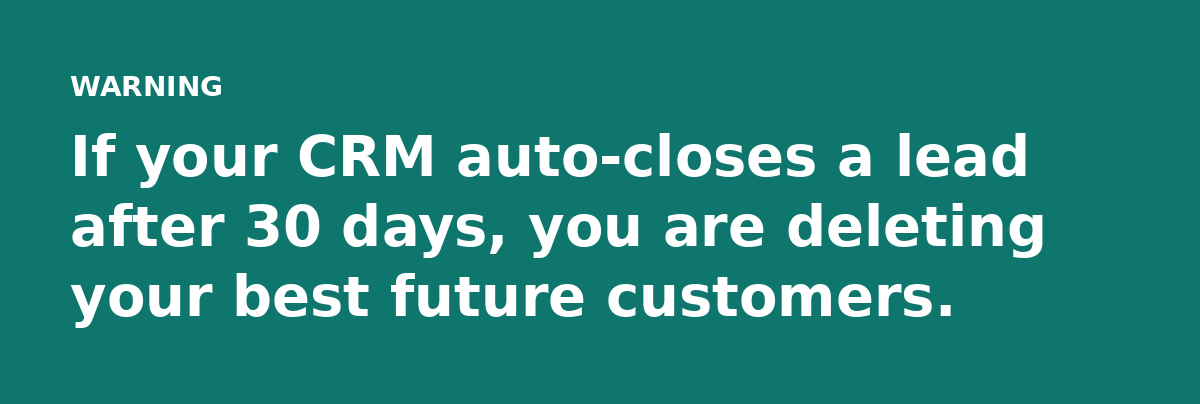
Put quiet leads into a nurture track that sends one useful thing every six weeks, such as a funding update or a peer case study. Then check in again.
Repackage One Asset Into Many Doors
Different buyers consume content in different formats. The program manager watches video and the analyst downloads the PDF.
Do this: Turn one research report into a webinar, four short videos, a written Q&A and a one-page checklist.
Not that: Building one asset per quarter and treating the launch as the finish line. A single PDF has a shelf life of about two weeks unless you keep cutting it up.
Surround the Campaign With Awareness
Buying 100 leads gets you 100 people who saw your content once. That is a narrow slice of a market that decides in committees.
Do this: Layer a newsletter placement and a banner ad around the webinar. Keep your name in front of the same agencies month after month.
Not that: Counting purchased names as market presence. Awareness is the reason someone takes your call.
Reverse Engineer the Deals You Already Won
Every win in your closed-won folder followed a path you can copy.
Do this: Pull four closed public sector deals from the past year. Map which content each buyer touched at each stage.
Not that: Copying a competitor’s funnel from the outside. You can only see your own data.
Rebuild the campaign around the pattern you find. If a webinar was the turn for three of the four deals, run more webinars for similar agencies.
Start With the Leads You Already Have
You probably have enough names this week. You need to know what is happening inside the ones you have.
Open your CRM, pick 20 leads from the past quarter and count the touches on each. If most show a single download, your report is inflating a list of strangers.
Fix the scoring, then go back to those 20 contacts with something useful and no ask.
Your one action: Today, add a touch count field to your lead view, then tomorrow sort by it. The top of that list is your real B2G lead generation pipeline.
Need this run for you? See the outreach service.