The short answer
B2G lead generation means finding business opportunities inside government agencies. It runs on evidence: a real lead has a funded problem and a route to award. A contact form without either fails the test.
This FAQ covers what to count and where to look.
What separates B2G lead generation from commercial demand generation?
Government buyers spend public money under rules, while a commercial buyer can sign after two calls. A school district may need a board item, a budget line, a legal review and a competitive bid.
Federal buyers work under the FAR, a rulebook built to force fair competition. State and local agencies run their own versions, so procurement rules change the lead and the timeline.
Public records also change the research: you can read prior solicitations before you ever speak to the agency. That tells you which questions to ask first.
What counts as a qualified B2G lead?
A qualified B2G lead passes four checks.
Miss any check and the lead is a research task that belongs in a nurture queue until the missing evidence appears.
The four-field test
Put these four fields in your CRM. Add the source link for each field; a link forces the rep to show the proof.
- Agency: the office that owns the problem and controls the program budget.
- Budget evidence: a line item in a capital plan or an approved request.
- Contract vehicle: an open RFP or a cooperative contract.
- Award date: the likely window based on board calendars and prior awards.
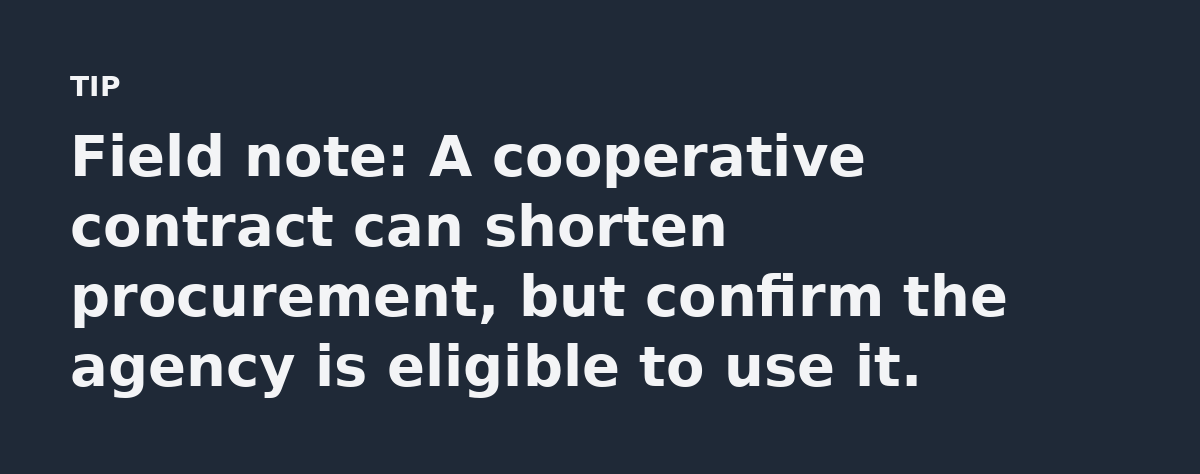
A cooperative contract is a pre-competed vehicle an agency can use without running its own RFP. Sourcewell and NASPO ValuePoint run purchasing cooperatives that offer such contracts, according to public reports.
Example: a county approves $400,000 for a permitting system; the capital plan names the department. A cooperative contract is open; the incumbent’s contract ends in eight months.
A simple lead score
Score each input from 0 to 2, with budget evidence and vehicle access carrying double weight. A strong incumbent pulls the score down.
Lead score = 2(budget evidence) + 2(vehicle access) + 1(timeline fit) – incumbent strength.
A funded agency with an open cooperative contract can score 8, while a prospect with no budget line and no vehicle scores 2. Use the score to see which input needs more research.
Which public records feed a B2G lead engine?
Start with sources that show money and awards, then narrow the list by date.
- USAspending.gov and FPDS show past awards and incumbents.
- SAM.gov holds opportunities and set-aside flags.
- State and local portals publish RFPs and addenda.
- Budget books and capital plans show money before a bid appears.
SAM.gov also holds entity records: check the agency’s registration and the NAICS codes tied to the work. A mismatch there can block a bid before the proposal starts.
How should content support B2G lead generation?
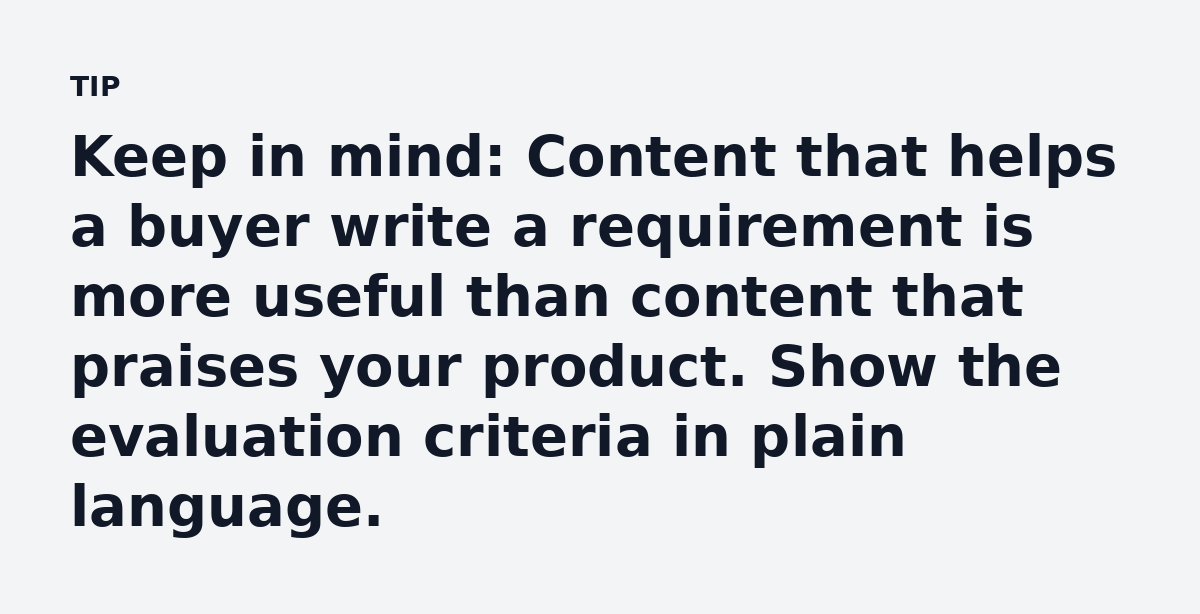
Government buyers need documents they can check, so write for the program office and the contracting shop. A capability statement is the baseline; a compliance matrix does more work.
Publish a security overview and a reference list with agency names and contract values. Those assets answer the questions that delay an award.
Put the technical facts on an open page. Gate the webinar for people who already know you.
How do you read intent when government buyers stay quiet?
Government buyers research before they contact vendors: they read budget documents and call peers. Your job is to catch the public signal.
- A sources sought notice shows an agency testing the market.
- A budget hearing names a new system or mandate.
- A contract expiration date flags a recompete window.
- A job posting for a program manager can reveal a new initiative.
A single RFI is a stronger signal than a stack of content downloads. Log the signal and the date.
What should the sales team do in the first 10 days?
Treat the first 10 days as research. By day 10, the rep should have a sourced brief for the bid team.
Day 1 to 2: Confirm the budget source and the program owner.
Day 3 to 4: Map the buying route through an open RFP or a cooperative contract.
Day 5 to 7: Find the incumbent and the contract end date, then read the last award.
Day 8 to 10: Send a short technical note to the program contact about the procurement route and evaluation criteria.
Do not pitch on the first call. A government buyer needs a reason to trust you before a demo; a specific answer to a requirement question builds that trust.
Which pipeline metrics fit a public sector sales cycle?
Use the four fields as the headline metric. MQL counts reward raw lead volume.
Count agencies with a dated budget line and leads with a usable contract vehicle. Also count proposal invitations and award value by agency.
A list of 12 agencies with funded budgets is worth more than 100 names with no budget line and is easier to forecast.
What is the one thing to do this week?
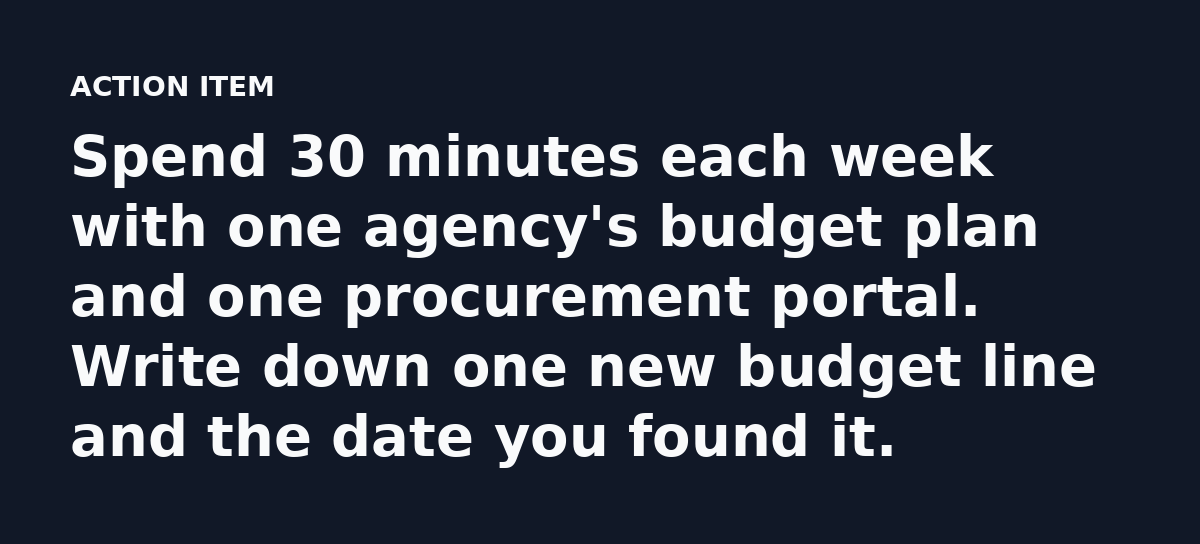
For one agency you can serve, pull its last three awards from USAspending.gov and find the budget document that funds the work.
Then write a two-page technical brief for the program office and send it to the person who owns the problem. Repeat with a second agency next week.
That is B2G lead generation in practice: one agency with a funded problem and a brief that answers a requirement.
Need this run for you? See the outreach service.