Key Takeaway
Automated lead generation usually fails because nobody writes down what a good lead looks like before the script runs.
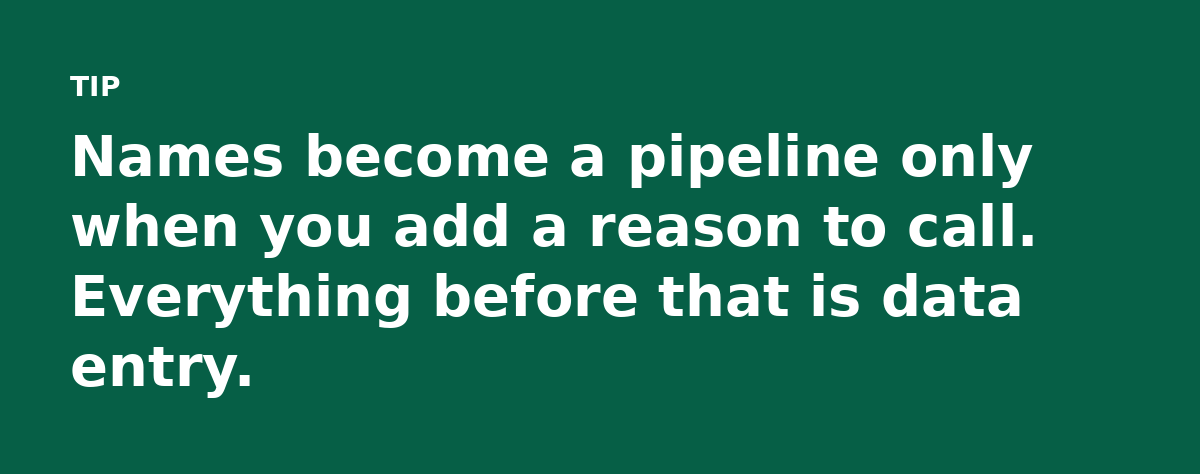
Your scraper pulls 4,000 business names in an hour. Your team books two meetings from them.
Claude Code can write a script that hits a map API or a directory and drops names and phone numbers into a CSV in under an hour.
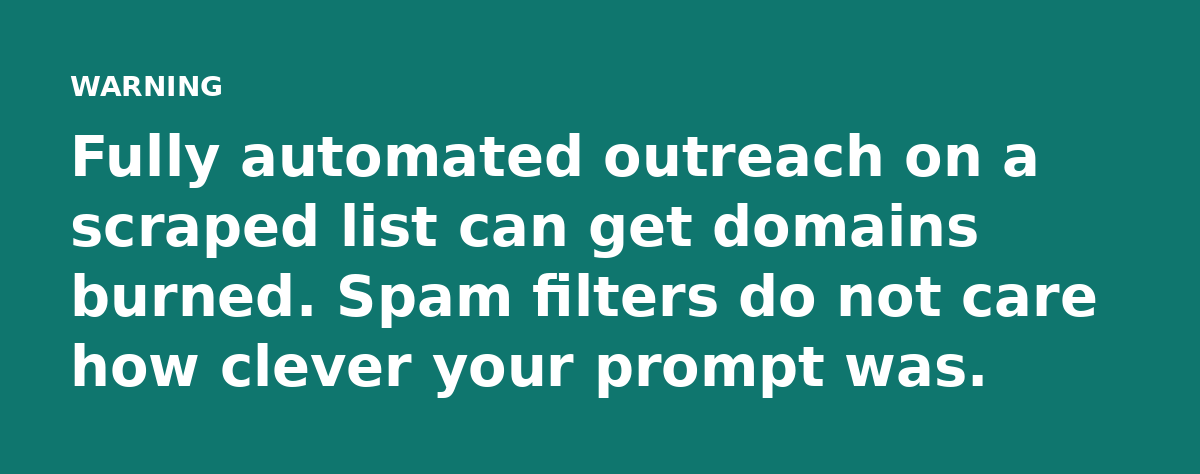
The first email run shows the real quality of the list.
Public reports put cold email reply rates between 1 and 5 percent. On a scraped list with no filter, the rate can fall below 1 percent. The extra speed produced worse results.
A 1,000-row list takes about four hours to review at 15 seconds a row.
Where Automated Lead Generation Actually Breaks
Ask five people on the team what a qualified prospect is and you get five answers. One says any local business with a website, another says companies spending on ads. Nobody wrote it down.
The script scrapes everything because no one wrote down a buying signal.
The Fix: Build the Filter Before the List
Claude and open-source scrapers follow your instructions. Your criteria decide which rows matter.
The workflow has four steps.
1. Pick one buying signal
A buying signal is something that changed recently. Examples include a new location, a job post for a marketing manager, a website untouched since 2019 or a public review complaining about slow replies.
Two signals shrink the list fast. Zero signals make it random.
2. Scrape four fields
Pull the business name, the signal evidence, one contact route and a source URL. That is enough to qualify and enough to personalize.
Extra fields feel productive. They slow the review and give your team more ways to skip rows.
3. Score every row with a simple formula
Use numbers so two people can agree on the same lead.
Lead score = (signal match x 3) + (size fit x 2) + (contact quality x 1)
Score each input from 0 to 3. Rows with a weak signal match rarely recover. Anything below 12 gets archived. Anything at 15 or above goes to a human the same day.
This takes ten minutes to set up in a spreadsheet. It removes most of the junk before anyone writes an email.
4. Route the top rows to a person
Automation should stop at the handoff: a rep reads the signal and checks the website for 30 seconds. Then they send a line that references the actual evidence.
What the Claude Part Is Good For
Claude Code handles four jobs. It cleans messy rows, writes the scoring script, summarizes a business website and drafts the first line of outreach from the captured signal.
A Real Automated Lead Generation Scenario
Say you target dental clinics in one metro area. The signal: a clinic with a booking page that has no online scheduling.
Your scraper pulls 300 clinics and the filter finds 46 with no scheduling link. A rep checks 46 sites in under an hour. Twelve are real fits; six reply and two book.
Cost and Time, Roughly
A basic stack runs on a map API and a spreadsheet. Expect a few dollars in API credits for a few hundred rows. The real cost is the hour you spend writing the buying signal.
Compare that to a lead database subscription at several hundred a month. The subscription sells you the same unfiltered pile everyone else has.
Keep These Points in Mind
- One buying signal beats five vague filters.
- A score below 12 gets archived.
Your Next Move
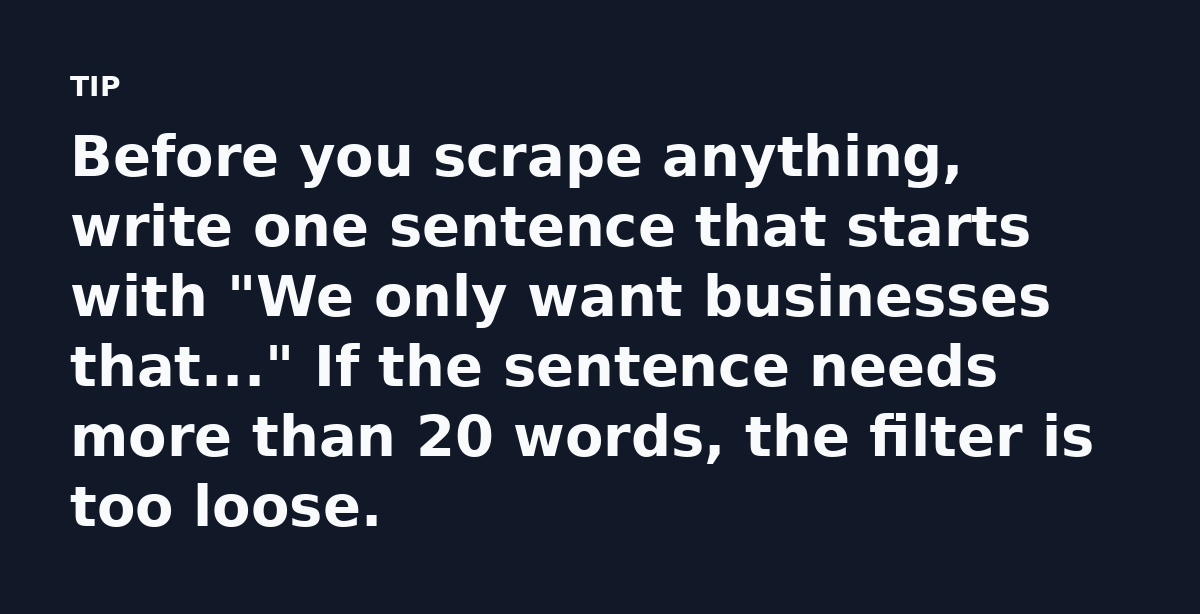
Open a blank doc and finish this line: “We only want businesses that…” Make it specific enough that a stranger could pick the right rows from a list.
Then build the smallest scraper that proves it on 100 rows. Check how many a human would actually call.
If more than ten of the 100 rows are worth calling, the filter works. If it is two, tighten the qualifying sentence.