Key Takeaway
Most B2G lead generation fails because vendors treat public buyers like private ones. A government lead is a budget line with a deadline attached. Find that requirement in the public record, then build the relationship around it.
Federal contract obligations exceed $700 billion a year, according to USAspending.gov. State and local agencies spend more than $100 billion on technology, according to public budget reports. That money is public.
Here are six myths that keep good vendors out of public sector deals. Each one comes with a correction you can use this week.
Myth 1: A Lead Is a Name and an Email
Fact: The contact is the least valuable part of the lead.
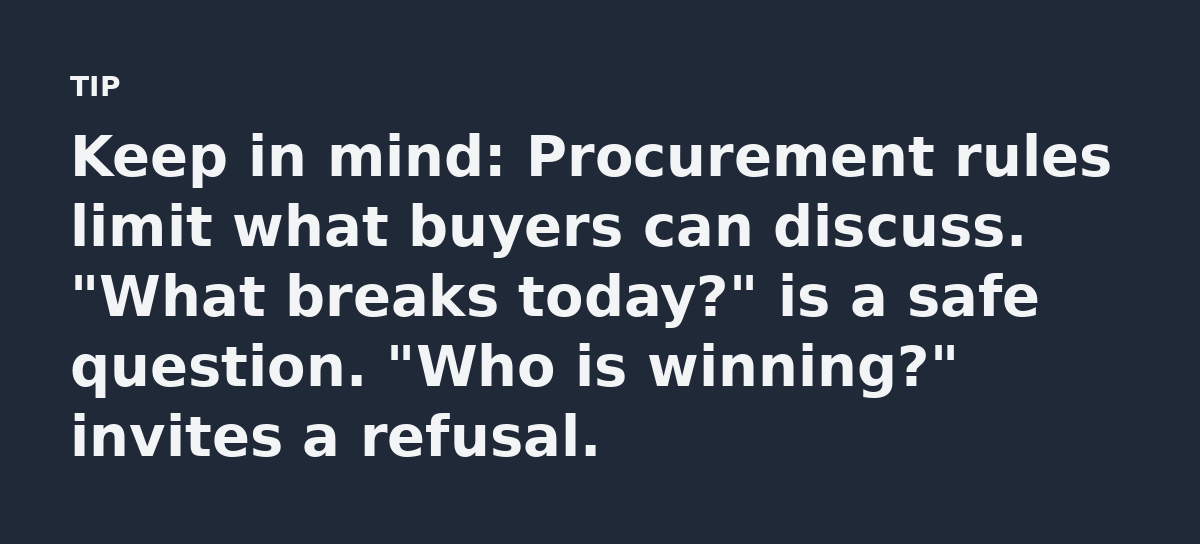
Public buyers do not swipe a credit card after a demo. A typical agency purchase runs through a program manager and a contracting officer. A CIO review may follow. Some deals add legal and security teams.
Ask for the funding document before you ask for a meeting.
Many public IT deals take a year or more from budget request to award.
Myth 2: More Contacts Mean More Leads
A vendor tracking 14 recompete dates at one agency beats a vendor with 8,000 scraped emails and no contract history.
Government buying does not reward volume. A long list of names tells you nothing about when the money is available.
Myth 3: Public Buyers Are Unreachable
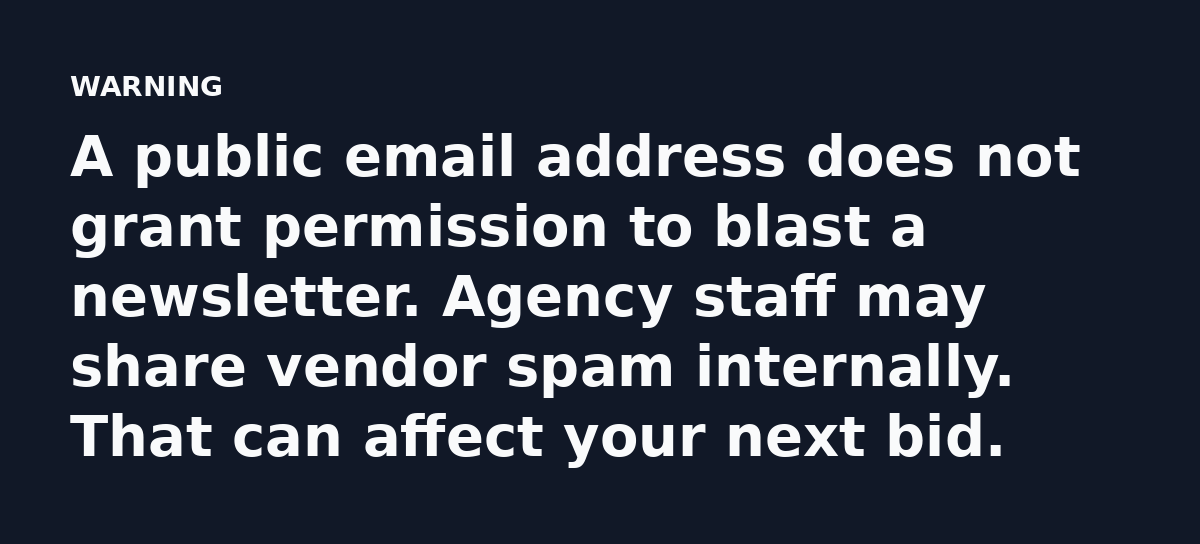
Agency budgets and contract awards are published. Most states publish who bid and who won.
Public records laws exist in all 50 states and a short request can reveal planning documents and vendor shortlists. A generic pitch is easy to ignore.
Myth 4: You Need a Contract Vehicle Before You Can Sell
GSA schedules and state contracts can shorten the buying process, but getting on one can take months.
You can start sooner through teaming. Prime contractors need subcontractors with security clearances or niche software. A subcontract gives you past performance, which B2G buyers weigh heavily.
SAM.gov registration is free and required before any federal award, so finish it while you look for primes that already hold the contract you want.
Offer a specific capability they lack. Ask for a defined scope of work.
Myth 5: The RFP Is the First Sign
By the time a request for proposal is public, the requirements are often locked. Vendors who helped shape the requirement have an advantage.
Influence happens earlier: request a meeting during budget season and comment on draft documents when the agency asks. The goal is to be known before the solicitation drops.
Myth 6: Cold Email Closes Government Deals
Government buyers need references and a price that survives an audit. A cold email can start a conversation. It rarely closes one.
Build proof instead: publish a one-page case study with a measurable result and get onto a relevant cooperative contract.
Vendors who win repeat business know the program manager’s priorities and the contracting officer’s timeline.
What a Real B2G Lead Looks Like
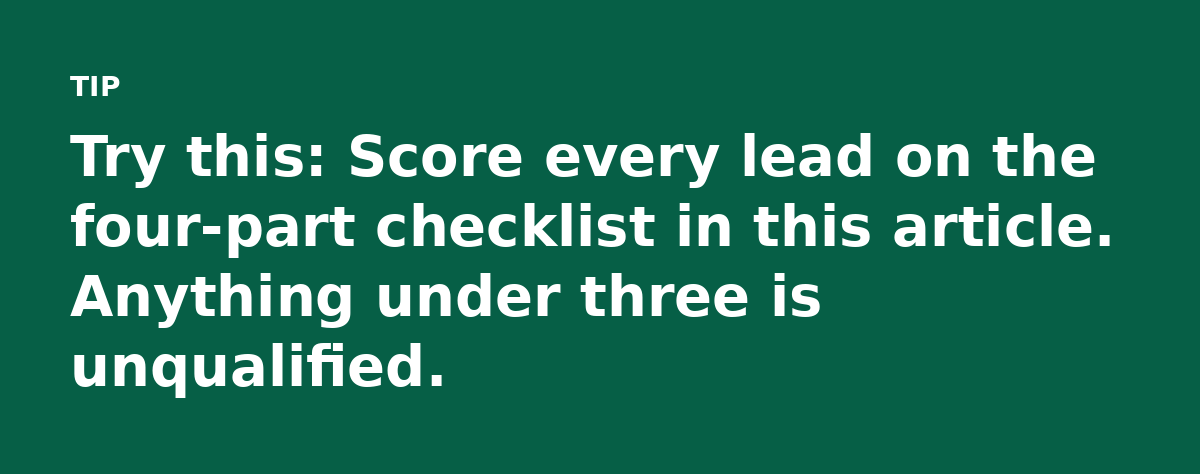
A usable lead has four parts. Check for all four before you spend an hour on outreach.
- Agency and program office: the team that owns the problem and the budget.
- Funded requirement: a line item or an approved modernization plan.
- Contract timeline: the current award’s expiration and the likely recompete window.
- Buying route: open bid, cooperative contract, sole source or subcontract.
Missing any one of those? Keep researching.
The Weekly Routine That Fills a Public Sector Pipeline
B2G lead generation rewards a weekly routine. Set aside 90 minutes each week and do the same four things.
Review one agency’s budget request on your watchlist and log every contract that expires in the next 18 months. Request one planning document from an agency and book one industry day or vendor webinar.
Those four actions need no sales team and produce information a competitor will not have.
Pick One Agency This Week
Pick one agency that already buys what you sell. Open USAspending.gov and pull its last five contract awards.
Write down the incumbent, the value, the expiration date and the program office. That gives you a deadline and a reason to call.
Track that agency for a quarter. You will know more about its buying plans than most vendors who have pitched it for years.
Need this run for you? See the outreach service.