The Short Version, Up Front
A 1,200 word service page takes a skilled writer about 6 to 9 working hours once you count the research and the calls. Freelance rates land between $0.10 and $0.50 per word. Agencies charge somewhere between $0.75 and $2.
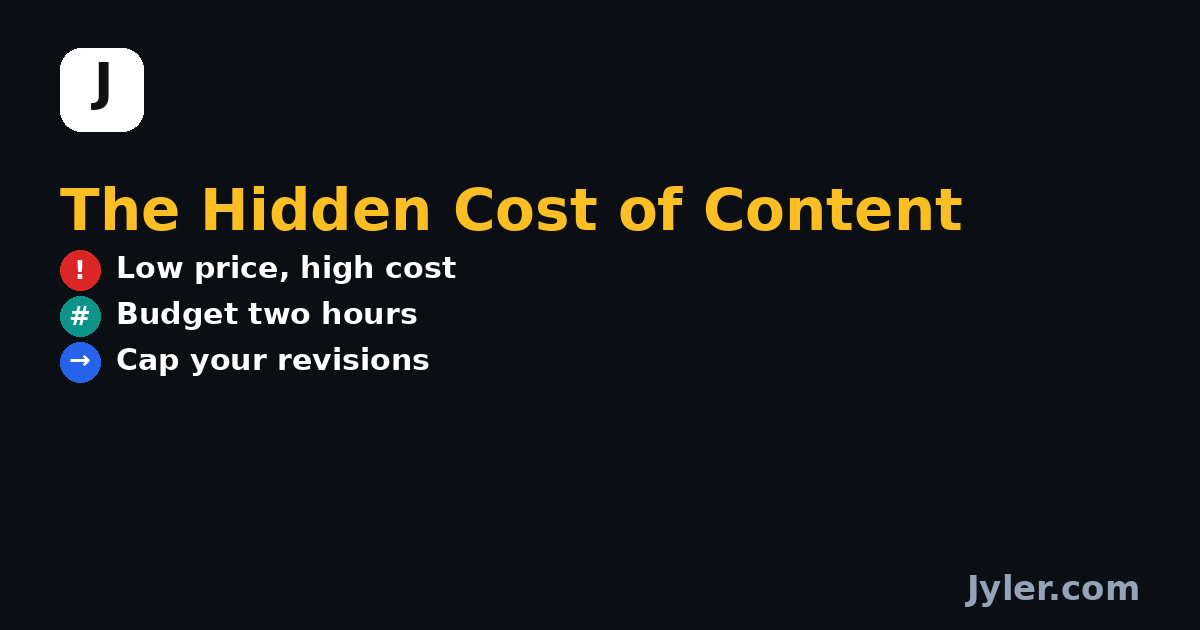
That spread of $500 to $2,000 per page is not a talent gap. It is about who does the interviewing, the editing and the waiting.
Know which of those you are paying for before you sign anything. That is the whole idea behind these notes.
What the invoice never shows
A writer cannot invent your operation. Someone has to explain how you handle refunds and why buyers actually pick you over the shop down the road.
That conversation eats 2 hours per page before anyone types a sentence. It happens first and it is invisible on the quote.
When a price looks suspiciously low, ask who is expected to do that talking. The honest answer is usually you, at 10pm, over a long email chain.
Cheap words get expensive at the edit stage
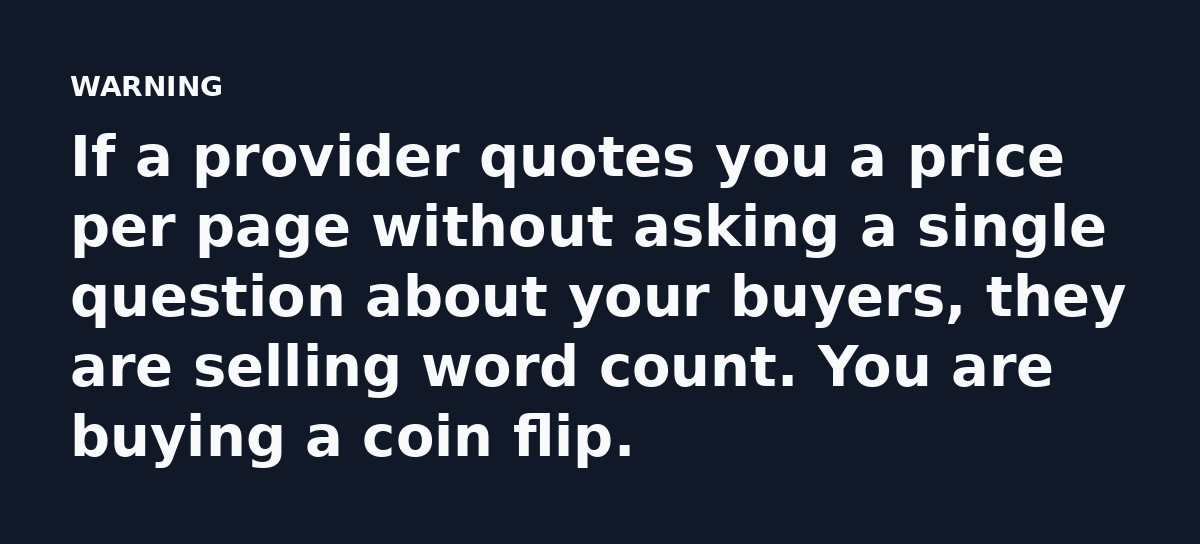
Low-cost writers often hand back clean grammar wrapped around claims a buyer cannot check. The page reads fine and proves nothing.
You then pay a second person to repair it. That is the hidden second invoice and it never appears in the first quote.
The revision loop nobody warns you about
Every page has a natural number of drafts. Two or four rounds is normal. Ten rounds means the brief was weak and everyone is guessing.
Ask for the round limit in writing. Ask who owns the brief.
If the writer owns the brief and you only approve it, the revisions drop fast. When you own the brief, you are the bottleneck and you will feel it.
The number that decides your spend
Work out what one new customer is worth to you. Say a customer brings in $2,000 over their lifetime.
A $600 page that wins two extra buyers a year pays for itself on the first one. The rest is profit.
Now flip it. A $150 page that wins nobody is the most expensive thing you buy this quarter.
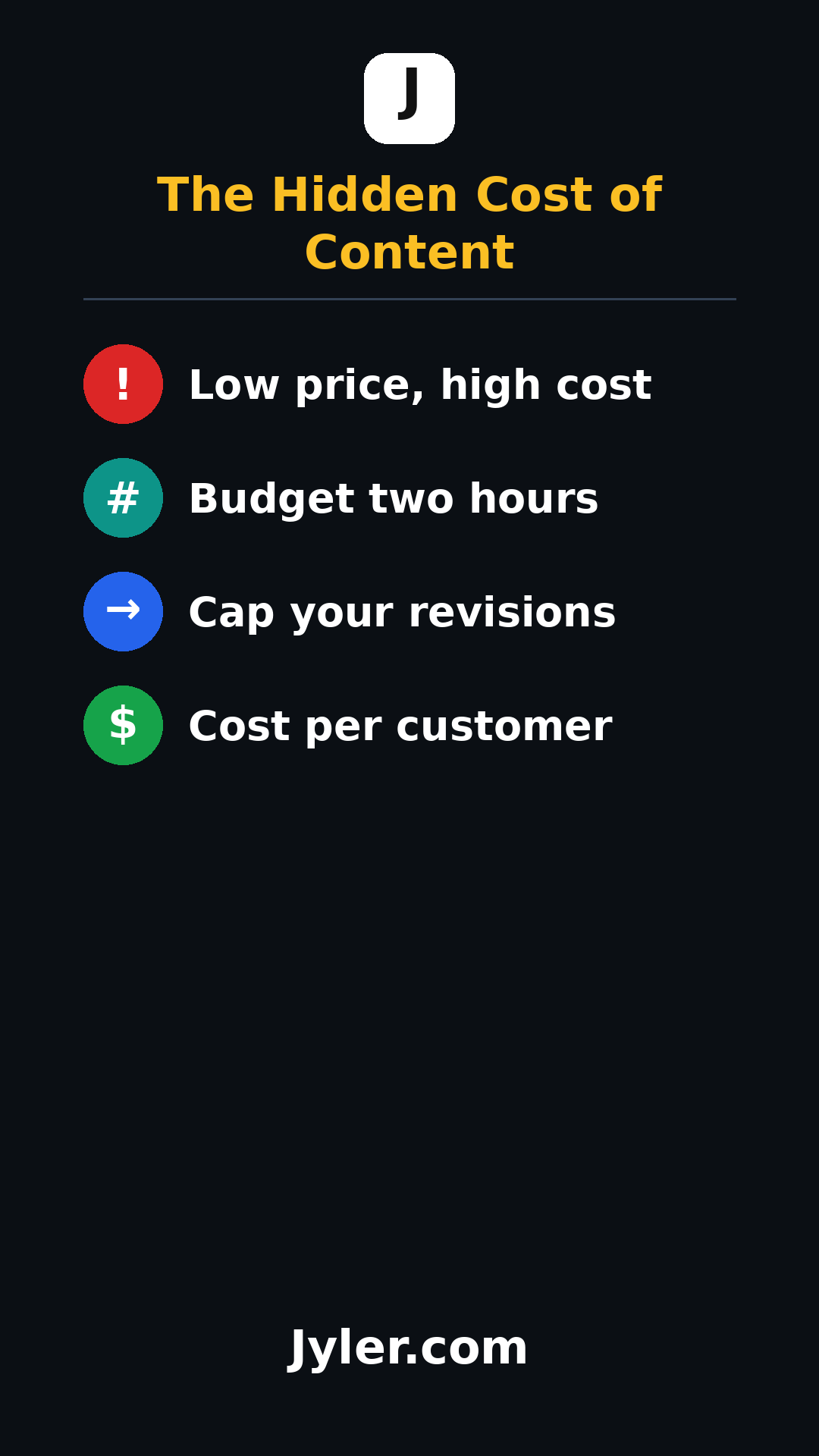
Price means nothing on its own. Cost per signed customer is the only figure that matters.
What a real website content writing service does all day
Good ones interview your sales team. They read your support inbox and your old proposals.
Then they map pages to buyer questions instead of mapping pages to your org chart. Your internal structure is not your customer’s map.
After that they write, cut and cut again. A published page is often 40 percent shorter than the first draft.
Ask any provider what their draft-to-publish cuts look like. A writer who never cuts is transcribing your words, not editing them.
The brief is where projects quietly die
Most weak pages trace back to a vague brief, not a weak writer. The brief is the cheap part and owners rush it.
Answer four things before you brief anyone. Who is the buyer. What do they fear. What proof do you hold. What should they do next.
Those answers are the page. The writing is just the assembly.
How I would buy this today
- Put the interview hours and the round limit in the quote, in writing.
- Pay for one test page before you commit to ten.
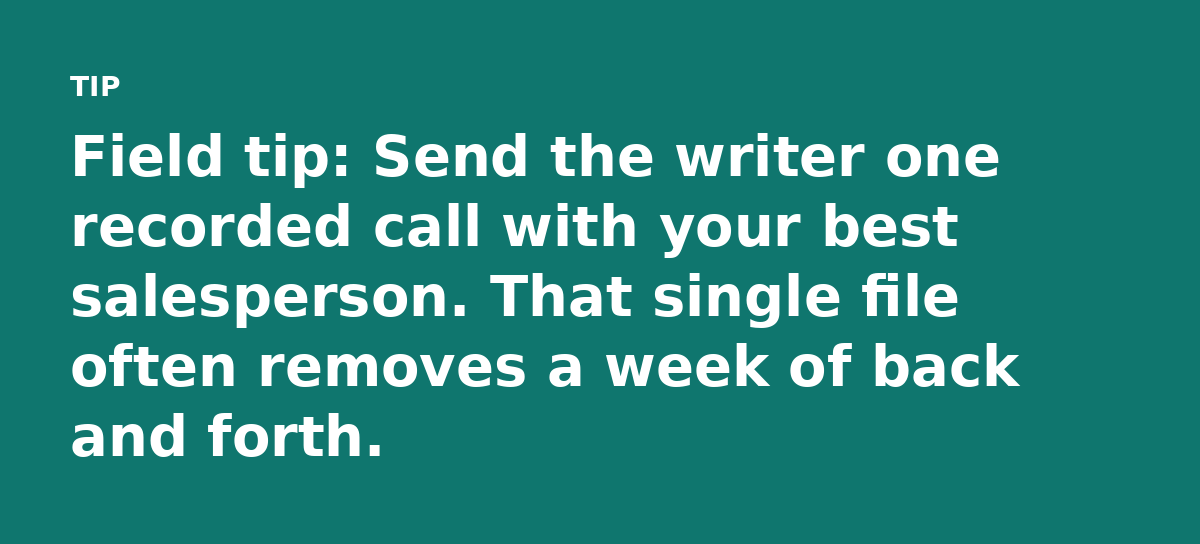
- Hand over a recorded call and a page of real customer language.
- Judge the page by buyers won, not by word count delivered.
That test page tells you more than any portfolio or any pitch deck. One page, one buyer, one number.
The one thing to do next
Find the page on your site that already gets traffic and converts worst. That is your test bed.
Hand it to a writer with one recorded call and a clear target for how many buyers it must win to cover its cost. If they turn that page around, give them the rest of the site.
If you would rather skip the search, our done-for-you website content writing service runs this exact process from the first call to the published page.
Start with the worst page. It is the fastest way to see whether your money buys words or buyers.
Watch the 30 second summary
Video transcript: A cheap page means you do the interviewing, editing and waiting. That invisible work is why the quote looks low. Ask who does the talking before you sign. A writer cannot invent your operation. Someone must explain refunds and why buyers pick you. That talk eats two hours per page and never shows on the quote. Two to four drafts is normal. Ten rounds means the brief was weak. Ask for the round limit in writing and agree who owns the brief. Price means nothing alone. Work out what one customer is worth. A cheap page that wins nobody is the most expensive thing you buy this quarter.