Key Takeaway
Content writing service pricing rarely shows the cost that decides whether the work performs. Two quotes at $500 can cover wildly different amounts of research, editing and strategy. Price the problem the article solves and the lead it returns, not the words on the page.
The Job That Looked Cheap Until You Added It Up
Dana runs a 14-person HVAC company outside Columbus. Last winter she signed up for a content writing service at $0.05 per word. Five posts a month came to about $250. She let it run for two quarters.
By the end she had spent $1,500. Organic traffic sat at 410 visits a month. It had started at 390.
The drafts explained everything. The writer never spoke to a technician. Every article described heating and cooling in generic terms. No model numbers. A homeowner could find the same advice in a search snippet.
Dana paid for words each month. What she needed was research. That gap is where content budgets leak and it starts with how the price is built.
Mistake One: Shopping by Word Count
A word is not a unit of value. A 1,200-word page that answers a buyer’s last question before they call is worth more than a 3,000-word page that repeats what everyone already knows.
Per-word rates still swing hard. Low-cost services sit near $0.03 to $0.08 per word. Mid-tier work runs $0.10 to $0.20. Anything with real expert input lands at $0.25 and up.
The invoice total tells you nothing about which one you are getting. Ask what happens inside the rate.
Mistake Two: Treating Research as Free
Most cheap content is written in one pass. The writer opens a document, reads two competitor posts and reshapes them. Time per piece: about an hour. That is what $0.05 buys.
Real research looks different. Someone interviews your team. Someone reads your old sales calls. Someone checks the phrases buyers type before they pick up the phone. That time costs money and it is the part of the price that changes results.
What Your Money Should Actually Cover
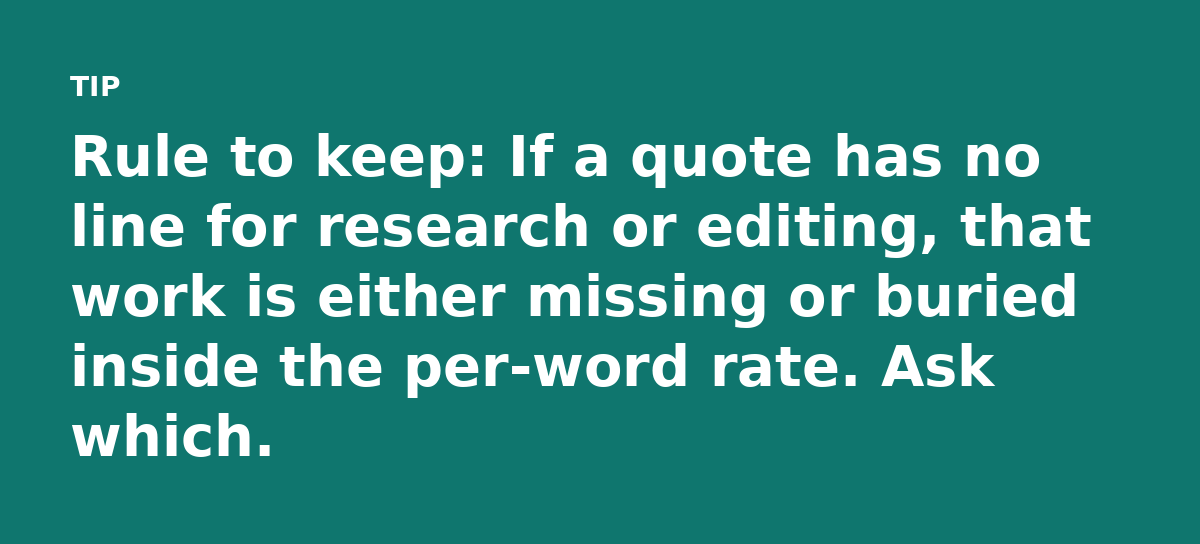
When you compare content writing service pricing, break every quote into the same buckets. Which line covers a strategy session. Which one covers subject-matter interviews. Where does editing sit. Who owns internal links and updates after publishing.
You spend time too. An interview pulls a technician off a job for 30 minutes. That is a real cost and worth tracking.
A $300 piece and a $900 piece usually differ in one place: whether a human learned anything about your business before writing.
Mistake Three: Comparing Quotes With Different Scopes
Three separate quotes can look identical on price while covering completely different work. One includes a strategy call. One includes revisions. One is a raw draft handed back to you with a spellcheck and nothing else.
Line the quotes up against the same scope before you decide anything. Same word count. Same interview time. Same revision rules. Then the cheapest number actually means something.
The Number That Beats Price Per Word
Set the rate card aside. Measure the cost per qualified lead. Take everything you spend on content in a month and divide it by the leads that came from it.
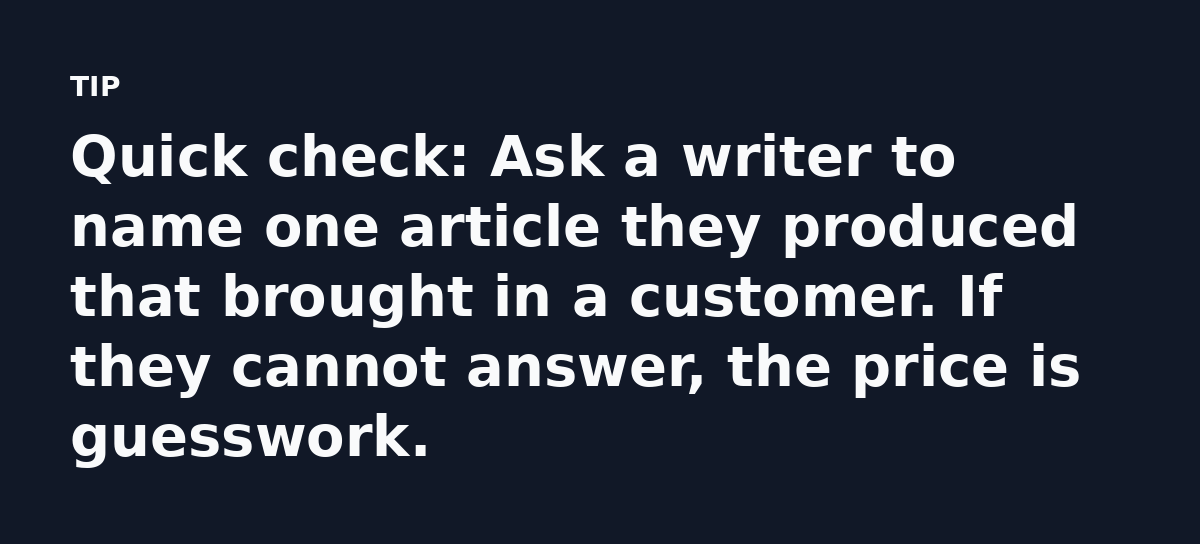
Dana switched to a service charging $600 an article, four posts a month. Monthly spend: $2,400. Those posts pulled 9 qualified leads. One turned into a $9,500 install.
Cost per qualified lead: $267. The cheap service charged less per word and produced almost nothing.
Know your average deal value. If it is $8,000, one closed job pays for 16 articles at $500. The question is how many leads a single piece returns.
Mistake Four: Signing Without Revision Rules
Loose contracts create rework. If the scope says “two revisions” and nobody defined what a revision is, every small edit becomes a fee or an argument.
Set the rules before you start. Decide who reviews the draft and define what counts as a full rewrite instead of a tweak. Put both in the contract.
How to Price-Proof Your Next Contract
- Ask what share of the fee pays for research and editing.
- Demand one sample written for your industry and buyer stage.
- Compare quotes on matching scope, not matching word count.
- Agree on revision limits and update rights before you sign.
One Thing to Do Before You Sign
Ask the provider one question: “Who learns about my business before writing and how?”
The answer separates a commodity from a partner. Cheap content writing service pricing looks like a bargain until you count the months that returned nothing. Done-for-you content, where research and editing sit inside the price, costs more up front and wastes fewer dollars overall.
If you want a team that interviews your staff and writes for your buyer, look at our done-for-you content writing service. Start with your average deal value. Work backward to what a qualified lead is worth. Then hold every quote to that number.
Watch the 30 second summary
Video transcript: A word is not a unit of value. A 1,200 word page that answers the buyer’s last question beats 3,000 words of recycled filler. Cheap content is written in one pass. Real research means interviews, old sales calls and the exact phrases buyers type before they call you. Compare quotes in the same buckets. Which line covers strategy, interviews and editing. Who owns the internal links and updates after publishing. Stop pricing words on the page. Price the problem the article solves and the lead it brings back. That gap is where your content budget quietly leaks.