Key Takeaway
A marketing contract only protects you if you read what it publishes. Every sentence a vendor writes for your store becomes your promise to the buyer. Check the work before the invoice lands and put one approval step in writing so nothing goes live without your name on it.
The Promise That Outlives the Contract
A shop owner signs a six month deal for eight posts a month at $1,400, which works out to $175 per post and $8,400 across the term.
Halfway through, the owner finally reads a published post. It promises customers a warranty the shop has never offered.
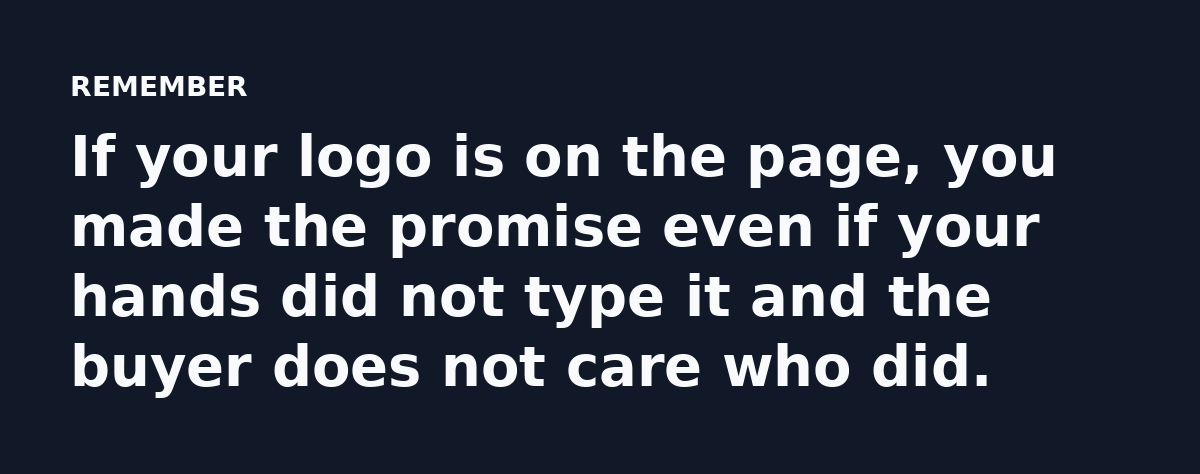
That promise now lives on the website as a legal commitment the business can be forced to honor.
One false claim can cost more than the whole contract. Refunds pile up and your best buyers stop trusting the product page.
What a Marketing Contract Really Covers
Most small vendor deals promise a number of posts plus a monthly report. They rarely promise accuracy. The scope lists volume and says nothing about claims.
Read those two lines closely: volume is easy to count, but accuracy needs a person who actually knows your business.
If the contract has no approval step, the vendor can publish straight to your site. Close that gap before you argue about the vendor.
Read the Deliverable, Not the Dashboard
Reports look clean with their impressions and click counts, but none of that tells you whether a post invented a policy.
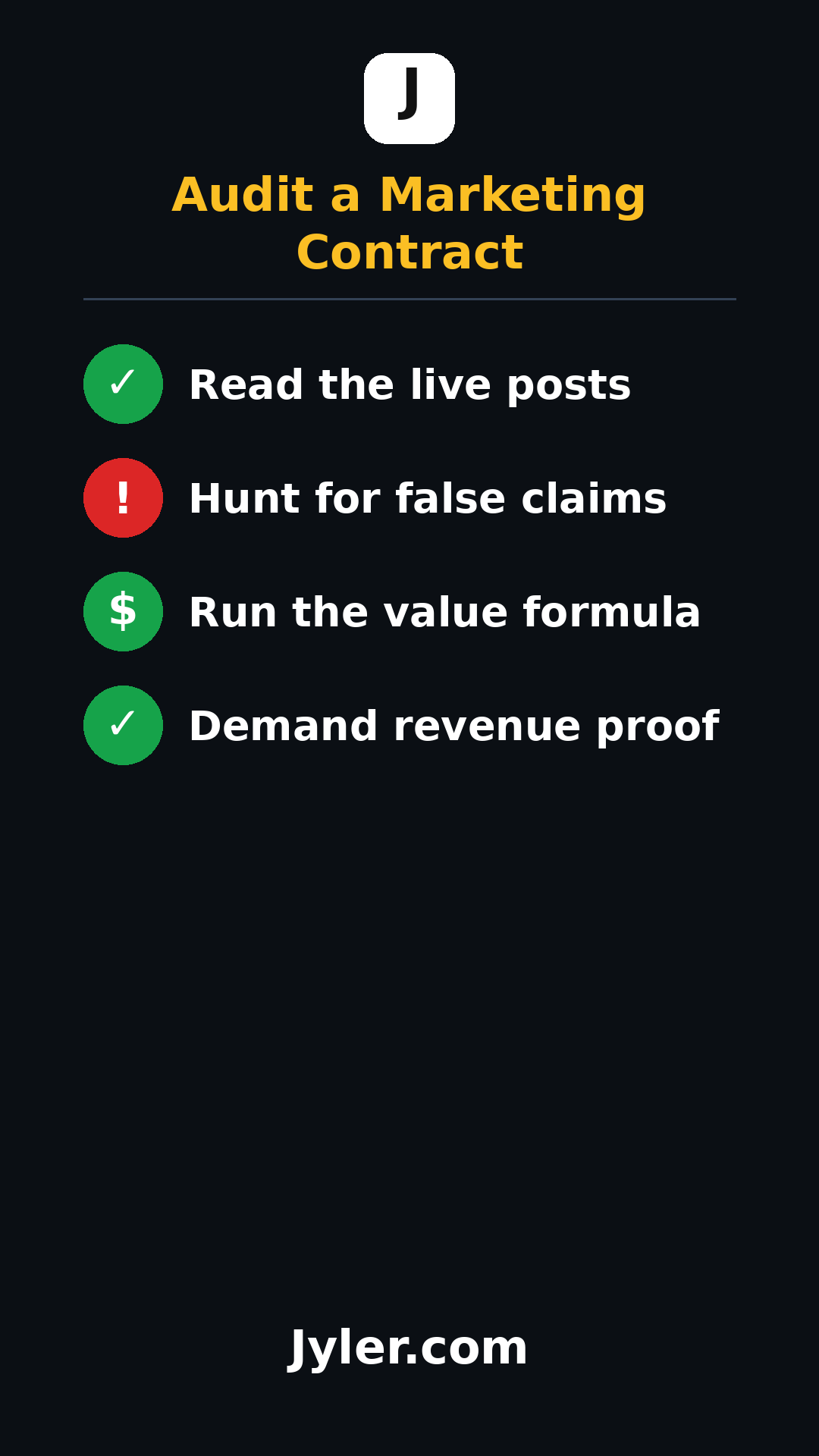
Open the live posts instead and read them the way a customer would. You are hunting for four things:
- Claims about pricing and warranty terms
- Facts about materials and shipping times
- Any service promise you never agreed to
- Competitor phrasing that leaked into your brand voice
Four checks take ten minutes, so run them the day a post goes live.
Run the Simple Value Formula
Before you renew anything, measure what the money bought. Use plain math.
Delivered value = (new buyers who mention the posts + repeat buyers the posts touch) x average order value
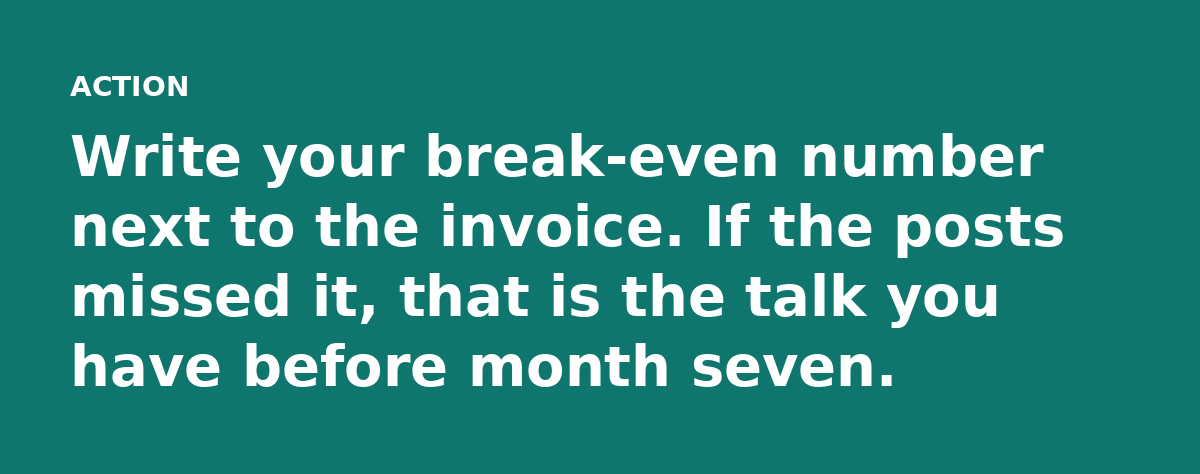
Then compare that to what you paid. A shop with a $90 average order needs roughly 16 extra sales a month to cover a $1,400 bill.
Make the vendor clear that bar or explain why it cannot.
The Report They Owe You
A good monthly report answers one question: what did the posts do for revenue? A report that shows only likes and page views cannot tell you what the posts earned.
Ask for the sales it influenced and which post brought the most orders. A vendor who cannot answer those questions is looking after the invoice.
Cancel or Repair?
Missed targets, more than a single bad post, should decide a vendor’s fate. Use the numbers.
Keep them if the content brings buyers and the claims stay accurate. Cut them if the posts invent policies or miss the break-even line.
Add One Clause Before You Sign Again
You do not need a lawyer to make the deal safer. Add two short lines.
First, no content goes live until you approve it in writing. Second, the vendor owns factual accuracy and pays for any correction.
That one approval step gives you a chance to catch a bad claim before it goes live.
What to Do This Week
Open every post published in the last 60 days. Flag any claim about warranties, returns, pricing and shipping. Fix the wrong ones and send the vendor the exact lines.
Then write the approval clause into the next renewal.
The real danger is silence.
Watch the 30 second summary
Video transcript: Skip the dashboard. Open each published post and read it the way a customer would before you pay the invoice. Scan for warranty promises, pricing claims, shipping times, and service offers you never agreed to. One invented promise becomes a legal commitment you must honor. Add new and repeat buyers the posts brought, times average order value. Compare that to what you paid, then make the vendor clear that bar. Ask which posts drove sales and which brought the most orders. A vendor who only shows likes is protecting the invoice, not your store.