Key Takeaway
A low per-word rate can cost more than a high one once you add your own editing hours. Work out the total cost per published page before you compare any two quotes.
Every SEO content writing agency pricing sheet hides the same trick. The rate is a starting number, while the real number appears later, after rewrites and the hours you burn fixing thin drafts.
People repeat the same four myths about per-word, hourly, retainer and performance deals. Let me take them apart one by one, then show you how to compare them properly.
First, Count What You Actually Pay
Your cost includes the invoice plus the time you or your team spend turning drafts into something publishable.
Here is the formula I use with clients:
Cost per usable word = (agency fee + editing hours x your hourly value + rework cost) / words you publish without major fixes
Plug real numbers into that and the cheapest quote often stops looking cheap.
Myth 1: The Lowest Per-Word Rate Saves You Money
Say you need 6,000 words a month, roughly four posts. Agency A quotes $0.10 a word, so $600. Agency B quotes $0.30 a word, so $1,800. On paper A saves you $1,200 a year every month.
A’s drafts need about three hours of your editing per post. At an $80 hourly value that is $960 of your time, so after four posts the gap between A and B shrinks to a rounding error.
The cheap quote actually cost $1,560 plus your evenings, while the higher rate shipped in one pass.
What the fact looks like
Rate is one input and editing load is the other. A writer who nails your tone on the first try is worth a higher rate because they remove a cost you would otherwise carry.
Myth 2: Retainers Only Make Sense for Big Spenders
A retainer is a flat monthly fee for a set deliverable that works as a volume discount. If you publish four posts a month for a year, an agency pays its writer’s rent with your account and can plan ahead. That planning is the source of your discount.
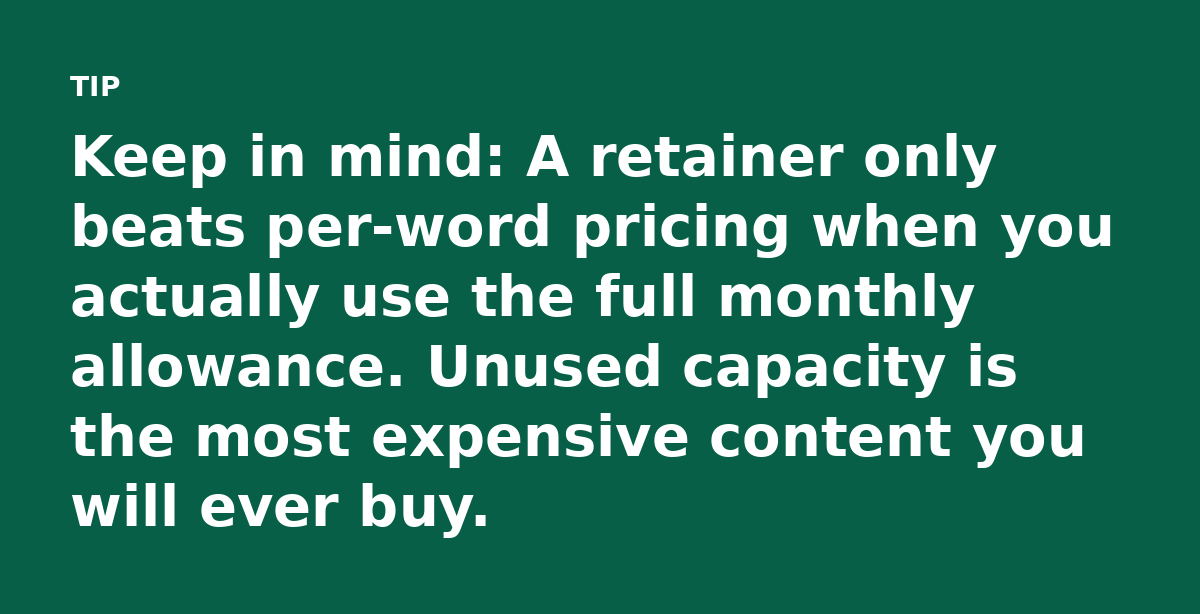
The trap is underuse. Pay $3,000 a month for ten pieces and take only six and your true cost per word doubles, so the issue is mismatched volume.
Myth 3: Performance-Based Pricing Removes Your Risk
Performance pricing sounds fair. You pay when a page ranks or drives traffic, so the risk feels like it sits with the agency.
It does not move for free. The agency covers its downside by chasing easy wins, which means thin posts on low-competition keywords that rank fast and earn their bonus while your money pages sit untouched.
You also handed a third party control over a channel you cannot influence. Google changes its algorithm and the bill changes with it, so your budget now depends on a ranking you do not own.
The trade you are really making
Fixed fee buys predictability, while performance pricing buys upside with less control. Pick the one that matches how much variance your cash flow can absorb.
Myth 4: A Higher Rate Guarantees Better Content
Price and quality move together only when the brief is tight. Give two writers the same loose brief and the pricier one may still miss.
The rate buys experience and research time, though it cannot supply knowledge of your buyers. That part is on you to supply in the brief or the notes you hand over.
A $0.40 writer with a sharp brief beats a $0.60 writer working blind.
Myth 5: You Can Compare Quotes by Rate Alone
Two quotes never cover the same scope. One includes keyword research and internal links, while the other delivers raw copy and leaves the rest to you.
Line up the deliverables side by side, then ask what happens with revisions and whether publishing is included. Price the work you would otherwise do yourself.

How to Pick the Right Model for Your Volume
Match the model to the shape of your content plan rather than to the lowest number on the page.
Publishing a fixed number of posts every month with a known budget? A retainer usually wins because the rate per piece drops.
Running campaigns in bursts, with quiet months in between? Per-word or hourly keeps you flexible and stops you paying for idle months.
Testing a new market where you can tolerate swings? Performance pricing can work if you cap the upside and keep control of the brief.
Most teams end up with a blend: a retainer for the core blog, per-word for one-off landing pages. The mix follows your production schedule.
What to Do Before You Sign
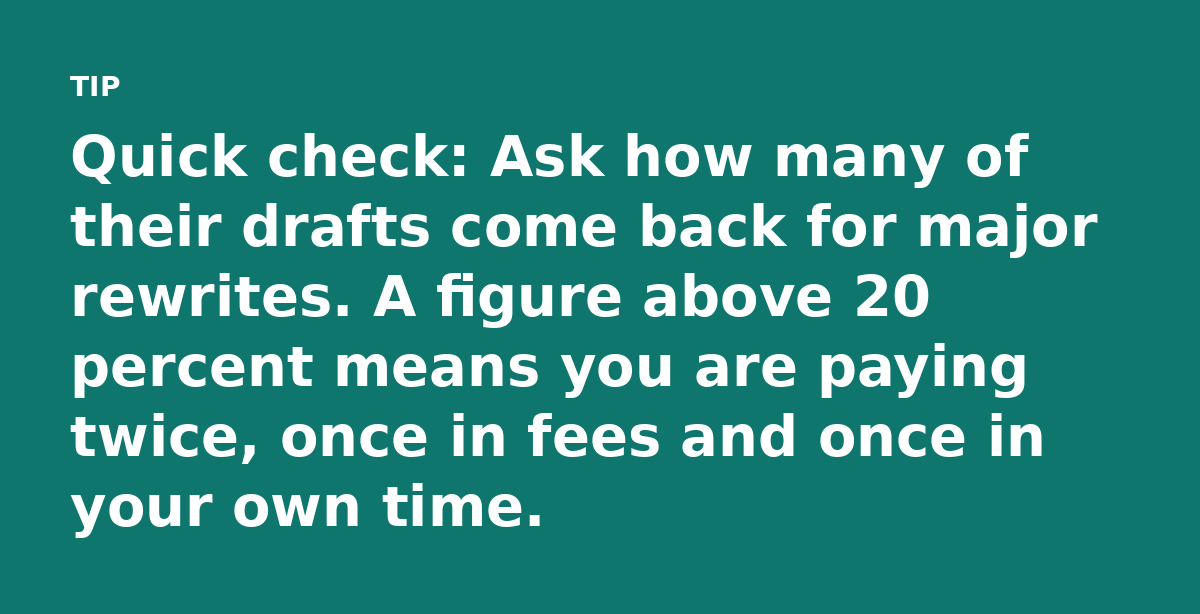
Run the cost per usable word formula on every quote and add your editing hours. Ask how many drafts get rewritten, then check that the scope covers the jobs you listed.
Then pick the model that matches your publishing rhythm. A slightly higher rate with clean first drafts will beat a bargain that eats your calendar.
The one thing you should do next: open your last three agency invoices and count the hours your team spent fixing the output. That number tells you which pricing model you can actually afford.
Read the full guide: The Real Cost of an SEO Content Writing Agency (And What Nobody Tells You First)