Key Takeaway First
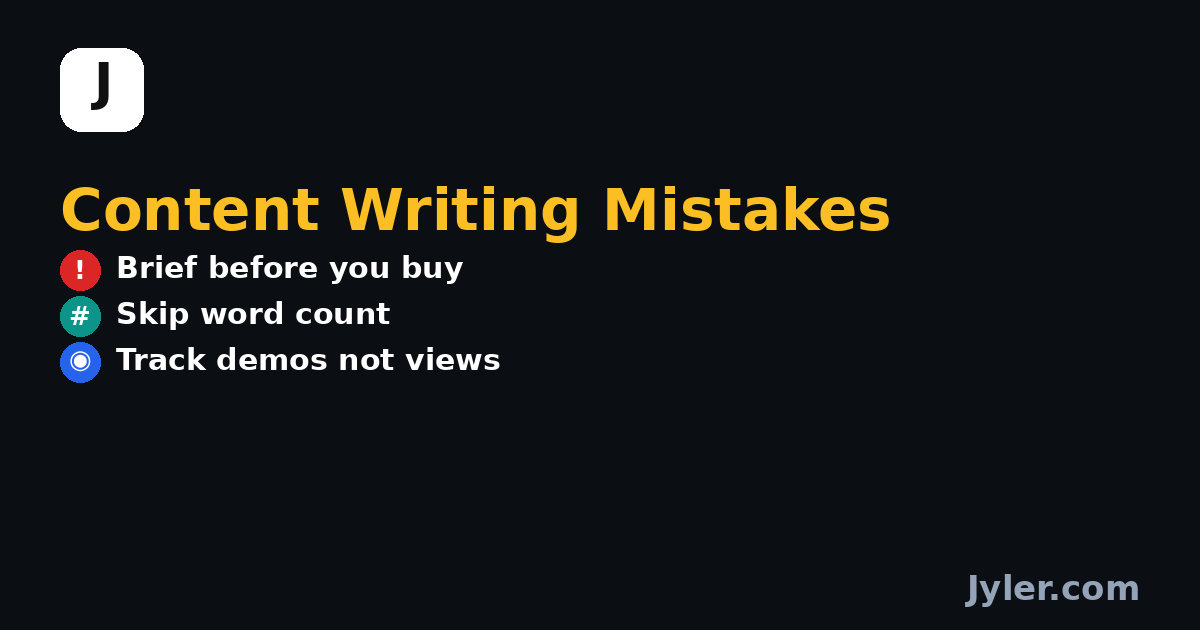
A done for you content writing service removes the writing bottleneck. It will not rescue a campaign that has no brief and no plan for distribution. Fix the system first, then every word you buy starts working.
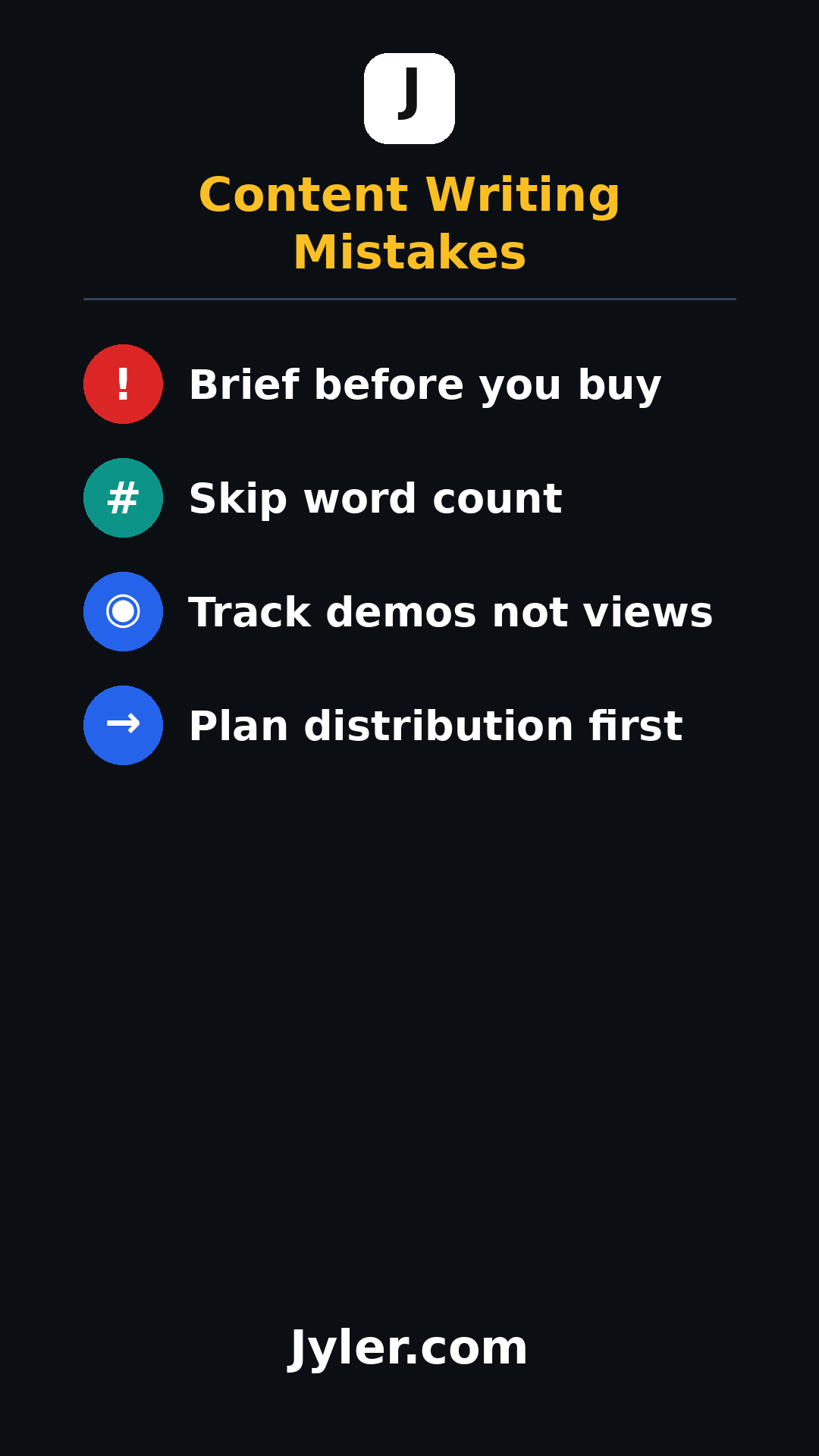
Below are the mistakes I see most often and how to stop making them.
Mistake 1: Buying Word Count Instead of Judgment
A 2,000 word post with no argument is a 2,000 word liability. Length is easy to count, so buyers use it as a stand-in for quality. It never works.
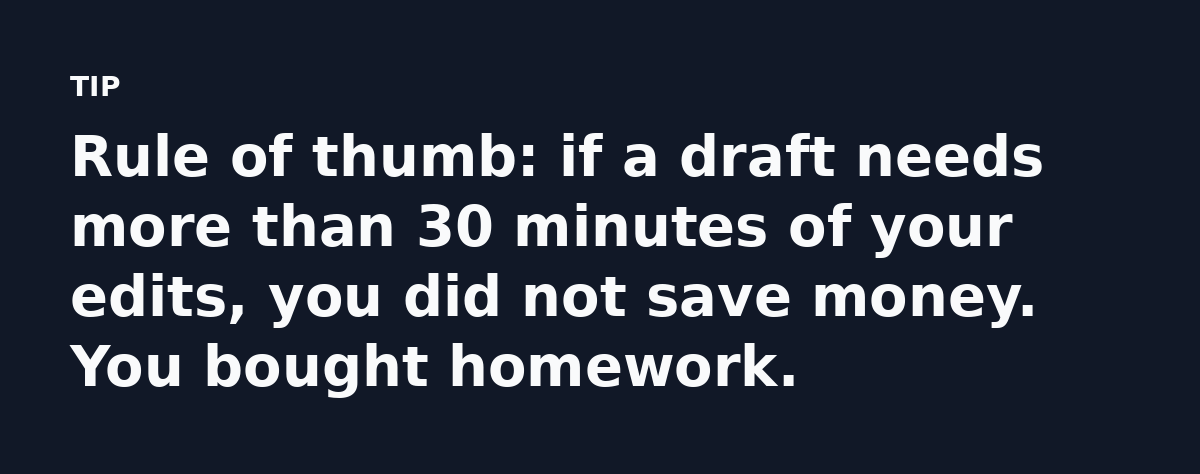
Freelance posts run $50 to $300. Content mills charge $20. That cheap post looks like a deal until you spend an afternoon repairing it. I have watched operators burn six hours fixing a $40 article. That is $360 of their own time on a piece they could have briefed once.
Mistake 2: Sending a One-Line Brief
The brief you send decides the draft you get back. A single keyword plus “make it good” produces filler. The writer has no idea who the reader is or what they need to believe before they buy.
A real brief names two things. The reader. The outcome they want. Everything else a good writer can research.
Add the exact phrase your customers use for the problem. Pull it from a support ticket or a sales call. Writers copy language well, so feed them the right words.
Mistake 3: Leaving Sales Calls Unused
Your best content is already recorded. Every objection your sales team answers is a question your website should answer first. Most B2B buyers finish their research before they ever talk to you.
Drop a spreadsheet of your ten most common objections into a shared folder. That list becomes a year of topics. The writer gets raw material and you get pages that match what buyers actually ask.
Mistake 4: Chasing Pageviews
Traffic flatters. It does not pay invoices. A post with 400 readers and nine demo requests beats a post with 12,000 readers and zero.
Track assisted conversions, demo requests, email replies and trial signups. Set the target before you publish. If nobody agrees on the metric up front, you will argue about it later.
Mistake 5: Publishing With No Distribution
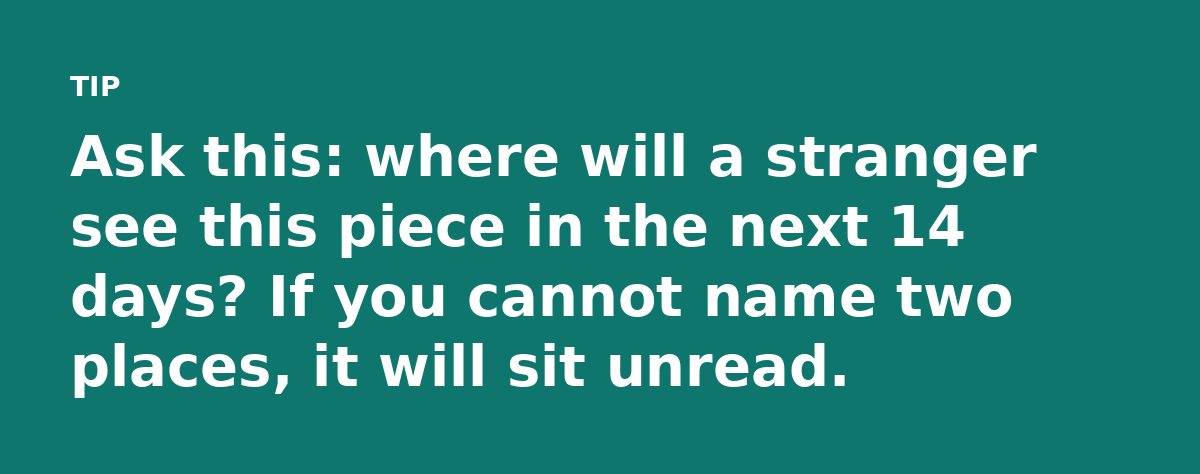
Publishing is one step. Distribution is the work that follows. One post can feed a newsletter, two social posts, a sales follow-up and a section of a landing page.
Plan where each piece goes before it goes live. If the answer is “nowhere”, do not write it yet.
Mistake 6: Treating Content as a One-Time Project
One post a quarter builds nothing. Trust comes from showing up with something useful again and again. The businesses that win treat content as a standing cost, like rent or salaries. It is not a campaign you run once and forget.
Pick a cadence you can hold for a year. Two solid posts a month beat ten in January and silence by March.
Mistake 7: Hiring a Writer When You Need a System
A strong writer still needs a topic pipeline and someone who owns the results. Without those two, even good work drifts toward random.
This is where a done for you content writing service earns its fee. You are not buying words. You are buying a repeatable process that turns your expertise into published assets on a schedule.
Done right, it covers research, drafting, editing and a publishing plan. You supply access to your team and your customers. The service handles the rest.
The Math That Decides It
Value your own hour at $150. Spend five hours a week writing and editing and that is $750 a week, close to $39,000 a year. A done for you content writing service usually costs a fraction of that and ships faster than you can.
The real question is whether you can keep writing while running the business. Most operators cannot and the content slips first.
What to Do Before You Hire Anyone
Write a one-page brief. Name the reader. Name the outcome. List five objections from real calls, in your customers’ own words.
Then hand that brief to a writer and watch the difference. Good content starts with your input, not their vocabulary. If the draft still misses, the brief was thin, not the writer.
Your Next Step
Skip the hiring cycle and the editing loop if you want. See how our done for you content writing service turns a short brief into published work on a schedule you set.
One brief. One owner. A steady stream of pages that sell while you work on everything else.
Watch the 30 second summary
Video transcript: A one line brief produces filler. Name your reader and the outcome they want before you send anything. Length is not quality. A cheap post you spend hours repairing costs more than a briefed one done right. Traffic flatters but does not pay. Set your target on demo requests and signups before you publish. Publishing is one step. Plan where each piece goes before it goes live, or do not write it.