Why Most Articles Get Ignored
A page published and forgotten earns nothing. It sits on page four while a thinner page ranks first.
The gap is process. Most teams skip the research step and write whatever sounds pleasant.
Search rewards pages that match a real query. Here is how to do it in order.
Step 1: Choose One Question Before One Keyword
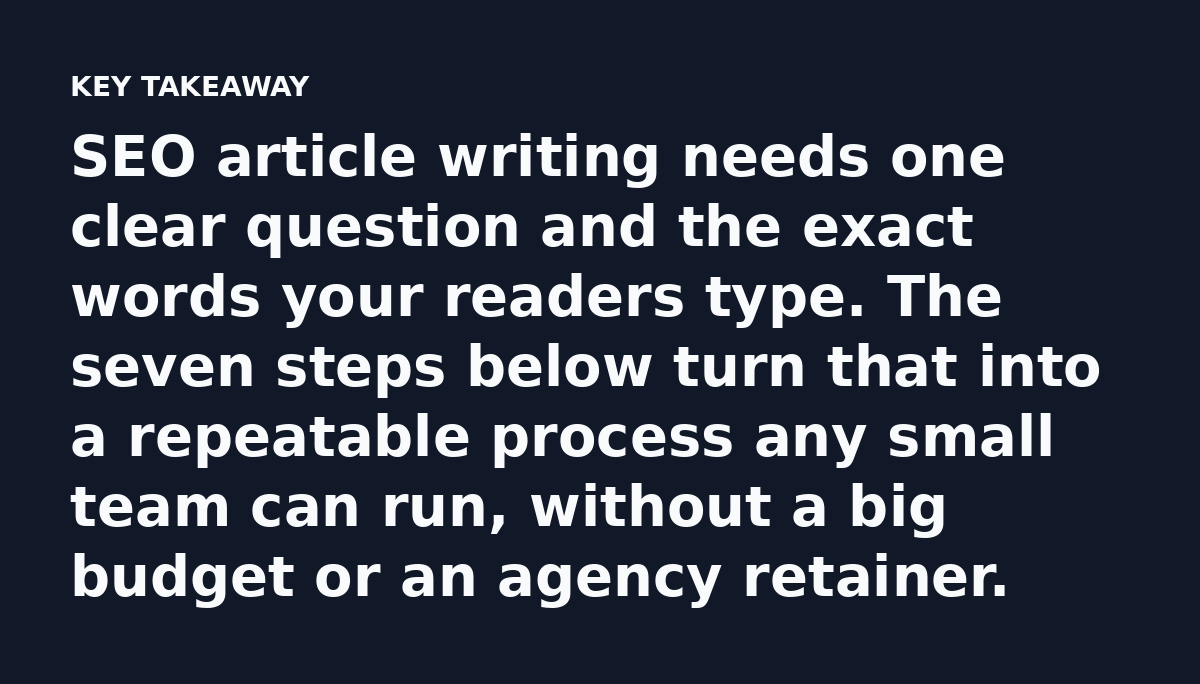
Start with the question a customer types into Google.
If you sell bookkeeping software, the question might be “how do I track receipts for taxes.” That phrase carries intent. The person wants a practical fix.
Write that single question at the top of a blank doc. Every section you add serves that line.
Why narrow beats broad
A page targeting “marketing” fights millions of results. A page answering “how to write a cold email that gets replies” competes with far fewer. Narrow pages win because the words on the screen match the words in the search bar.

Step 2: Find the Words People Actually Type
You can do this for free. Open Google and type your question. Read the “People also ask” box and scroll to the related searches at the bottom.
Copy every phrase you see. These are real searches from real people. They belong in your headings and your opening paragraph.
Cost so far: zero dollars and about 20 minutes.
Two numbers worth knowing
Roughly 27% of clicks land on the first organic result. The tenth result gets under 3%.
Step 3: Build an Outline That Answers the Query
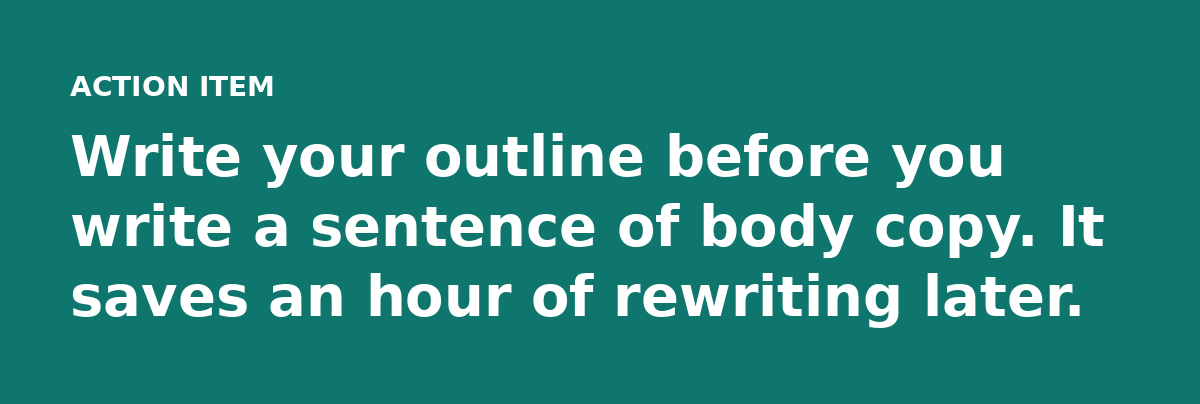
Your outline is a contract with the reader. Every heading promises an answer and every section delivers it.
For the receipts question, headings might look like this:
- How the tax deadline works for freelancers
- What counts as a deductible receipt
- How to store paper slips
- How to store digital receipts
Each heading maps to something the reader came to learn. Nothing decorative. Nothing off topic.
Step 4: Write the Draft Without Stopping
Write ugly. Fix it later. The first draft exists to move ideas out of your head.
Keep sentences short. Most should run under 20 words. When a sentence spills past 25 words, break it in two.
Aim for 1,200 to 1,800 words when the topic needs depth. Coverage matters more than length. A focused 1,200-word page beats a padded 2,500-word page that circles the same point.
Step 5: Edit for the Reader
Read your draft out loud and rewrite where you stumble. Where you get bored, the reader will too.
Cut these on sight:
- Sentences that restate the heading
- Adjectives that carry no information
- Intros that delay the answer
- Points repeated in new wording
Answer inside the first 100 words
Front-load the fix, then explain how and why in the sections below. Readers decide in seconds whether to stay.

Step 6: Optimize Without Stuffing Keywords
Place your main phrase in the title, the first paragraph, one heading and the meta description. That is enough.
Using it 40 times reads like spam and gets ignored. Swap in related terms instead. If you write about SEO article writing, natural partners include search intent and keyword research.
Add internal links to pages that go deeper. Add one or two external links to sources you trust. Links help readers and help search engines understand the page.
Step 7: Publish and Update
Set the page live. Then watch four numbers in Search Console: impressions, clicks, average position and click-through rate.
Wait 30 days before you judge it. New pages need time to be crawled and tested.
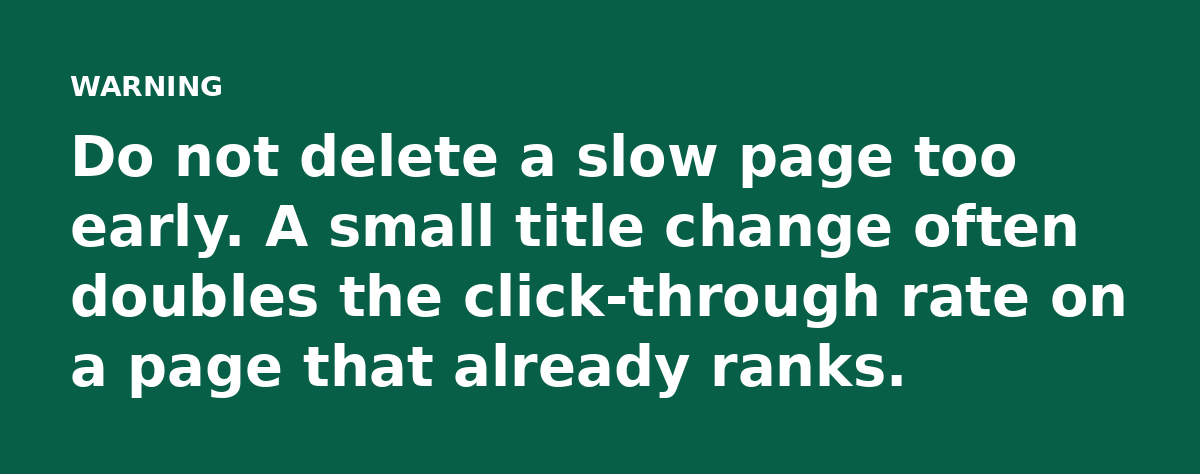
If impressions climb but clicks stay flat, rewrite your title and meta description. If neither moves, the page targets a term with no demand. Pick a better question and start again.
What to Check Before You Hit Publish
One question per page, answered in the first 100 words. The headings use the words your readers type. Keep the sentences short and the keywords in the right spots without crowding the text.
Run that list every time. The process does not change. Only the topic does.
Your next move
Pick one question today and build the outline before you write a paragraph. Do that and you have a page with a real chance of ranking, built without a retainer or a content agency.
Watch the 30 second summary
Video transcript: Start with the exact question a customer types into Google, not a broad keyword. Narrow pages win because your words match the search bar. Type your question into Google. Copy the People also ask box and the related searches. These are real phrases real people type. Put them in your headings. Your outline is a contract. Every heading promises an answer and every section delivers it. Nothing decorative, nothing off topic. Write ugly and fix it later. Keep sentences under 20 words. Then read it out loud and cut wherever you stumble or get bored.
Need this run for you? See the writing service.