
Two customers want the 2 p.m. slot. Three colleagues booked the same rep for lunch. Your trade show meeting scheduling just became a full-time job on top of your actual job.
This is normal. A big show pulls in more buyers than any team can seat in a few days. The fix is admitting that scheduling customer meetings at trade shows is its own process, with its own rules and its own owner.
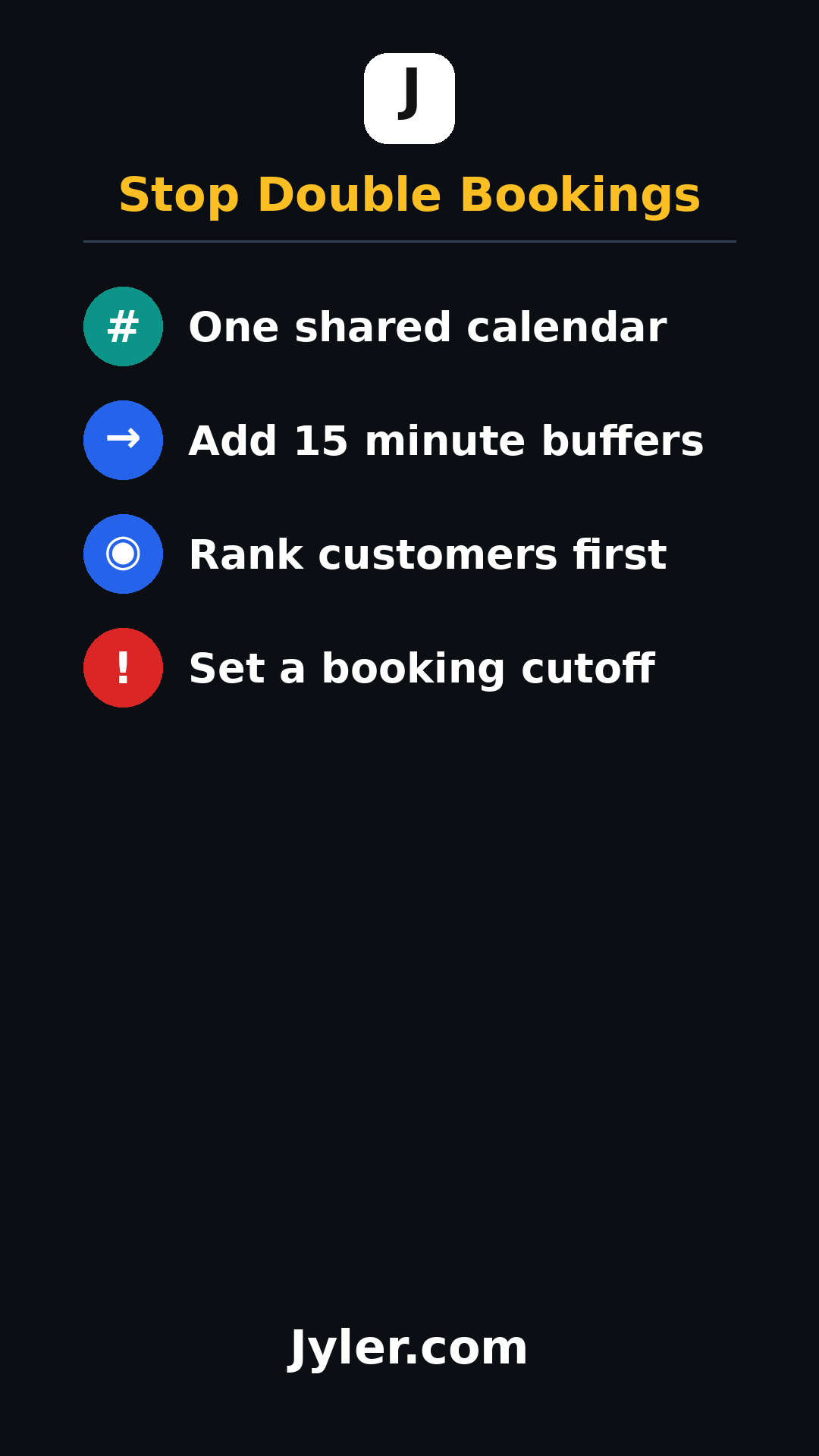
Executive Summary
Most trade show chaos comes from one mistake: letting people book meetings anywhere with no single source of truth. You do not need fancy software to fix it. You need a shared calendar and someone who says no.
Below are nine rules that keep customer meetings at a show from collapsing into a pile of double-bookings.
1. One calendar. Not five.
If your team tracks customer meetings in a spreadsheet and three personal inboxes, double-bookings are guaranteed. The count of overlapping requests will always beat the count of people tracking them.
Pick a single shared calendar. Everyone sees the same blocks in real time. When two people request the same slot, one of them watches it disappear the moment the other books.
The 15-minute buffer rule
Back-to-back meetings do not work on a show floor. Walking between halls can eat 10 minutes alone. Build a 15-minute gap between every booked slot.
That buffer looks wasteful on paper. It is the only thing that keeps the day from sliding into a two-hour traffic jam.
2. Rank customers before you rank times
Not every meeting is worth the same. A qualified buyer with budget beats a friendly hello. Decide the order before the day starts, not in the moment.
Split the list into two groups: meetings that can move revenue this quarter and meetings that just need a handshake. The first group gets prime slots. The second group gets whatever is left.

3. Set a hard booking cutoff
Someone will text you at 11 p.m. the night before asking for a 9 a.m. meeting. If you keep saying yes, you never stop working.
Announce a cutoff 48 hours before the show floor opens. After that, people either fit the open slots or they catch the customer at the booth.
4. Give every meeting a fixed length
Open-ended meetings ruin schedules. A 20-minute slot keeps the conversation tight and the calendar clean. Longer blocks belong to deep buyers only.
Write the length on the invite. When someone asks for more time, they are asking to take it from the next customer. Make that trade-off visible.
5. Appoint one dispatcher
When everyone schedules, no one schedules well. One person owns the calendar for the whole show. They approve and reshuffle.
This person needs the power to say no. Without that, the role is just a suggestion box that fills up and slows everyone down.
What the dispatcher actually does
- Approves every new meeting against the open slots
- Flags conflicts the moment they appear
That is it. Two jobs.
6. Confirm with the customer twice
Internal calendars do not know when a buyer changes plans. Send a confirmation when you book. Send another the morning of the show.
One rep reportedly cut no-shows by half with a single text the night before. The buyer replies “see you at 2.”
7. Publish a shared daily sheet
Print one page each morning, times down the side and customer name and location across the top. Tape it behind the booth.
Anyone on the team can glance up and answer “where is our 1:30?” without opening a laptop. Paper beats a login screen when the hall is loud and hands are full.
8. Track the meetings you lose
Every show, some customers never get a slot. That is data. Write down who you could not fit and why.
If six buyers wanted Thursday afternoon and you only had two slots, next year you bring more people. You cannot spot that pattern unless you log the misses.
9. Debrief before the team flies out
On the last afternoon, gather everyone for 20 minutes. What booked well. What you would change.
Memory fades fast on the flight home. The notes you write at the show are the notes that fix next year’s schedule.
What to do first
Pick one calendar and one dispatcher today. Set the 48-hour cutoff. Those two moves erase most double-bookings before the next show.
Scheduling customer meetings at a trade show is the difference between a booth that sells and a booth that just looks busy.
Watch the 30 second summary
Video transcript: If your team tracks meetings in inboxes and spreadsheets, double bookings are guaranteed. Pick one calendar everyone sees in real time, so a slot disappears the moment it is taken. Back to back meetings do not work on a show floor. Walking between halls can eat ten minutes alone. Build a fifteen minute gap between every slot to keep the day moving. Not every meeting is worth the same. Decide the order before the day starts, not in the moment. Prime slots go to buyers who can move revenue this quarter. Someone will text at eleven p.m. before the show asking for a nine a.m. meeting. Announce a cutoff forty eight hours before doors open, and hold the line.