Key Takeaway
Your first paying client is usually one relationship away, not one cold email away. Students who land real work fast almost always start with people who already trust them: classmates, professors, local shops. This guide answers the questions students ask most about finding that first freelance client.
FAQ: Finding Your First Freelance Client as a Student
Do I need a portfolio before anyone will hire me?
No. You need one sample that looks close to the work you want paid for.
A student who wants to write blog posts can rewrite an existing article from a local bakery’s site and send it as a free pitch. That one piece beats a folder of class essays. Two strong samples cover most entry-level gigs.
Clients hiring students are buying effort and speed. Show that you can finish something clean. That is the whole test.
Where do most students actually find their first client?
Start where you already have a name people recognize.
Here are the channels that produce real checks, roughly in order of how fast they tend to work:
- Campus networks. Student clubs, professor referrals, graduate students running their own side projects. A marketing professor teaching a night class often knows five owners who need help.
- Facebook groups. Local business groups and alumni groups. Post a specific help offer, not a generic “hire me” message.
- Warm referrals. Tell one person what you do. Ask them for one name. Repeat each week.
- Niche job boards. Boards built around a single industry or tool, like remote writing boards or no-code communities.
- Local businesses nearby. Walk into the coffee shop or the gym. Owners are an arm’s length away.
- Freelance platforms. Upwork and Fiverr work, though you compete on price early on. Use them to build reviews, not to build a career.
- Online communities tied to a skill. Discord servers and forums for designers, editors and developers often post paid jobs in a channel.
What do I say when I message someone cold?
Keep it to four lines. Say who you are, name one specific thing about their business, offer one small piece of help and close with a simple question.
Here is a template a student can send a local dentist:
“Hi Dr. Lane. I’m a junior at State studying marketing. I noticed your site has no appointment button on the mobile homepage. I can draft a button and a short booking page copy for free so you can see the idea. Want me to send it over?”
The free sample does the selling. It shows you already looked at their problem. Most people ignore “I do social media management.” Almost nobody ignores a fix to a real issue they can see.
How many people do I need to contact to get one yes?
Expect roughly ten real conversations for one paid job when you start. That ratio tightens as your samples improve. A student who sends twenty specific messages in a week will usually land a call. One who sends two will not.
Track your sends in a simple sheet. Rows for name, channel and date. The numbers tell you which channel works for your skill.
Should I charge money or work for free to get experience?
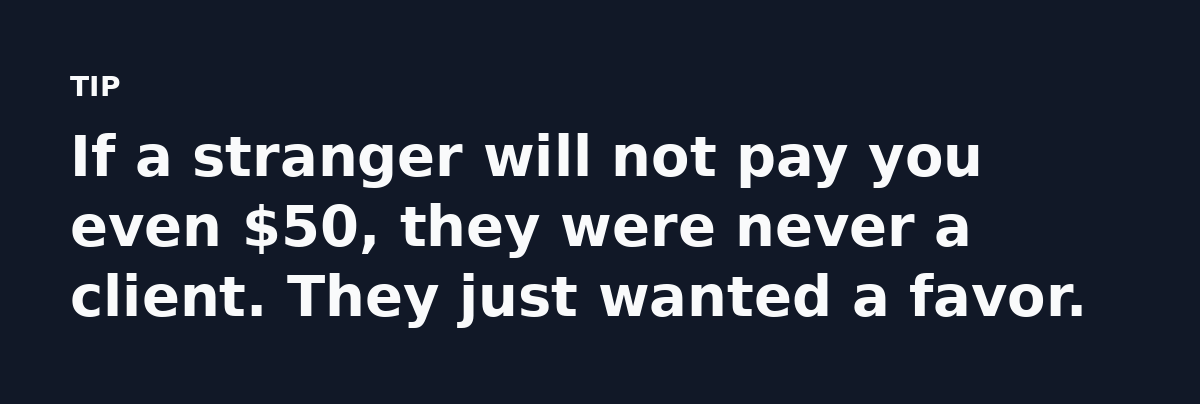
Charge something, even a small amount. Paid work changes how seriously a client treats you and how seriously you treat the job.
A common student mistake is doing five free projects and calling it a portfolio. Do one or two free samples to prove a point, then quote a flat rate. A $150 flat fee on a small job teaches you pricing and deadlines. Free work teaches you how to be taken for granted.
What is the fastest channel for a beginner with no experience?
Warm referrals beat everything else for a beginner. Someone who trusts you cuts a ten-message cold process down to one conversation.
Text a former internship supervisor. Email a club leader. Ask a family friend who owns a business. Tell each one you now take on paid work and ask if they know one owner who might need it. Personal referrals move fast because trust is already built.
Then ask that new client for a short review and one more name. A single happy client can turn into three jobs if you just ask.
How do I stand out when everyone is offering the same service?
Get specific about the outcome. “I write blog posts” is vague. “I write two SEO posts a month for dental clinics” is a target.
Pick one industry you can mention in a sentence. Then learn the common problems in that field. A student who specializes in restaurants will beat a generalist every single time for restaurant work. Narrow scope makes you the obvious pick.
What should I do this week?
Pick one channel and work it hard for seven days.
Write down ten names from your campus network and your past jobs. Send each a short, specific message with one useful idea. Offer a small free sample to the two you like most. Ask every reply for one referral.
One paying client is a proof of concept. Once you have that review and a sample, the second client comes faster. The channels do not change much after that. Your confidence does.
Things to Keep in Mind
Beginners overestimate the need for a perfect brand and underestimate the need for one real conversation. Your major does not matter as much as your willingness to send the tenth message after nine go quiet. Treat the first client as a learning project. Get paid, get a review and ask for the next name. That loop is how a student turns a single gig into steady freelance work.
Read the full guide: Email Marketing for Beginners: How One Student Landed a Paying Client With Zero Experience