
Key Takeaway
A cold outreach email is a short note from one stranger to another. You get replies when it reads like a real person and asks for something tiny. The template matters far less than the fact that a human wrote it for one human.
So What Is a Cold Outreach Email?
A cold outreach email is a message you send to someone who has never heard of you. You want a reply or a small yes. It is cold because there is no prior relationship to warm things up.
New senders overthink this part. They write a mini essay and list every skill they have. The reader deletes it in two seconds.
The Real Reason Most First Emails Fail
Being ignored hurts more than a no. At least a no tells you the message landed.
According to public reports, cold email reply rates often sit between 1% and 5%. Ten thoughtful emails can produce one real conversation. A student with no portfolio can land a paying client from a list of twenty names.
Who Should Get the Email
Skip the generic inbox. “info@” and “hello@” drop into a queue, not a person. Find a real name, maybe the founder or the person who writes their blog.
Small businesses are a fair starting point. The owner often reads their own mail. A reply from them moves faster than a reply from a big company’s contact form.
Build the Cold Outreach Email Line by Line
Start With a Subject Line You Would Open
Short beats clever: four to six words and lowercase often feels more personal than Title Case.
Lines that work: “quick question about your blog” or “saw your post on pricing”. These name a real thing. They promise no free gift.
Trim words that smell like a blast: “exciting offer” and “collaboration”. People and spam filters both flinch at those.
Make the First Sentence About Them
This is the part beginners skip. Prove you looked by naming the exact thing you noticed.
Weak opening: “I hope this email finds you well.” It says nothing and everyone uses it.
Strong opening: “I read your post on hiring your first VA and the part about trial tasks stuck with me.” That took ninety seconds to find. It changes the whole tone.
Say Why You Are Writing in One Line
Do not build suspense; get to the point fast. “I help small agencies clean up their email lists.” One sentence, then stop.
Ask for Something Small
The big mistake is asking for a 30-minute call in email number one. That is a huge ask from a stranger.
Ask a question instead. “Would it help if I sent a sample of what that looks like?” A yes costs them nothing. It opens the door.
Close Clean
Sign off like a human. “Thanks for reading. – Sam” is enough. You do not need a signature block stacked with five logos.
A Full Example You Can Copy
Here is the whole thing. It lands under 90 words.
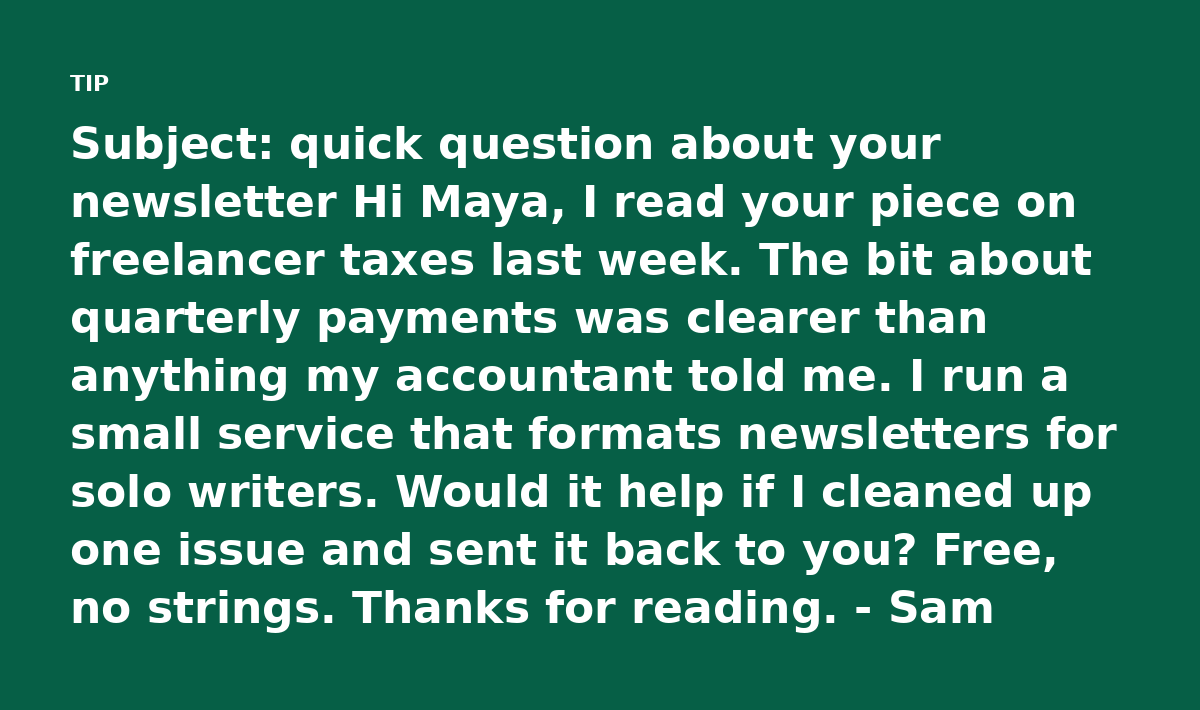
Notice what is missing. There is no resume, no long bio, no links and no attachments. The whole email is about Maya’s problem.
The Follow-Up Nobody Sends
Most people send one email and quit. That is a mistake. Many replies come from the second touch.
Wait four or five days, then reply in the same thread and keep it to two lines.
“Hi Maya, just floating this back up in case it got buried. Happy to send that sample either way.”
Then stop after two follow-ups. Pushing past that turns helpful into annoying.
Keep These Numbers in Mind
- Under 100 words. Longer notes get skimmed, not read.
- One ask per email.
- Two follow-ups, then move on.
- Named people only. Never a shared inbox.
What Can Go Wrong
Some readers will ignore you and that is normal. Others will reply with a quick “not right now”. Treat that as a win. You reached a person and left a good impression.
The bigger risk is sounding like a robot. Read your draft out loud; if you would not say those words to a friend over coffee, rewrite the line.
Your Move This Week
Pick ten people who do work you admire, find one real detail about each and send a note under 100 words before Friday.
Expect one reply, maybe two. That reply is the start. Cold outreach is a numbers game played one person at a time and the first one is always the hardest.
Read the full guide: Email Marketing for Beginners: How One Student Landed a Paying Client With Zero Experience